
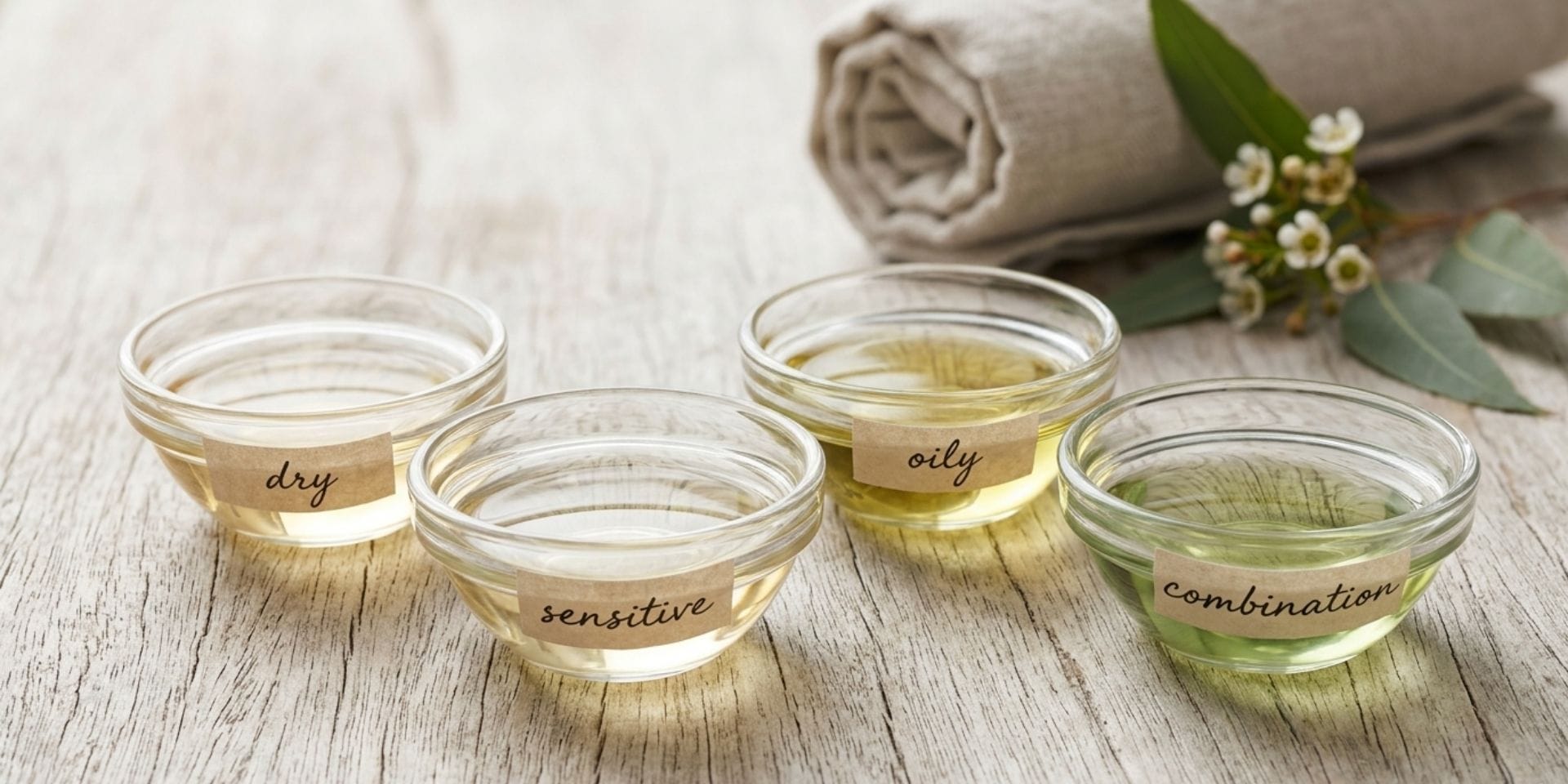
How to Choose the Best Massage Oil for Your Skin Type
Choosing the best massage oil for your skin type is the first step to a comfortable, enjoyable massage experience. From dry and sensitive skin to oily and combination types, each requires a different balance of hydration, texture, and botanical support. This guide breaks down how to choose a massage oil based on your skin type so you can find a blend that feels right on your skin. If you are exploring options, you can also explore massage oils for different skin types to see the different blends available.
Not all oils feel the same on the skin. The right choice depends on whether your skin is dry, sensitive, oily, or somewhere in between. If you are unsure what your skin type is, it is worth understanding how your skin naturally behaves before choosing an oil. Skin type is generally determined by oil production, hydration levels, and sensitivity. For a deeper explanation, you can refer to reputable dermatology resources such as this guide to understanding how skin behaves.
Jump to your skin type:
Why Skin Type Matters When Choosing a Massage Oil
Your skin has a specific balance of oils, moisture, and sensitivity. Using the wrong product can leave dry skin feeling even more stripped, trigger breakouts on oily skin, or cause redness on reactive skin. This is especially true for reactive skin types, where choosing the best massage oil for sensitive skin requires a different approach entirely. Choosing an oil that works with your skin rather than against it means you get the therapeutic benefits of the massage without any unwanted side effects.
How to Choose a Massage Oil for Your Skin Type
Here is a quick breakdown of which oils tend to suit each skin type:
| Skin Type | Best Oils | Why They Work |
|---|---|---|
| Dry | Olive, Coconut, Almond | Rich in fatty acids for deep hydration |
| Sensitive | Olive, Jojoba, Lavender-infused oils | Gentle, calming, low irritation risk |
| Oily | Jojoba, Grapeseed | Lightweight, helps regulate sebum without adding excess oil |
| Combination | Apricot kernel, balanced botanical blends | Hydrates without heaviness or overwhelming oilier zones |
Dry Skin
If your skin feels tight, flaky, or easily dehydrated, richer oils tend to perform better. Choosing the best massage oil for dry skin comes down to selecting oils with higher fatty acid content that can restore moisture without evaporating too quickly.
Dry or flaky skin needs deep, lasting hydration. Rich botanical oils such as olive oil are often used for dry skin because they contain high levels of fatty acids that help restore the skin's natural moisture barrier and prevent water loss. The antioxidants naturally present in olive oil also help protect and repair skin over time. Some people also use coconut or almond oil for similar reasons, as both provide deep hydration and leave the skin noticeably softer after use.
Sensitive Skin
If your skin reacts easily to products or fragrance, choosing a gentle formulation becomes essential.
For sensitive skin, prioritising gentle, simple formulations is essential. Sensitive skin reacts easily to fragrances, preservatives, and harsh ingredients, and a poor choice can trigger redness, itching, or inflammation that undoes the benefit of the massage entirely. The priority here is an oil that calms the skin rather than challenges it.
Oils infused with lavender or rose geranium tend to work well because both are known for their calming and balancing properties, helping to reduce redness without causing further irritation. A botanical base oil like olive oil is also a strong foundation for sensitive skin, as it delivers nourishment through natural fatty acids and antioxidants rather than synthetic additives.
Avoid anything with a long ingredient list of chemicals you cannot identify, artificial fragrance, or alcohol. Simple, plant-based blends are almost always the safer choice.
Oily Skin
If your skin tends to look shiny or feels congested, lighter and non-comedogenic oils are the better fit.
It might seem counterintuitive to apply oil to already oily skin, but the right oil can actually help regulate sebum production rather than add to it. Jojoba oil is the standout option here because its molecular structure closely resembles the skin's own natural oil. When applied, it sends a signal to the skin that it is already moisturised, which can reduce overproduction of sebum. Grapeseed oil is another commonly used option for oily skin types, valued for its lightweight feel and low comedogenic rating. Lavender and bergamot are often used in blends designed to help balance the skin while providing a light, refreshing scent.
Combination Skin
If your skin has both dry patches and oilier areas, a balanced rather than heavy or intensely rich oil works best.
Combination skin has both dry patches and oily zones, so it needs something balanced rather than intensely rich or extremely lightweight. Apricot kernel oil is a popular choice in the wider market for this reason, as it is light enough for oilier areas while still providing enough nourishment for drier patches. Light aromatherapy blends, particularly those combining lavender and sweet orange, also tend to work well because they hydrate without overwhelming. The uplifting quality of sweet orange helps keep skin feeling refreshed rather than heavy after a massage.
Choosing a Massage Oil for Your Specific Goal
Once you understand what works for your skin, the next step is choosing an oil based on the experience you want to create.
Lavender and bergamot are often used in balanced massage oil blends to support the skin while providing a light, refreshing scent. For full-body massage, choosing an oil with the right level of glide and absorption is key. If you are looking to explore more targeted sensations, arousal oils are designed for intimate areas and offer warming or cooling effects as a separate experience.
Full Body Relaxation
For a full body session focused on unwinding tense muscles, look for oils infused with grounding botanicals like lavender, sandalwood, or sweet orange. These ingredients help create a calming, immersive atmosphere while supporting the physical benefits of the massage. Warm massage candles can also be used to create a more immersive experience, as the melted wax becomes a skin-safe oil that adds gentle warmth to the massage.
Muscle Relief and Recovery
Hot oil massage is particularly effective for targeting deep muscle tension. The warmth allows the oil to penetrate more effectively, making it ideal after physical activity or for anyone dealing with chronic stiffness. Blends incorporating warming herbal infusions alongside grounding essential oils such as patchouli or sandalwood are well suited for this purpose, as the depth of these botanicals complements the heat of the massage and helps create a genuinely restorative experience.
Stress and Anxiety Relief
Aromatherapy blends are the go-to for stress relief. Lavender, bergamot, and ylang-ylang are among the most well-regarded essential oils for promoting calm and reducing tension. These oils work on two levels: the scent itself has a direct effect on mood, while the physical act of massage releases built-up tension in the body. Used together, the result is both emotionally and physically restorative.
Intimacy and Couples Massage
Oils designed for couples are typically formulated to provide a smooth, consistent glide without becoming overly sticky or difficult to work with during extended massage. Scents like ylang-ylang, sandalwood, and jasmine are commonly used in massage oil for couples formulations because they are warm, grounding, and widely associated with a more connected, immersive experience.
Key Ingredients and What They Do
Olive Oil
Olive oil forms the base of many traditional botanical massage oils because it is rich in antioxidants, polyphenols, and fatty acids that support skin hydration and elasticity. It absorbs slowly, which makes it ideal for longer massage sessions where consistent glide is important. Its natural vitamin E content helps protect against environmental damage, and its anti-inflammatory properties make it one of the better choices as a base oil when looking for the best massage oil for sensitive skin, providing nourishment without the need for synthetic additives.
Herbal Infusions
Some massage oils also contain herbal infusions, where botanicals are steeped directly into the carrier oil over time. This traditional technique allows the oil to absorb plant compounds gradually, creating blends that combine skin nourishment with the subtle properties of herbs. It is a meaningfully different approach to formulation compared to simply adding fragrance, and results in an oil that works with the skin rather than just sitting on top of it.
Coconut Oil
Rich in fatty acids and antioxidants, coconut oil is one of the more hydrating carrier oils available. It absorbs reasonably well, has natural anti-inflammatory properties, and works particularly well for dry or mature skin. It does have a slightly heavier feel compared to some other oils, so it may not suit everyone for whole-body application.
Almond Oil
Almond oil is lightweight, high in vitamin E, and absorbs without leaving a greasy residue. It is particularly good for softening rough patches and improving overall skin texture, making it a solid everyday option for dry or sensitive skin types. Its mild, neutral scent also makes it easy to pair with essential oils.
Jojoba Oil
Technically a liquid wax rather than a true oil, jojoba is prized for its compatibility with all skin types. It is non-comedogenic, meaning it will not block pores, and its sebum-mimicking properties make it a smart choice for anyone with oily or acne-prone skin.
Frequently Asked Questions
Should I choose a massage oil based on skin type or purpose?
Ideally both. Start by choosing an oil that suits your skin type to avoid irritation or imbalance, then consider your goal, whether that is relaxation, muscle relief, or a more intimate experience. The best results come from matching both factors.
What is the best massage oil for dry skin?
Rich botanical oils such as olive oil are a strong choice for dry skin, thanks to their high fatty acid and antioxidant content. Coconut oil and almond oil are also commonly used for deep hydration, as both absorb well and leave the skin soft without a greasy finish.
Which is the best massage oil for sensitive skin?
The best massage oil for sensitive skin is one built on a gentle botanical base, free from synthetic fragrance, alcohol, and harsh preservatives. Look for oils infused with lavender or rose geranium, both of which have natural calming and anti-inflammatory properties. An olive oil base is particularly well-suited to sensitive skin because it nourishes through fatty acids and antioxidants rather than artificial additives, and its slow absorption means it does not strip or disrupt the skin's natural barrier during the massage.
Can massage oil be used during intimacy?
Yes, provided you choose a product specifically formulated to be body-safe. Many sensuous oil blends are designed with intimate use in mind. Avoid oils with synthetic fragrances or harsh preservatives in these situations.
What is the difference between a couples massage oil and a standard one?
Couples formulations are usually lighter in texture for smooth glide and are scented with warmer, more intimate notes like sandalwood or ylang-ylang. Standard massage oils are more likely to prioritise therapeutic or skin-nourishing properties over scent.
How do I choose a massage oil for relaxation?
Look for aromatherapy blends containing lavender, bergamot, or ylang-ylang. These botanicals are well-regarded for their calming effects on both the mind and body, and work particularly well when combined with a nourishing base oil.
Can warm massage candles be used for a full body massage?
Yes. When the wax melts it produces a warm, skin-safe liquid that is poured directly onto the body. The warmth adds a therapeutic element and enhances relaxation during the massage.
Is jojoba oil good for oily skin?
It is one of the best options for oily skin. Because it closely mimics the skin's natural sebum, it can help regulate oil production rather than adding excess oil to the skin's surface.
Not All Massage Oils Are Formulated the Same Way
Many basic massage oils found in supermarkets or large retail chains are designed for general use and often rely on simple carrier oils or synthetic fragrance for scent. While these products can provide glide during a massage, more specialised formulations take a different approach. Botanical massage oils are often blended with carefully selected essential oils and sometimes infused herbs, allowing the oil to support both skin nourishment and the overall sensory experience of massage. Some formulations also incorporate traditional herbal infusions, where botanicals are slowly steeped in oil to allow the plant compounds to integrate naturally into the blend. This kind of formulation focuses not just on lubrication, but on how the oil interacts with the skin, the scent, and the atmosphere created during the massage itself.
Your Skin Knows the Difference
The best massage oil is the one that feels right for your skin. Whether you are looking for deep hydration, a lightweight glide, or a balanced botanical blend, choosing based on your skin type makes all the difference.
Explore options across massage oils, arousal oils, and essential oils to find a blend that suits your skin and your experience.