
Can You Use Massage Oil on Private Parts?
Yes, but not all oils are created equal. The intimate areas of the body have a naturally acidic pH between 3.8 and 4.5, and the wrong ingredients can disrupt that balance, causing irritation or infection. Here’s what to look for, what to avoid, and how to choose an oil that’s genuinely safe for intimate use. Not sure where to start? Our massage oil guide covers everything you need to know about choosing the right oil for your needs.
What Makes a Massage Oil Safe for Private Parts?
Intimate skin is more sensitive than the rest of the body and has a delicate ecosystem that harsh chemicals, synthetic fragrances, and certain oils can easily disrupt. A massage oil that’s perfectly fine for your back may not be appropriate for intimate areas.
The safest base oils for intimate use are those that are lightweight, non-comedogenic, and pH-friendly. Here’s how the most common options compare:
- Jojoba oil: Technically a liquid wax, jojoba closely mimics the skin’s natural sebum. It absorbs cleanly, won’t clog pores, and is well-tolerated by even the most sensitive skin. It’s our primary base ingredient for this reason.
- Extra virgin olive oil: Rich in vitamin E and antioxidants, olive oil has been used in intimate wellness for centuries. It’s nourishing and skin-compatible, though heavier than jojoba.
- Sweet almond oil: Lightweight and mild, sweet almond is a popular choice for sensitive skin and absorbs reasonably well.
- Coconut oil: While widely used, coconut oil is comedogenic and can disrupt vaginal pH balance in some people. It also degrades latex condoms. Use with caution.
- Mineral oil: Derived from petroleum, mineral oil sits on the surface of the skin rather than absorbing. It offers no nourishing benefits and is best avoided for intimate use.
Our Australian-made pleasure oils are built on jojoba and olive oil as their base, chosen specifically for their compatibility with sensitive skin.
What to Avoid When Using Massage Oil on Private Parts
Many conventional massage oils are not formulated with intimate use in mind. When checking ingredients, steer clear of:
- Synthetic fragrances: Often a cocktail of undisclosed chemicals, synthetic fragrances are a common cause of irritation and allergic reactions in sensitive areas.
- Parabens: Used as preservatives, parabens are hormone disruptors that have no place near intimate skin.
- Mineral oils: These petrochemical derivatives offer no benefit and can interfere with the skin’s natural function.
- Glycerin: Found in some lubricants and oils, glycerin can feed yeast and contribute to imbalance in some people.
- High-concentration essential oils: Undiluted or poorly diluted essential oils can cause burning and irritation. Always check that essential oils are blended at skin-safe concentrations.
Essential Oils and Intimate Use
Essential oils can genuinely enhance intimate experiences when selected and diluted appropriately, but the operative word is appropriately. Concentration matters enormously. At skin-safe dilution levels, many essential oils are well-tolerated and bring real sensory and therapeutic benefits. Used undiluted, the same oils can cause significant irritation.
Our pleasure oil collections are specifically formulated with intimate safety in mind, with every essential oil blended at carefully tested concentrations.
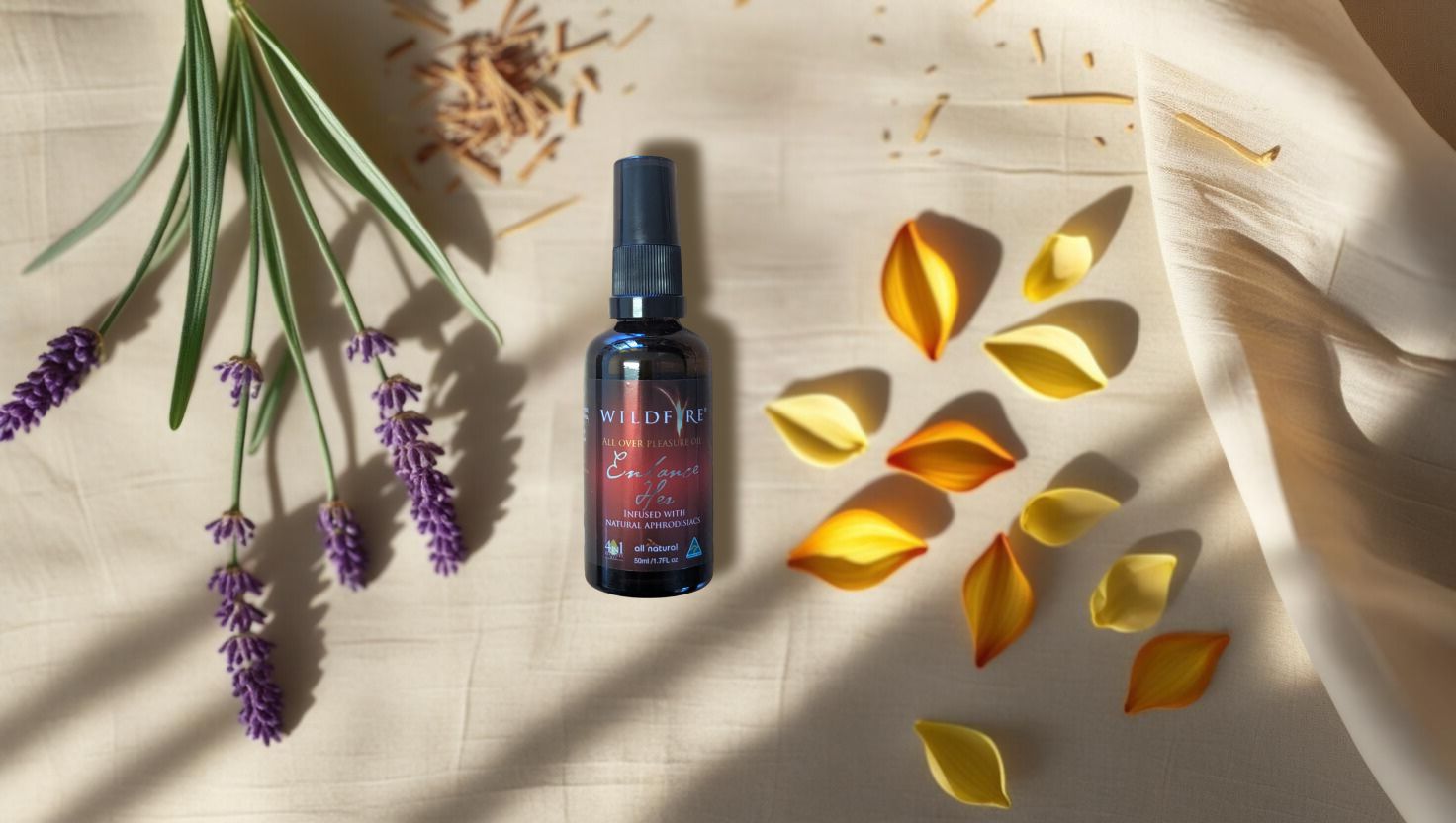
Our Enhance Her pleasure oil features patchouli, ylang ylang, and bergamot. Patchouli has long been used to enhance sensuality and has grounding, skin-nourishing properties. Ylang ylang is known for its ability to reduce tension and heighten sensory awareness, while bergamot adds a bright, uplifting note that balances the blend.
The Original pleasure oil blends lavender, ylang ylang, rose geranium, and sandalwood. Lavender’s calming properties help both partners feel more at ease, while sandalwood adds warmth and depth. This is our gentlest blend, well suited to those with sensitive skin.
For something bolder, our Black pleasure oil combines patchouli, rosewood, and sweet orange. It’s a confident, energising blend designed to build atmosphere and boost sensory connection.
How to Use Massage Oil on Private Parts Safely
- Patch test first: Apply a small amount to your wrist or behind your ear 24 hours before intimate use, especially if you have sensitive skin or known allergies.
- Warm gently: Hold the bottle in your hands for a minute or place it in warm water. Never heat oil directly as this can degrade the ingredients.
- Be latex aware: All oil-based products can weaken latex condoms and other latex barriers, increasing the risk of breakage. If using protection, consider polyurethane alternatives or water-based products instead.
- Use sparingly: A little goes a long way with quality oils. Start with a small amount and let your body heat activate the experience.
- Store correctly: Keep oils below 30 degrees Celsius, away from direct sunlight. Dark glass bottles, like ours, help protect the integrity of the ingredients.
Why Wildfire Oils Are Safe for Intimate Use
Every Wildfire product is free from parabens, mineral oils, and synthetic fragrances. Our Australian-made production process gives us full control from formulation to packaging, so we know exactly what goes into every bottle. We use dark glass to protect against light degradation and test every blend for skin compatibility before it reaches you.
Our oils are also designed as 4-in-1 products: massage oil, skincare treatment, bath oil, and intimate enhancement. Start with a few drops in a warm bath, move into a full body massage, and continue into intimate moments without switching products.
FAQs: Can You Use Massage Oil on Private Parts?
Can you use massage oil on private parts safely?
Yes, as long as it is natural, free from synthetic ingredients, and formulated for intimate use. Wildfire’s pleasure oils are designed exactly for this purpose.
Is any massage oil safe for private parts?
No. Many massage oils contain synthetic fragrances, parabens, or mineral oils that are not appropriate for intimate areas. Only use an oil that is clearly formulated and labelled as safe for intimate use.
Can you use coconut oil on private parts?
Coconut oil is natural but not ideal for everyone. It is comedogenic, can disrupt vaginal pH in some people, and degrades latex condoms. If you want to use it, do a patch test first and avoid it with latex barriers.
Is massage oil the same as lube?
Not always. Some massage oils double as intimate lubricants when formulated for that purpose, as ours do. Standard massage oils are not designed for intimate use and may contain ingredients that cause irritation. Always check the label.
What if I have a sensitivity?
Patch test first. If you experience redness or irritation, reduce the amount used or apply externally only. Every body is different, and finding what works for you is part of safe, confident exploration.
Can I use massage oil on private parts every day?
It depends on your skin’s sensitivity and the oil’s ingredients. Daily use is fine for many people, but always choose a product clearly formulated for intimate use, like Wildfire’s Australian-made blends.
Choose an Oil That Honours Your Body
According to Healthline, jojoba oil is among the most skin-compatible natural oils available, making it ideal for sensitive and intimate areas. It’s one of the hero ingredients across our entire range.
Explore our full body oil collection to find the formula that works for your body.