
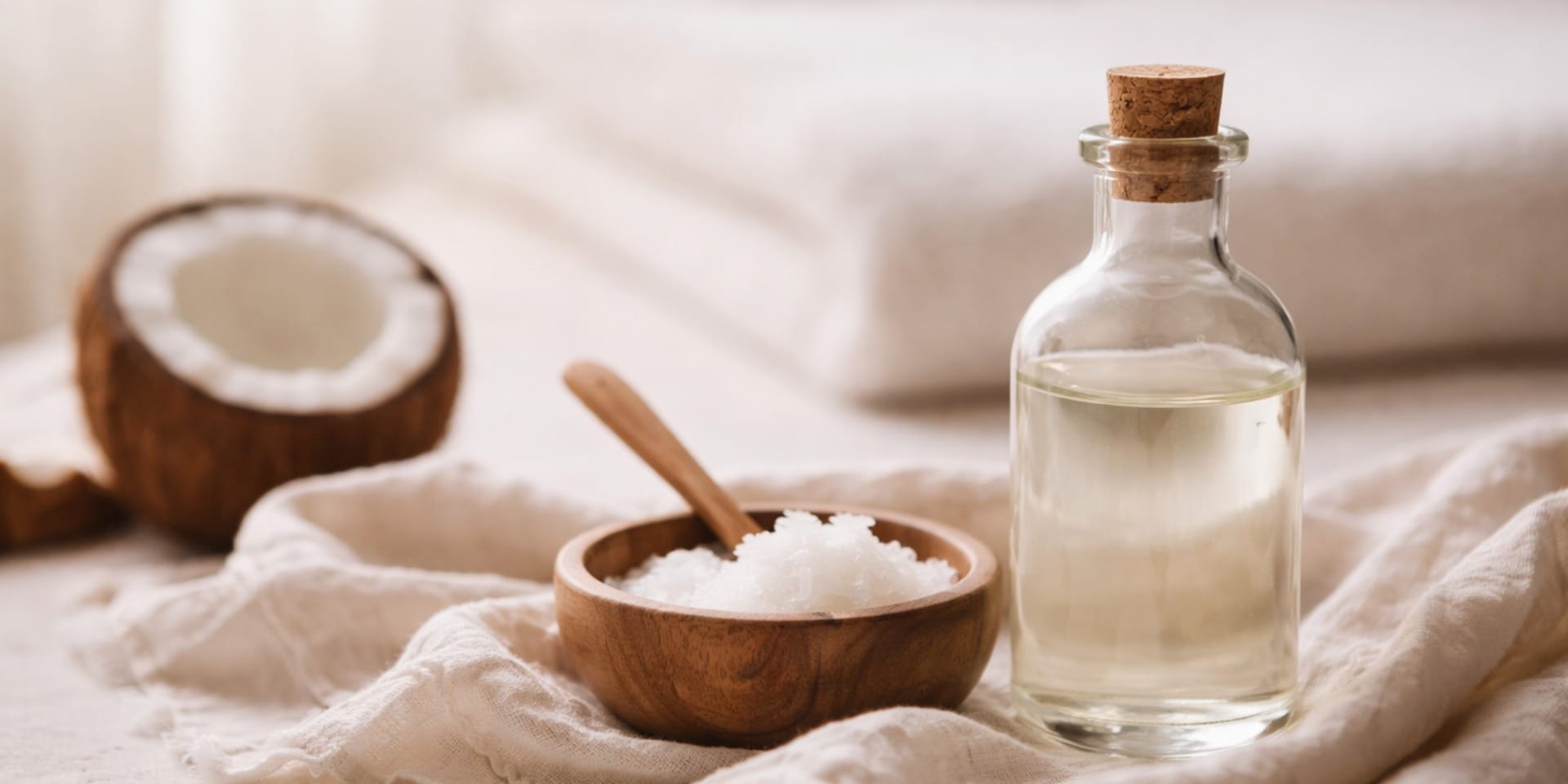
Can You Use Coconut Oil as Massage Oil?
Yes, you can use coconut oil as massage oil. It gives the hands slip, reduces friction and can leave dry skin feeling softer. For a simple shoulder, back or full-body massage, the coconut oil you already have at home may do the job perfectly well.
The more useful question is which coconut oil you have. Virgin coconut oil, refined coconut oil and fractionated coconut oil can feel noticeably different once massage begins.
That matters because the best massage oil is not necessarily the most expensive or specialised one. It is the one that gives you the glide, skin feel, scent and practicality you actually want.
Can you use coconut oil as massage oil?
Yes. Coconut oil is a legitimate massage oil, not simply a substitute you use when nothing else is available.
Virgin coconut oil gives a richer feel and familiar coconut aroma. Fractionated coconut oil stays liquid and tends to feel lighter. A formulated massage oil becomes worth considering when you want a particular blend, scent, skin feel or product designed around more than one kind of use.
Yes, coconut oil actually can be a good massage oil
There is no need to create a problem where there is not one. Coconut oil is an oil, so it naturally helps hands move over the skin without the drag you would get during a dry massage.
It is also familiar, readily available and easy to use. If you already keep coconut oil for body care, using a small amount for massage can make perfect sense.
Virgin coconut oil has also been studied for topical skin moisturising, with research showing improvements in skin hydration in people with dry skin. You can read the published study on virgin coconut oil and skin hydration. That does not mean everyone will love its texture, but it does give coconut oil more credibility as a body oil than the idea that it is simply something borrowed from the kitchen cupboard.
Where coconut oil makes particular sense: simple body massage, dry-feeling skin, shorter massages, people who enjoy its richer texture, or anyone who already has a coconut oil they know their skin likes.
Before you grab the jar, which coconut oil do you have?
This is the part that often gets missed. “Coconut oil” can describe products that behave quite differently during massage.
Virgin or unrefined coconut oil
This is the coconut oil many people picture first. It commonly has a noticeable coconut aroma and can become solid or semi-solid when the room is cool.
Consider it if: you enjoy a richer skin feel, like the natural coconut scent and do not mind warming a little between your hands before you begin.
Refined coconut oil
Refining generally creates a more neutral aroma, although the exact scent and feel vary by product. Like virgin coconut oil, it can still change consistency as temperatures rise and fall.
Consider it if: you want coconut oil without such an obvious coconut fragrance.
Fractionated coconut oil
Fractionated coconut oil has been processed so that it remains liquid at normal room temperatures. It is commonly used as a carrier oil because it is easy to dispense, relatively light and generally has little noticeable aroma.
Consider it if: you want the convenience of a permanently liquid oil or plan to blend your carrier oil with an appropriate scent.
Fractionated coconut oil is recognised as a massage carrier oil by the Australian Traditional-Medicine Society, which notes its liquid consistency and lighter feel.
It worked for me. So why would I use anything else?
You may not need to.
If coconut oil gives you enough glide, you like how your skin feels afterwards and the consistency does not bother you, there is no rule saying you need a product labelled “massage oil”.
This is where the difference between can I use it? and is it the best choice for me? becomes useful.
People generally start looking beyond a single oil when they want something different from the experience: a lighter or more controlled skin feel, a particular aroma, a blend of carrier oils, easier dispensing or one product they can use in several different ways.
You do not need to upgrade just because you massage regularly.
Change oils because you want something different from the experience, not because coconut oil somehow stops being a “real” massage oil.
What does coconut oil actually feel like during massage?
The answer depends on both the coconut oil and how much you use.
Virgin coconut oil tends to create a richer, more noticeable layer on the skin. That can be lovely for slow body massage, particularly if you enjoy an oilier finish. Fractionated coconut oil tends to feel lighter and is easier to spread straight from the bottle.
Temperature also changes the experience of regular coconut oil. A jar that is firm on a cool morning may become completely liquid in warmer weather. That is not a quality problem. It is simply how coconut oil behaves.
The easiest way to judge it is by feel rather than by trying to follow a perfect quantity. Start with less than you think you need. You can always add another few drops as the massage develops.
Will coconut oil make you feel greasy?
It can, particularly if you use too much.
“Greasy” is also subjective. One person may describe a rich layer of oil as luxurious while another wants their skin to feel almost dry once massage is over.
- You enjoy a richer, more moisturised skin feel.
- You are giving a slower body massage.
- Your skin tends to feel dry.
- You do not mind some oil remaining on the skin afterwards.
- You dislike an oily finish.
- You tend to apply more oil as you massage.
- You want something that pours easily in cooler weather.
- You prefer a lighter carrier such as fractionated coconut oil or a blended massage oil.
And yes, think about the sheets before you start
Coconut oil can mark fabric, just as other body and massage oils can. If you are planning a generous full-body massage on the bed, put down a towel or sheet you are comfortable washing afterwards.
If oil does reach clothing or bedding, deal with the mark rather than leaving it until the next wash day. Pre-treat the oily area with an appropriate laundry detergent and check that the stain has lifted before tumble drying.
A simple rule: use enough oil for comfortable glide, not enough to saturate the skin. It usually makes the massage feel better and makes clean-up easier.
How do you actually use coconut oil for massage?
You do not need a complicated technique. The biggest mistake is usually starting with far too much oil.
Choose your oil
Use an oil intended for topical use and check the ingredient label if you are unsure what is in the product.
Start small
Use a small amount first. You can add more as you move to another part of the body.
Warm it between your palms
If your coconut oil is firm, let your body heat soften it before placing your hands on the person you are massaging.
Spread before adding more
Give the oil time to distribute across the skin. Add only enough to keep your hands moving comfortably.
Let comfort guide you
If the skin feels too slick, stop adding oil. If your hands begin to drag, add a little more.
If you are new to massage itself, our massage oil guide explores oil choice and how it fits into a more complete massage experience.
Can you mix coconut oil with essential oils?
Yes. Coconut oil, particularly fractionated coconut oil, is commonly used as a carrier for essential oils.
But essential oils are highly concentrated, so “a few extra drops” should not be guessed by eye. Different essential oils have different dermal limits and suitability considerations. Follow the dilution and topical-use guidance supplied with the particular essential oil you are using.
If you simply want a pleasant massage scent without becoming your own formulator, a pre-blended massage oil can be the easier option.
What if the massage might become more intimate?
For ordinary external body massage, coconut oil is mostly a question of skin feel and personal preference. If the oil may also come into contact with condoms or contraceptive barriers, there is an additional compatibility question.
Oil-based products can damage latex and polyisoprene condoms. Compatibility with other barrier materials varies, so check the instructions provided by the barrier manufacturer before using coconut oil or another oil-based product. Planned Parenthood also advises avoiding oil-based products with latex condoms; you can read its condom-use guidance here.
That is also where this article should stop trying to answer a different question.
If you are specifically considering coconut oil for sensual or sexual massage, read our guide to using coconut oil for erotic massage. If your real question is whether coconut oil can replace personal lubricant, our guide to lube alternatives covers that separately.
So should you use coconut oil or choose a massage oil?
There is no automatic winner. Start with what you want the massage to feel like.
| If you want… | A good place to start |
|---|---|
| A simple oil you may already have at home | Virgin or refined coconut oil |
| A light coconut-derived oil that remains liquid | Fractionated coconut oil |
| A natural coconut aroma and richer skin feel | Virgin coconut oil |
| A more neutral scent | Refined or fractionated coconut oil |
| A blend of carrier oils rather than one single oil | A formulated massage oil |
| One oil for massage, bath, body care and intimate moments | Wildfire Pleasure Oil |
If the coconut oil you already use does everything you want, keep using it.
If you are looking for something different, Wildfire Pleasure Oils take another approach. Rather than relying on one carrier oil, they are blended for their overall feel and versatility across massage, bath, body care and intimate moments.
That does not make coconut oil the wrong choice. It simply gives you another option when your priorities move beyond having a basic oil for glide.
Want to compare the alternatives?
Explore Wildfire’s massage oils and choose according to the experience, scent and skin feel you prefer.
Still wondering about coconut oil for massage?
Can I use coconut oil as massage oil?
Yes. Coconut oil can provide the slip needed for body massage and may leave dry skin feeling softer. The type of coconut oil matters: regular virgin or refined coconut oil can change consistency with temperature, while fractionated coconut oil remains liquid and generally feels lighter.
Which coconut oil is best for massage?
There is no single best type. Virgin coconut oil suits people who enjoy a richer feel and coconut aroma. Refined coconut oil generally has a more neutral scent. Fractionated coconut oil remains liquid and is convenient when you want a lighter, easy-to-dispense carrier oil.
How do you use coconut oil for body massage?
Start with a small amount and warm it between your palms before spreading it over the skin. Add more gradually only when your hands begin to drag. Using less at the beginning usually gives you better control and makes clean-up easier.
Is fractionated coconut oil good for massage?
Yes. Fractionated coconut oil is commonly used as a massage carrier oil. Unlike regular coconut oil, it stays liquid at normal room temperatures and tends to have a lighter feel with little noticeable coconut aroma.
Does coconut oil stain sheets?
It can. Coconut oil and other massage oils may leave oily marks on fabric. Put down a washable towel or sheet before massage, avoid using excessive amounts of oil and pre-treat any oily areas before washing.
Can I mix essential oils with coconut oil for massage?
Yes, coconut oil can be used as a carrier for appropriately diluted essential oils. Essential oils are concentrated, however, and different oils have different dermal-use limits. Follow the dilution and topical-use instructions for the specific essential oil rather than estimating the amount.
Can couples use coconut oil for massage?
Yes. Coconut oil can be a simple choice for couples massage if both people enjoy its texture and scent. If the massage may involve condoms or other contraceptive barriers, check compatibility first because oils can damage latex and polyisoprene condoms.