
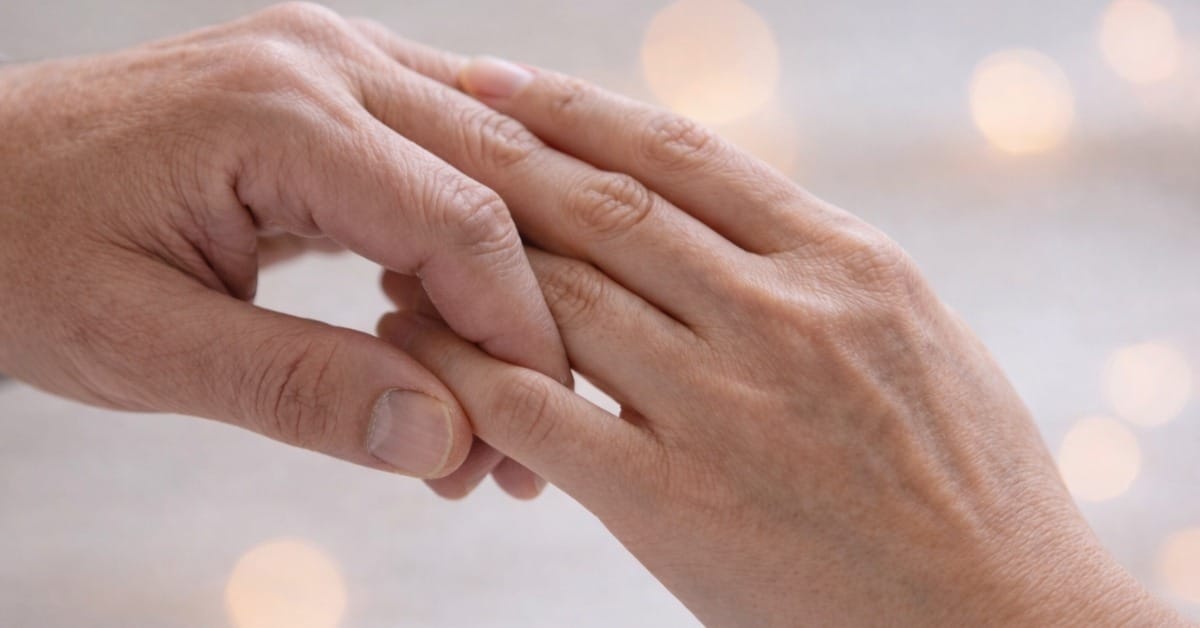
Why Physical Touch Matters in Long-Term Relationships
There’s a moment many couples don’t notice when it happens.
Touch becomes practical. A hand on a shoulder in passing. A brief squeeze before sleep. Affection is still there, but it’s folded into routine — efficient, familiar, almost invisible.
It isn’t a loss of desire. It isn’t dissatisfaction or emotional distance. It’s simply life doing what life does: filling quiet spaces with urgency, distraction, and responsibility. Touch doesn’t disappear dramatically. It fades through omission.
We talk often about communication in relationships — how to speak more openly, listen more carefully, resolve conflict more effectively. Yet one of the most powerful forms of connection rarely receives the same attention. Physical touch, when it’s unhurried and intentional, regulates emotion, signals safety, and reinforces attachment in ways language never fully can.
Why Touch Is Foundational to Human Connection
Long before language, humans communicated through touch. It was how safety was recognised, how comfort was offered, how belonging was felt.
That wiring hasn’t changed.
Psychological research consistently shows that affectionate physical touch helps regulate the nervous system. It lowers stress responses, supports emotional balance, and strengthens feelings of security between partners. The body responds before the mind has time to analyse — a reminder that connection isn’t only cognitive, it’s physiological.
When physical touch is present, relationships feel steadier. When it’s absent, tension accumulates quietly. Not always as conflict — more often as emotional distance, irritability, or a sense that intimacy requires effort where it once felt natural.
What Happens When Touch Becomes Incidental
Most couples don’t stop touching altogether. They stop engaging in intentional physical touch.
Contact happens around life — between tasks, during transitions, at the edges of exhaustion. Over time, this kind of incidental touch carries less emotional weight. It doesn’t provide the same reassurance or grounding, even though affection still exists.
Without intentional touch, couples often experience higher baseline stress, reduced emotional resilience, less comfort initiating closeness, and a gradual thinning of intimacy.
This isn’t a failure of love. It’s the absence of structure.
Why Intentional Touch Matters
Spontaneity is often held up as the gold standard of intimacy, but in long-term relationships, spontaneity alone rarely sustains connection.
Intentional physical touch works because it removes ambiguity. It creates space where care is given without expectation, performance, or outcome. When touch has a beginning and an end, it no longer competes with fatigue or uncertainty. It simply exists as time set aside for presence.
This is where many couples begin to reconnect — not through grand gestures, but through small, deliberate practices that make closeness feel safe again.
Where Massage Fits In
One of the most accessible ways couples create intentional physical touch is through massage. Exploring different massage oils can make this kind of touch feel smoother, slower, and easier to stay present with.
Massage offers something rare in modern relationships: uninterrupted presence. Phones are put away. Roles are paused. One partner gives, the other receives — and then they switch.
For those who prefer to keep things simple, a nourishing massage oil allows hands to move without distraction, keeping attention where it belongs.
How Massage Supports Emotional and Physical Connection
Regular massage between partners has effects that extend well beyond relaxation.
Emotionally, it encourages bonding through the release of oxytocin — the hormone associated with trust and attachment. Stress hormones decrease, making emotional closeness easier and more accessible.
Physically, massage helps couples maintain comfort with touch during busy periods, life transitions, or times when intimacy feels harder to initiate.
The Mental Health Benefits of Shared Touch
Massage activates the parasympathetic nervous system — the body’s “rest and restore” mode. It can reduce anxiety, improve sleep quality, and promote a sense of calm that lingers beyond the session itself.
For many couples, massage becomes a quiet form of mutual care. A way of supporting one another through stress without needing to fix or explain anything.
Making It a Sustainable Practice
Like any meaningful ritual, massage works best when it’s simple and consistent.
Start small. Ten or fifteen minutes is enough. One person gives, the other receives.
Over time, sessions can lengthen naturally. The space can become more intentional — supported by scent, lighting, or a simple, dedicated space. Some couples like to set the mood before they begin.
For those who prefer a ready-made starting point, the All My Love Gift Pack brings everything together without overthinking.
Others treat massage as one part of a broader ritual — adapting it to whatever feels right for them.
Touch as a Relationship Language
Massage isn’t the goal. Connection is.
In relationships where life moves quickly and demands are constant, physical touch slows things down. It creates moments where nothing else is required.
And often, that’s what keeps intimacy alive.