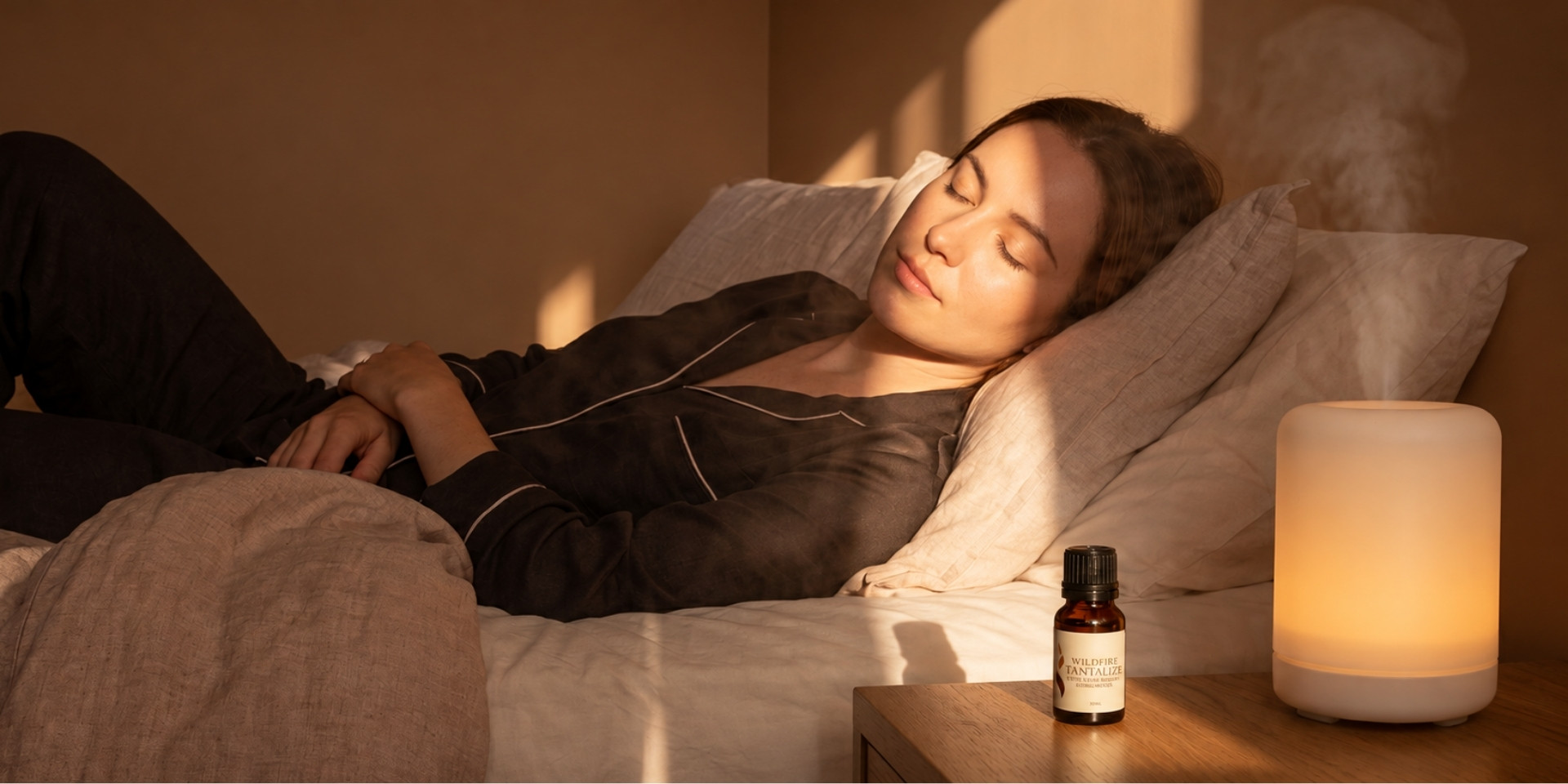
What Are the Best Essential Oils for Calm and Relaxation?
Lavender is one of the most familiar essential oils used when people want a softer, more relaxing atmosphere, but it is not the only option. Sandalwood, rose geranium, ylang ylang, bergamot and other aromatic oils can all bring something different to a wind-down ritual.
The best essential oils for calm and relaxation are not necessarily the ones with the biggest list of wellness claims. Often, the better question is: which aroma do you actually enjoy, and how do you want to experience it?
Soft lavender may feel right for a quiet bedroom. Sandalwood can add warm woody depth. Ylang ylang brings richer floral warmth, while bergamot can keep a blend feeling lighter and brighter.
How you use those oils matters too. A concentrated essential oil in a diffuser performs a very different job from a finished massage oil formulated for the skin.
This guide compares some of the essential oils commonly chosen for relaxation, explains how aromatic blends work and looks at the different ways to enjoy scent safely — from ultrasonic diffusers and ceramic oil burners to room mists, massage and bath rituals.
Which essential oils are commonly chosen for calm and relaxation?
Lavender is one of the most widely recognised relaxing aromas. Sandalwood adds smooth woody warmth, rose geranium offers softer floral freshness and ylang ylang brings richer floral depth. Bergamot can add a brighter citrus character, while chamomile and frankincense are also common choices in relaxation-focused aromatherapy.
There is no single essential oil that everyone will find most relaxing. Scent preference, fragrance strength, the surrounding environment and the way the oil is used can all change the experience.
Best Essential Oils for Calm and Relaxation
Essential oils are concentrated aromatic materials extracted from plants. When people describe certain oils as calming essential oils, they are often describing the character of the fragrance and the type of environment they like to create with it.
Some aromas are soft and floral. Others are warm and woody. Citrus oils can feel brighter, while earthy base notes can make a blend feel deeper and slower.
| Essential Oil | Aromatic Character | Often Chosen For |
|---|---|---|
| Lavender | Soft, floral and gently herbaceous | Evening routines, bedrooms and wind-down settings |
| Sandalwood | Warm, smooth and woody | Adding depth and warmth to quieter aromatic blends |
| Rose Geranium | Rosy, floral and slightly green | Softening floral blends without becoming overly sweet |
| Ylang Ylang | Rich, sweet and floral | Warm, enveloping and more sensual aromatic settings |
| Bergamot | Fresh citrus with softer floral qualities | Adding brightness to heavier floral and woody blends |
| Chamomile | Soft, herbaceous and gently sweet | Traditional evening and relaxation-focused aromatherapy |
| Frankincense | Resinous, warm and slightly earthy | Meditative or quieter aromatic settings |
There is no universal “most relaxing” scent. An aroma that one person finds comforting may be too floral, woody or intense for someone else. Personal preference matters.
Lavender Essential Oil for Relaxation
Lavender is probably the essential oil most closely associated with relaxing aromatherapy.
Its aroma is floral but also gently herbaceous, which can make it feel softer and cleaner than richer floral fragrances. It is commonly used in bedrooms, evening routines, diffusers and aromatic blends intended for quieter surroundings.
Lavender also blends easily with other fragrance families.
- Pair it with sandalwood for warmer woody depth.
- Add rose geranium for softer floral freshness.
- Use ylang ylang for a richer floral character.
- Combine it with brighter citrus notes when you want something less sleepy or heavy.
If lavender is the aromatic direction you enjoy most, our guide to creating a calming lavender atmosphere with diffuser oils explores that scent profile in more detail.
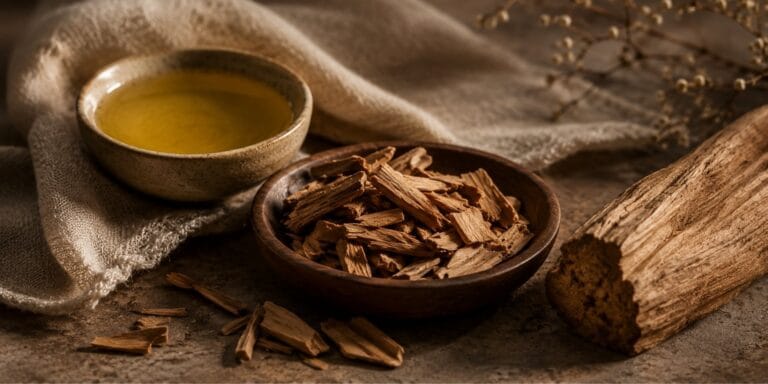
Sandalwood Essential Oil for Warm, Woody Calm
Sandalwood creates a very different impression from lavender.
Rather than being obviously floral, sandalwood is smooth, warm and woody. It works particularly well as a base note beneath softer florals because its slower aromatic character gives a blend depth and balance.
That makes sandalwood useful when you want the atmosphere to feel warm and settled rather than simply floral.
It appears alongside lavender, rose geranium and ylang ylang in Wildfire’s Tease aromatic family.
For a deeper look at this ingredient, read our guide to sandalwood essential oil and its use in massage-oriented blends.
Rose Geranium Essential Oil
Rose geranium brings a rosy floral aroma with a fresher, slightly green quality.
It can help bridge the space between a clean floral such as lavender and a richer flower such as ylang ylang.
For people who enjoy floral fragrances but find traditional rose scents too heavy or sweet, rose geranium can offer a softer direction.
Ylang Ylang Essential Oil
Ylang ylang has a rich, expressive floral fragrance that feels noticeably warmer than lavender.
Because the aroma can be quite full-bodied, it often works well as part of a blend rather than needing to dominate the room on its own.
Paired with lavender and rose geranium, it adds richness. Combined with sandalwood, it can move a fragrance towards something warmer and more intimate.
Bergamot Essential Oil
Bergamot is useful when you want a relaxation-focused fragrance that still feels fresh.
Its citrus character is softer and more aromatic than a sharp lemon scent, which allows it to sit comfortably alongside florals, woods and earthy notes.
Rather than making every relaxation blend smell heavy or sleepy, bergamot can provide lift and contrast.
What About Chamomile, Frankincense and Other Relaxing Essential Oils?
Lavender is far from the only oil used in relaxation-focused aromatherapy.
Chamomile has a soft, herbaceous character commonly associated with evening rituals, while frankincense has a warmer resinous fragrance often used in meditative settings.
Other commonly discussed oils include sweet orange, cedarwood, clary sage, neroli and patchouli.
That does not mean you need ten different bottles to create a relaxing atmosphere. A small number of complementary oils — or a well-balanced finished blend — is often much simpler.
What Makes a Good Essential Oil Blend for Relaxation?
A relaxing essential oil blend is not simply a collection of every oil described as calming.
A good blend usually needs balance.
For example:
- A softer lead note such as lavender can make the first impression gentle and familiar.
- Supporting florals can give the fragrance greater dimension.
- Woody base notes such as sandalwood can add warmth and depth.
- Brighter citrus notes can prevent a blend from becoming too heavy.
Fragrance strength matters too. An aroma that is pleasant at a light concentration can become distracting when the room is oversaturated.
A relaxing blend should make the room more pleasant, not demand all of your attention. Start gently and adjust the fragrance strength to suit the space.
A Wildfire Example: Tease
Wildfire Tease is our relaxing essential oil blend, combining:
- lavender
- rose geranium
- ylang ylang
- sandalwood
The result is a soft floral and warm woody fragrance. Lavender provides the familiar softer opening, rose geranium adds floral freshness, ylang ylang contributes greater richness and sandalwood settles underneath with woody warmth.
Tease is a concentrated aromatic blend. It is made for suitable diffusers and oil burners. It should not be applied directly to the skin or used as though it were a massage oil.
Is a Single Essential Oil or a Blend Better for Relaxation?
Neither is automatically better.
A single essential oil makes sense when you know exactly which aroma you like. Pure lavender, for example, gives you a straightforward and recognisable fragrance.
A blend can provide more depth because different notes develop at different rates and contribute different aromatic qualities.
| Single Essential Oil | Essential Oil Blend |
|---|---|
| One clear aromatic profile | Several complementary aromatic notes |
| Easy to understand and adjust | More layered fragrance |
| Useful if you already know your favourite oil | Useful if you want a ready-made aromatic direction |
| Can be blended with other oils later | No DIY blending required |
How to Use Essential Oils for Calm and Relaxation
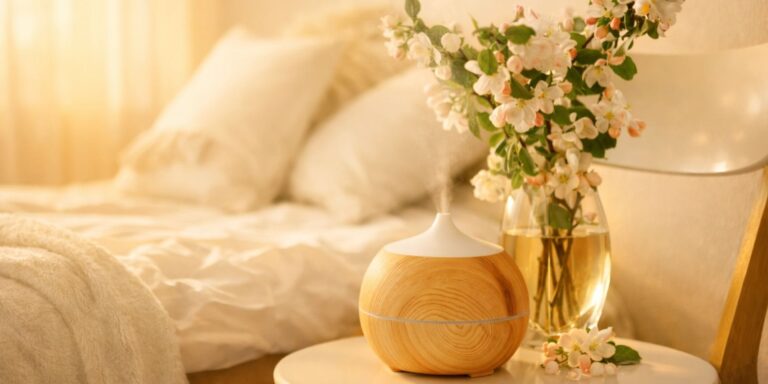
Diffusion is one of the simplest ways to enjoy essential oils because the aim is to fragrance the surrounding space rather than apply concentrated oil to your body.
There are several ways to do it.
| Method | How It Works | Best Suited To |
|---|---|---|
| Ultrasonic diffuser | Uses water and ultrasonic vibration to disperse a fine aromatic mist | Bedrooms, living rooms and broader room fragrance |
| Ceramic oil burner | Uses gentle heat beneath a water bowl containing essential oil | Slower evening rituals and smaller spaces |
| Passive diffuser | Allows oil to evaporate naturally from porous material | Desks, bedside areas and subtle fragrance |
| Nebulising diffuser | Disperses concentrated essential oil without a water reservoir | Stronger aromatic output when used according to device directions |
| Room or linen mist | Sprays a ready-to-use fragrance into the room or onto suitable fabrics | Immediate fragrance without operating a diffuser |
Using an Ultrasonic Diffuser
An ultrasonic diffuser contains a water reservoir and uses vibration to disperse a fine mist into the surrounding room.
Because diffuser capacities and manufacturer instructions vary, do not assume every device should receive the same amount of essential oil.
For Wildfire Tease, a practical starting point is approximately 3–6 drops per 100 ml of water, while still following the directions supplied with your diffuser.
- Use fewer drops in smaller rooms.
- Increase gradually if the aroma is too light.
- Avoid making the room unnecessarily overpowering.
- Clean the diffuser according to its manufacturer’s instructions.
For more detail, see our complete guide to using an essential oil diffuser.
Essential-oil diffuser and humidifier are not automatically the same thing. Do not add essential oils to a humidifier unless the manufacturer specifically states that the model is designed for them.
Using a Ceramic Oil Burner or Warming Chalice
If you prefer a more traditional fragrance ritual, a ceramic oil burner uses the warmth of a tealight beneath an upper bowl to release aroma gradually.
The Wildfire Warming Oil Chalice is a handcrafted ceramic burner designed to pair with essential oil blends such as Tease, Tempt and Tantalize.
How to use Tease in the Warming Chalice
- Fill the upper bowl with water.
- Add a few drops of Tease.
- Place a suitable tealight underneath.
- Keep water in the bowl while the burner is operating.
- Place the Chalice on a stable, heat-resistant surface.
- Never leave the burning candle unattended.
This creates a slower aromatic experience than an ultrasonic diffuser and can work particularly well when the ritual itself — softer lighting, warmth and gradual fragrance — is part of what you enjoy.
Passive and Nebulising Essential Oil Diffusers
Passive diffusion
Passive diffusers use porous materials such as ceramic or stone to hold a small amount of essential oil and allow the aroma to evaporate naturally.
The effect is usually subtler than an ultrasonic diffuser, making passive diffusion useful for a bedside area, desk or smaller personal space.
Nebulising diffusers
Nebulising diffusers work differently because they can disperse concentrated essential oil without a water reservoir.
They generally produce a stronger aromatic output, so follow the device instructions closely and use them conservatively if your goal is a soft background fragrance.
More fragrance is not necessarily more relaxing. If the scent becomes distracting, causes discomfort or gives you a headache, reduce the concentration or ventilate the room.
What If You Want Calm Fragrance Without a Diffuser?
You do not need an essential oil diffuser every time you want to add fragrance to a room.
A ready-to-use room and linen mist provides an immediate option without filling a water reservoir, lighting a candle or handling concentrated essential oil.
Wildfire Bliss Mood Mist is the room-and-linen option in the softer Tease scent family. Its lavender-led fragrance is paired with floral notes and warm sandalwood for bedrooms, bedding and quieter spaces.
Spray lightly into the air or over suitable fabrics according to the product directions. Avoid saturating fabrics and test delicate or light-coloured materials in an inconspicuous area first.
Wildfire Mood Mists are intended for rooms, linen and suitable fabrics rather than direct application to the skin.
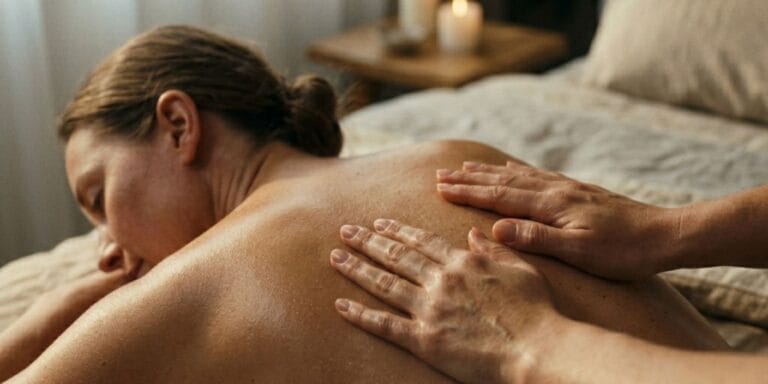
Relaxing Oils for Massage: Essential Oil or Finished Massage Oil?
This is one of the most important distinctions to understand.
A bottle of concentrated essential oil designed for diffusion is not the same thing as a finished massage oil.
If you want a relaxing aroma in the room, an essential oil blend such as Tease can be used in an appropriate diffuser or oil burner.
If you want fragrance on the body as part of massage, a properly formulated topical oil makes more sense.
This is one of the advantages of a Wildfire Pleasure Oil. The essential-oil aroma is already incorporated into a finished body-oil formula, so you are not trying to calculate your own topical essential-oil dilution before massage.
Wildfire Original Pleasure Oil shares the Tease aromatic family of lavender, rose geranium, ylang ylang and sandalwood, but it is formulated for an entirely different purpose.
Its base contains plant oils including olive oil and jojoba oil, together with vitamin E. These provide the glide, slip and skin-softening feel expected from a body and massage oil while the essential-oil blend adds aroma.
Original is designed as a 4-in-1 Pleasure Oil for:
- relaxing massage
- body care
- bath rituals
- external intimate touch
| Tease Essential Oil | Original Pleasure Oil |
|---|---|
| Concentrated essential oil blend | Finished topical body and massage oil |
| Designed for suitable diffusers and oil burners | Designed for massage, body care, bath rituals and external intimate touch |
| Not for direct application to skin | Formulated to be applied to the skin as directed |
| Creates aroma in the surrounding space | Combines aroma with massage glide and skin feel |
That distinction is particularly useful if you are searching for relaxing oils for massage. The aroma may be important, but so are topical safety, glide and the quality of the carrier-oil formula.
Can You Use Essential Oils in a Relaxing Bath?
Be careful with advice that simply tells you to drop neat essential oil into bath water.
Essential oils do not dissolve evenly in water. Concentrated droplets may remain on the surface rather than being uniformly dispersed.
If you want aroma as part of a bath ritual, use a product formulated for that purpose or follow appropriate dispersing guidance for the specific essential oil.
A finished product such as Wildfire Original Pleasure Oil has already incorporated its essential oils into a body-oil formulation and is designed to be used as a bath oil as directed.
Bath safety: Any oil-based bath product can make the bath surface slippery. Use a small amount and take extra care when entering or leaving the bath.
Which Relaxation Format Should You Choose?
The easiest way to choose is to decide where you want the fragrance.
| If You Want… | Choose… | Wildfire Option |
|---|---|---|
| A relaxing aroma throughout the room | Concentrated essential oil blend + diffuser | Tease Essential Oil |
| A slower, candle-lit aromatic ritual | Essential oil + ceramic burner | Tease + Warming Chalice |
| An immediate room or linen fragrance | Ready-to-use room mist | Bliss Mood Mist |
| Relaxing aroma together with massage | Finished topical massage oil | Original Pleasure Oil |
| Aromatic body care or bath ritual | Finished body and bath oil | Original Pleasure Oil |
One aromatic family, three different jobs. Tease is the concentrated essential oil blend for diffusion, Bliss is the ready-to-use room and linen mist, and Original brings a related aroma into a finished body and massage oil.
Essential Oil Safety: What to Know Before You Start
Essential oils are highly concentrated, so the safest way to use them depends on the product and the intended application.
- Follow the label. Use each essential-oil product only for the applications for which it is intended.
- Do not apply concentrated diffuser blends directly to skin.
- Do not ingest essential oils.
- Avoid contact with eyes and irritated or broken skin.
- Use appropriate dilution for topical essential-oil applications. A finished topical product removes much of the DIY guesswork.
- Keep essential oils away from children and pets.
- Follow device instructions. Not every diffuser, humidifier or burner is designed to work in the same way.
- Never leave a candle-powered oil burner unattended.
- Stop using an aroma if it causes irritation, headache or discomfort.
Essential oils can be part of an enjoyable relaxation ritual, but they are not a substitute for treatment for anxiety, persistent stress or another health condition. If anxiety or stress is significantly affecting your daily life, speak with an appropriate healthcare professional.
Creating a Calm Wildfire Scent Ritual
You do not need to use every product at once.
The advantage of having the same aromatic direction available in different formats is that you can choose the format that suits the moment.
- Diffuse Tease when you want the fragrance moving through the room.
- Use the Warming Oil Chalice when you prefer a slower ceramic-burner ritual.
- Reach for Bliss Mood Mist when you want to fragrance the room or suitable linen quickly.
- Choose Original Pleasure Oil when you want the aroma to become part of massage, body care or a bath ritual.
The important difference is that each product stays in the role it was formulated for.
Find the aromatic ritual that suits your evening.
Explore Wildfire’s concentrated essential oil blends for the room or finished Pleasure Oils when you want aroma, skin feel and massage glide together.
Continue Exploring Essential Oils
Best Diffuser Oils for a Calming Lavender Atmosphere
Go deeper into lavender-led diffuser oils and how to create a softer atmosphere at home.
How to Use an Essential Oil Diffuser
Learn how diffuser types work and how to control fragrance strength.
Sandalwood Essential Oil for Massage
Explore the warm woody base note used in many aromatic massage and relaxation blends.
Essential Oils for Sensual Massage
Understand how aromatic essential oils differ from finished oils formulated for touch.
Aromatherapy Oils Guide
Learn more about essential oils, aromatic use and choosing the right format.
Frequently Asked Questions About Essential Oils for Calm and Relaxation
What is the best essential oil for calm and relaxation?
Lavender is one of the most familiar essential oils used in relaxation-focused aromatherapy, but there is no single oil that everyone will find most relaxing. Sandalwood, rose geranium, ylang ylang, bergamot, chamomile and frankincense all offer different aromatic profiles that may suit different preferences.
Is lavender the most relaxing essential oil?
Lavender is strongly associated with evening and wind-down settings, but scent preference is personal. Someone who dislikes lavender may find a warmer woody aroma such as sandalwood more enjoyable. The best choice is an aroma that feels pleasant at a comfortable strength in your space.
What is the best essential oil blend for relaxation?
There is no single blend that everyone will find most relaxing. A balanced blend often combines softer floral notes with warmer base notes. Wildfire Tease combines lavender, rose geranium, ylang ylang and sandalwood for a soft floral and woody fragrance designed for suitable diffusers and oil burners.
What is the difference between an oil burner and an ultrasonic diffuser?
An ultrasonic diffuser uses water and ultrasonic vibration to disperse a fine aromatic mist. A ceramic oil burner uses heat from a tealight beneath a bowl containing water and essential oil. Both fragrance the surrounding space, but they create a different type of ritual and should be used according to their individual instructions.
Can I use essential oils directly for massage?
Concentrated essential oils generally should not be applied directly to skin. For massage, use an appropriately diluted topical formulation or choose a finished massage oil. Wildfire Original Pleasure Oil already combines its essential-oil aroma with plant-based oils formulated to provide massage glide and skin feel.
Can I put essential oils directly into bath water?
Neat essential oils do not dissolve evenly in water, so simply dropping concentrated essential oil into a bath can leave concentrated oil on the surface. Use a product formulated for bath use or follow appropriate dispersing guidance. Take care with any oil-based bath product because it can make surfaces slippery.
Can essential oils treat anxiety?
Essential oils can be enjoyed as part of an aromatic relaxation ritual, but they should not be treated as a substitute for appropriate care for anxiety or another health condition. If anxiety is persistent or significantly affecting everyday life, speak with an appropriate healthcare professional.
Do I need a diffuser to enjoy a relaxing aroma at home?
No. Essential oils can also be used in suitable ceramic oil burners or passive diffusers. If you do not want to handle concentrated essential oils, a ready-to-use room and linen mist is another way to add fragrance to a space.