Most of us have more bottles on the bathroom shelf than we intended to accumulate. A massage oil here, a body moisturiser there, a lubricant, a bath oil still in its box. Each one was chosen with care and then quietly forgotten by the next. The reason that collection keeps growing is that most products are made for one purpose only - and the body rarely works that way.
Pleasure oils are formulated differently. They are designed to move across the full range of touch: massage, body care, bath ritual, and intimate use. Understanding how to use pleasure oil - and when - is the key to getting everything they offer from a single bottle.
What Is a Pleasure Oil Used For
A pleasure oil is a multi-use body oil formulated with skin compatibility at its centre. Unlike conventional body oils or massage oils that are developed for one specific application, a pleasure oil is built to work well across all kinds of touch - including intimate touch.
This matters in formulation terms. Many body products contain synthetic fragrances, mineral oils, or preservative systems that are fine for general external use but poorly suited to more sensitive skin. A pleasure oil is developed with those more demanding conditions in mind from the beginning, which means it earns its place across every use case rather than being stretched to cover them.
The result is an oil that nourishes skin during daily care, enhances massage with the right slip and warmth, and moves naturally into intimate moments without requiring a different product. The body does not change categories as an evening shifts. A well-formulated pleasure oil does not ask it to.
How to Use Pleasure Oil for Massage
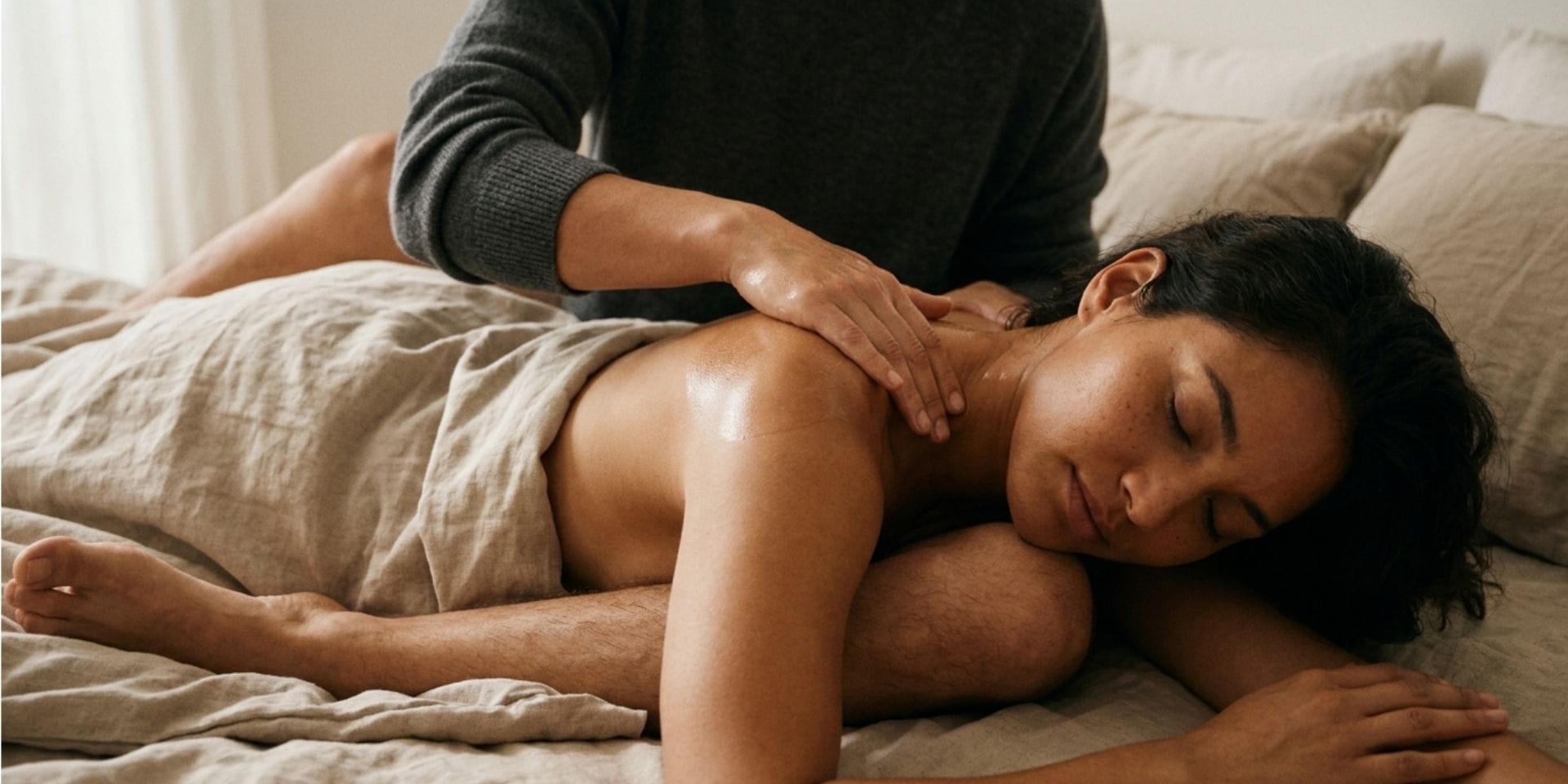
Pleasure oil works for massage in the most direct sense: when learning how to use pleasure oil for massage, the goal is simple glide without dragging, warmth from friction, and the freedom for hands to move slowly and with full attention. A small amount is usually enough. Warm it briefly between palms before applying - this activates the botanical ingredients and makes the texture feel more generous across skin.
For a full-body massage, apply to one area at a time rather than spreading it all at once. Starting with the back and shoulders, where tension tends to sit, allows the oil to begin warming the body before moving to other areas. Work slowly. The oil is designed to stay workable for several minutes without needing to be reapplied constantly.
For intimate massage specifically, the oil can transition naturally from broad strokes across the back or legs into closer, more intentional touch. Because the formulation is designed for skin-to-skin contact including intimate areas, there is no point at which you need to switch products or interrupt the moment.
After massage, the oil absorbs without leaving a heavy residue. Skin feels nourished rather than coated - which matters both for comfort and for how the rest of an evening unfolds.
Using Pleasure Oil for Skin and Bath Rituals
Applied after a shower to warm, slightly damp skin, a pleasure oil becomes something quieter and more daily. A small amount warmed between palms and smoothed across the body takes only a minute and leaves skin visibly nourished. This is the use that tends to build habit - the one that makes reaching for the bottle feel natural rather than reserved for special occasions.

Skin absorbs the oil more readily when it is still warm from the shower, which means you need less and the effect is more even. Focus on areas that tend toward dryness - shins, elbows, the décolletage - and let the rest absorb naturally. The oil should not transfer noticeably to fabric once it has been given a minute to settle.
For a bath ritual, a few drops added to warm water change the quality of the water itself. The surface takes on a softer feel, the steam carries the botanical notes of the formulation, and skin emerges already cared for rather than stripped. This is the slowest and most restorative use, and often the one that most naturally sets the tone for whatever follows in an evening.
An evening built around one bottle might begin in the bath, continue with oil applied to warm skin after drying, move into massage, and transition into intimacy - all using the same product without interruption. That coherence is not incidental. It is what the formulation was designed to make possible.
Pleasure Oil vs Massage Oil: When Each Is Used
The difference between a pleasure oil and a standard massage oil comes down to formulation depth rather than feel. Both provide glide and are designed for skin contact. But a massage oil is typically developed with only that use in mind, which means the ingredient choices reflect external use on less sensitive areas of the body.
A pleasure oil is held to a higher standard: it has to work well for massage and for intimate use, which means every ingredient must be suitable for more sensitive skin, in closer contact, over more time. This rules out synthetic fragrance, mineral oils, parabens, and certain preservative systems commonly found in conventional massage products.
In practical terms, you can use a pleasure oil wherever you would use a massage oil - and also in situations where a massage oil would not be appropriate. The reverse is not always true. A massage oil is not automatically suitable for intimate use, even if it feels similar during a back massage.
There are also texture and absorption differences worth understanding before choosing. For a deeper explanation of how these two formulations differ, see our guide on the difference between pleasure oil and massage oil.
Choosing the Right Pleasure Oil
The most important consideration when choosing a pleasure oil is the ingredient list. Look for plant-based carrier oils chosen for skin compatibility - jojoba, sweet almond, and similar options that absorb well without blocking pores or causing irritation. The absence of synthetic fragrance, mineral oil, parabens, and alcohol is not optional for intimate use; it is the baseline.
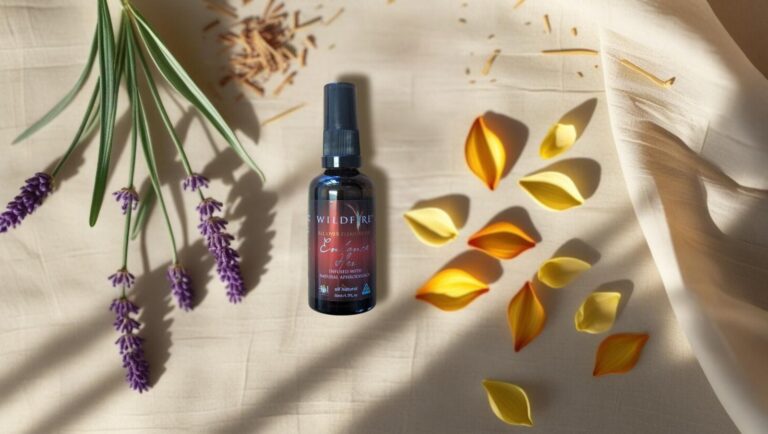
If you would like to explore different botanical blends designed for these uses, Wildfire offers several pleasure oil formulations built for massage, bath, body care, and intimate use.
Scent is the next consideration. A pleasure oil's scent should come from the botanical ingredients themselves rather than from fragrance added separately. This means the scent behaves differently from a conventional perfumed product: it sits closer to the skin, changes subtly with body heat, and does not compete with the rest of the atmosphere in the way that heavy artificial fragrance can.
Wildfire offers several formulations, each built around a different botanical profile. Choosing between them comes down to the kind of atmosphere you want to create - warmer and earthier, lighter and fresher, or something in between. All are formulated without synthetic additives, petrochemicals, or parabens, and all are designed to move across massage, bath, body care, and intimate use without compromise.
If you have a known sensitivity to a specific plant-based ingredient, check the full ingredient list before purchasing. For most people with sensitive skin, the absence of the common irritants listed above means the risk of reaction is significantly lower than with conventional body products.
One note on compatibility: oil-based products are not compatible with latex. If latex accessories are part of your experience, a water-based product is the appropriate choice. Wildfire's pleasure oils are designed for skin-to-skin use and perform best in that context.
For many people, understanding how to use pleasure oil begins with choosing a formulation that suits both massage and intimate touch. You can explore Wildfire's range of botanical pleasure oils to find the blend that best matches your preferred atmosphere and ritual.