Best Bedroom Scents: Relaxing, Romantic and Sensual Ideas
The best bedroom scents are fragrances that suit the way you want the room to feel. Lavender and sandalwood create a soft, restful aromatic profile, rose geranium adds floral warmth, while ylang ylang, patchouli and bergamot produce a richer, more sensual bedroom fragrance.
There is no single scent that works for every bedroom. Some people prefer gentle florals, others feel more at home with warm woods or deeper botanical blends. The key is choosing a balanced fragrance and using it lightly enough that it complements the room rather than overwhelming it.
For a relaxing bedroom, begin with lavender, sandalwood or soft florals. For a romantic atmosphere, consider rose geranium and warm woods. If you prefer a more sensual scent, explore ylang ylang, patchouli, bergamot and warm citrus.
How to Choose the Best Scent for Your Bedroom
Start by deciding what kind of aromatic character you enjoy. The fragrance does not need to transform how you feel or produce a particular emotional response. It simply needs to make the bedroom more pleasant and personal to you.
Consider three questions:
- Do you prefer floral, woody, citrus or earthy fragrances?
- Do you want the scent to feel light and fresh or warm and enveloping?
- Would you prefer an immediate mist or fragrance that develops gradually through a diffuser?
Fragrance preferences are highly individual. A scent one person finds peaceful may feel too floral or familiar to someone else, so begin lightly and allow time to experience the blend in your own space.
Best Bedroom Scents for Relaxation
For a softer evening atmosphere, look for fragrances that are gentle, rounded and not excessively sweet. Lavender, sandalwood and balanced florals are popular choices because they create a quieter aromatic profile.
Lavender and Sandalwood
Lavender has a clean herbal-floral character that is widely associated with evening routines. Sandalwood adds warmth and depth, preventing the blend from feeling too sharp or traditionally floral.
This combination suits people who want a bedroom fragrance that feels soft, familiar and grounded.
Rose Geranium and Ylang Ylang
Rose geranium brings a fresh floral aroma with green and subtly rosy notes. Ylang ylang is richer and more rounded. Used in balance, the two create a layered floral scent without relying on an intensely sweet perfume character.
Soft Floral Woods
Floral notes paired with sandalwood can feel warmer and quieter than florals used alone. This style of fragrance works particularly well in a bedroom because the woody base gives the blend depth while allowing the floral notes to remain noticeable.
If you enjoy a lavender-led botanical fragrance, Feels Like Bliss Mood Mist combines lavender with rose geranium, ylang ylang and sandalwood for a soft room and linen fragrance.
Best Romantic Bedroom Scents
A romantic bedroom scent does not need to be heavy or overtly perfumed. Warm florals, gentle woods and restrained citrus can create an inviting fragrance that feels considered without becoming the centre of attention.
Rose Geranium and Sandalwood
Rose geranium contributes floral warmth and freshness, while sandalwood adds a smooth woody base. Together, they produce an elegant bedroom fragrance that suits date nights, shared evenings or any time you want the room to feel warmer and more welcoming.
Ylang Ylang and Bergamot
Ylang ylang has a full floral aroma, while bergamot adds a brighter citrus edge. The contrast keeps the blend expressive without allowing the deeper floral character to become too dense.
Warm Floral Blends
Blends containing floral and woody notes often feel more rounded than a single-note fragrance. They can also be easier to layer across a diffuser and linen spray when the products share a related aromatic profile.
For a warm floral option, Feels Like Love Mood Mist pairs rose geranium with sandalwood in a ready-to-use room and linen spray.
What Are the Best Sensual Scents for a Bedroom?
The best sensual scents for a bedroom usually combine floral richness with warm, earthy or woody notes. Ylang ylang, patchouli, sandalwood, bergamot and sweet orange can create a deeper aromatic character that feels suited to an intimate evening setting.
Ylang Ylang and Warm Citrus
Ylang ylang provides floral richness, while bergamot or sweet orange adds brightness. This contrast creates a scent that feels expressive and layered rather than overly heavy.
Patchouli and Sandalwood
Patchouli has an earthy aromatic character that adds noticeable depth to a blend. Sandalwood is smoother and warmer. Used carefully, these notes can produce an enveloping bedroom fragrance without becoming overpowering.
Floral, Citrus and Earthy Notes
A blend that moves between floral, citrus and earthy notes offers more complexity than a single fragrance. The brighter notes are usually noticed first, followed by the richer aromatic character of florals and patchouli as the scent settles.
Feels Like Lust Mood Mist combines ylang ylang, bergamot, patchouli and warm citrus for those who prefer a richer and more sensual bedroom scent.
Keep sensual fragrance subtle
Begin with a small amount and allow the scent to settle before adding more. A bedroom fragrance should complement closeness and conversation rather than compete with them.
Bedroom Scent Comparison
The following guide can help you match your preferred atmosphere with a suitable aromatic direction.
| Preferred atmosphere | Scent direction | Notes to explore | Wildfire option |
|---|---|---|---|
| Soft and peaceful | Gentle floral woods | Lavender, rose geranium, ylang ylang and sandalwood | Feels Like Bliss |
| Warm and romantic | Warm floral | Rose geranium and sandalwood | Feels Like Love |
| Rich and sensual | Floral, citrus and earthy | Ylang ylang, bergamot, patchouli and warm citrus | Feels Like Lust |
These descriptions are a starting point rather than a rule. Choose the profile you genuinely enjoy, regardless of the occasion associated with it.
Room Spray or Diffuser: Which Is Better for a Bedroom?
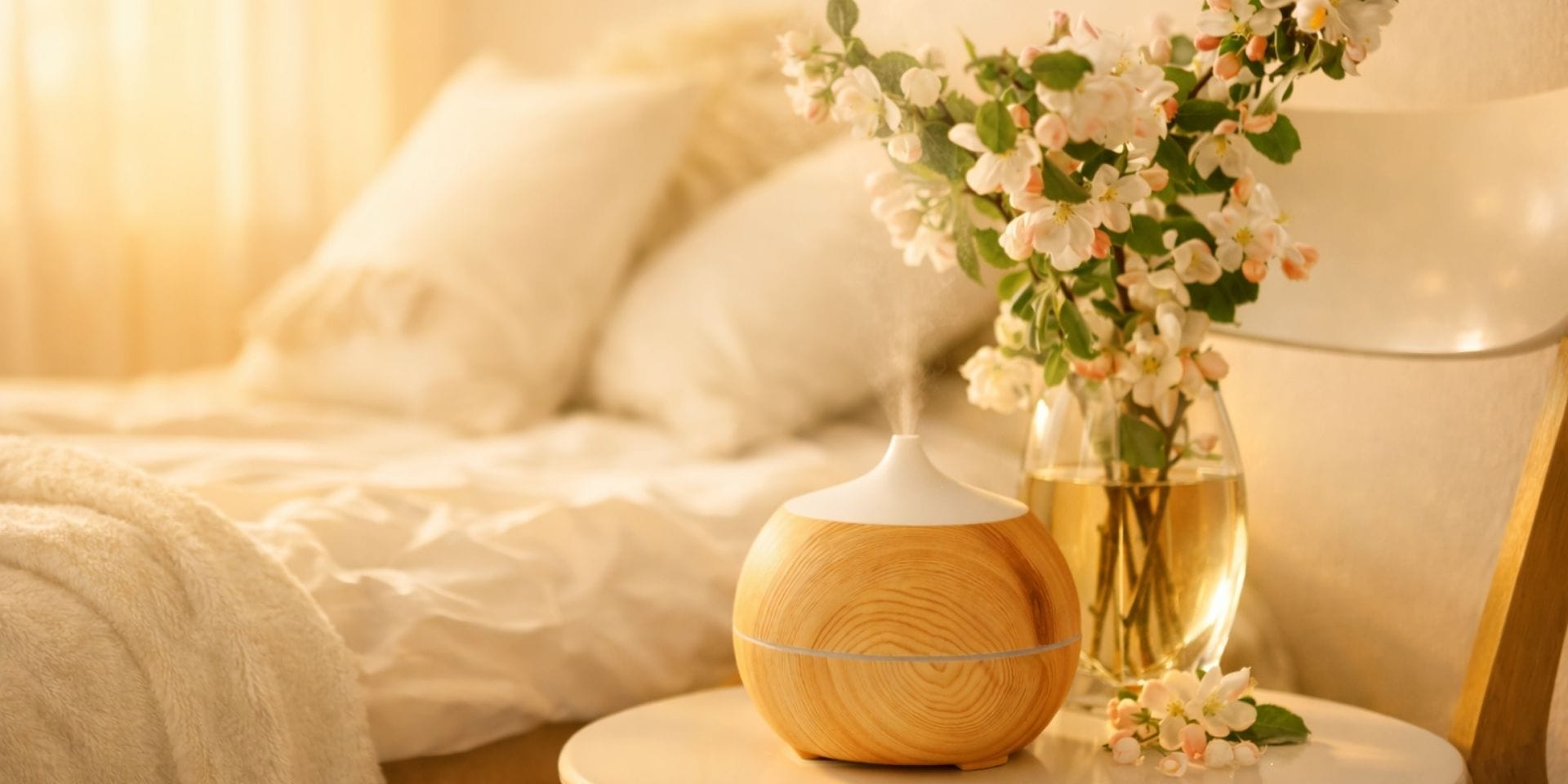
A room and linen spray is best when you want an immediate, controlled burst of fragrance. An essential oil diffuser is better suited to gradual fragrance over a longer period. Neither method is universally better. The right choice depends on how and when you want to experience the scent.
| Fragrance method | Best suited to | What to consider |
|---|---|---|
| Room and linen spray | Quickly scenting the room, bedding or suitable soft furnishings | Use lightly, avoid saturating fabric and patch test delicate materials |
| Essential oil diffuser | Gradual fragrance over part of the evening | Follow the diffuser instructions and use an appropriate amount for the room |
| Reed diffuser | Continuous passive fragrance | Offers less control over when fragrance is released |
| Scented candle | Combining fragrance with warm light | Never leave a burning candle unattended or use it while sleeping |
Explore Wildfire’s ready-to-use essential oil room and linen sprays or browse our concentrated essential oil blends for diffusers and oil burners.
If you are new to diffusion, our guide explains how to use an essential oil diffuser, including how much water and oil to add.
How to Use Bedroom Fragrance Without Overdoing It
Begin with less fragrance than you think you need. It is much easier to add another light mist or continue diffusing than it is to remove an overpowering scent from an enclosed bedroom.
- Air the room before adding fragrance.
- Start with a light application and allow the scent to settle.
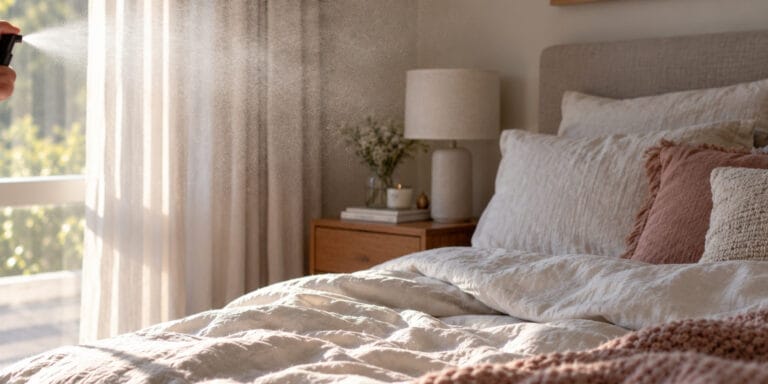
- When using linen spray, mist from a distance rather than saturating the fabric.
- Patch test delicate, specialty or light-coloured fabrics in an inconspicuous area.
- Allow sprayed bedding and fabrics to dry before use.
- Follow the manufacturer’s directions when using a diffuser or oil burner.
- Avoid combining several strong or unrelated fragrances at once.
- Do not use a room and linen spray as a body perfume unless it is specifically formulated for skin.
Fragrance should be added after the bedroom has been cleaned and aired. It cannot remove the source of persistent damp, musty or otherwise unwanted odours.
If stale air, bedding or unwanted odours are the underlying problem, begin with our guide to making your bedroom smell good and keeping it fresh.
Using fragrance around pets
Animals can be more sensitive to essential oils and airborne fragrance than people. Avoid spraying near pets, bedding, food or water bowls, and do not diffuse in a confined space where an animal cannot move away. Birds are especially sensitive to airborne products. If you are uncertain, ask your veterinarian before introducing a fragranced product.
Create a Bedroom Fragrance That Feels Like Yours
The best bedroom scent is ultimately the one you enjoy living with. Lavender and soft woods offer a quieter fragrance, rose geranium adds warmth, and blends of ylang ylang, bergamot and patchouli create a richer aromatic profile.
Start lightly, give the fragrance time to settle and notice which notes feel most comfortable in your space. When the blend suits both the room and your personal preferences, fragrance becomes a natural part of the setting rather than an added layer competing for attention.
Find a fragrance for your bedroom
Explore three Australian-made botanical blends created for soft, warm and more expressive room and linen fragrance.
Explore Wildfire Mood MistsBedroom Scent FAQs
These practical answers can help you choose and use bedroom fragrance without making the room feel overly perfumed.
What is the best scent for a bedroom?
The best scent depends on your personal fragrance preferences. Lavender and sandalwood suit a softer bedroom atmosphere, rose geranium creates floral warmth, while ylang ylang, bergamot and patchouli offer a richer and more sensual aromatic profile.
What are the best sensual scents for a bedroom?
Ylang ylang, patchouli, sandalwood, bergamot and warm citrus are popular choices for a sensual bedroom scent. Combining floral, woody, earthy and citrus notes can produce a fragrance with more warmth and depth than a single note used alone.
Is lavender a good bedroom scent?
Lavender is a popular bedroom fragrance because of its recognisable herbal-floral aroma. It pairs particularly well with sandalwood and other gentle floral notes when you want a soft scent that does not feel excessively sweet.
Should I use a room spray or diffuser in the bedroom?
Choose a room and linen spray when you want immediate and controlled fragrance. Choose a diffuser when you prefer the aroma to develop gradually. You can use both at different times, but avoid layering so much fragrance that the room becomes overpowering.
Can I spray bedroom fragrance on my sheets?
Only use a product that is intended for linen or suitable fabrics. Apply a light mist from a distance, patch test delicate or light-coloured material first, avoid saturating the fabric and allow it to dry before using the bedding.
How much bedroom fragrance should I use?
Begin with a small amount and allow the fragrance to disperse before adding more. Room size, ventilation, fabric type and personal sensitivity all affect how strong a scent feels.
Can bedroom fragrance remove unwanted odours?
No. Fragrance can change how a room smells temporarily, but it does not remove the source of stale, damp or persistent odours. Ventilation, laundering and cleaning should come first, with fragrance added afterwards.