
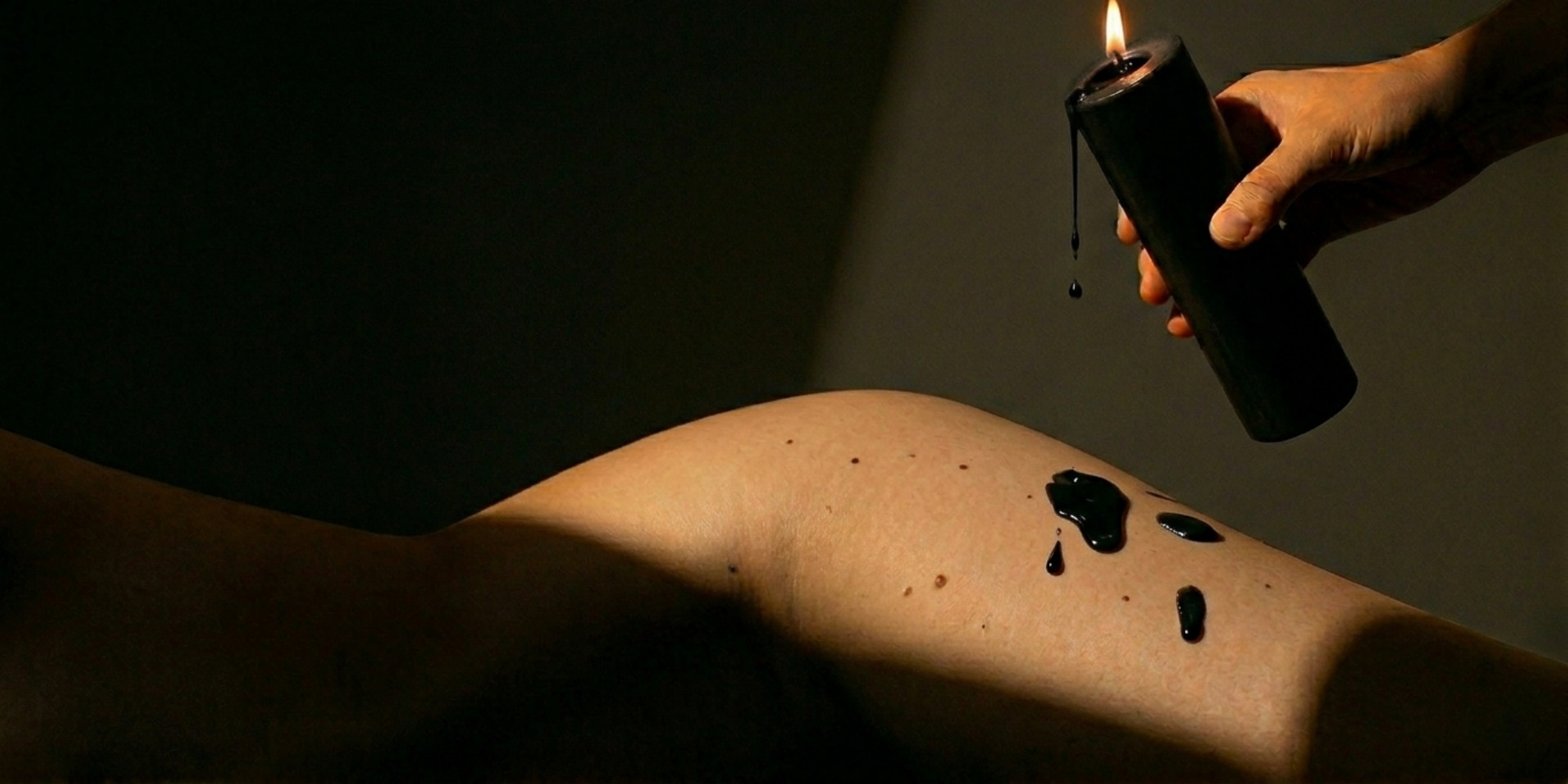
Why Do People Enjoy Wax Play? Understanding the Appeal of Temperature Play
Wax play combines warmth, anticipation, visual contrast, trust and focused touch. For some people the appeal is intensity; for others it is the ritual, creativity or simply trying something different together.
Why would someone want hot wax poured on them? From the outside, wax play can look as though it must be mainly about pain. For many people, that is not what makes it appealing at all.
The experience can combine anticipation, warmth, cooling, visual pattern, trust, control and attention in a way that makes ordinary touch feel very different. What one person enjoys may be the suspense before the wax lands; another may be drawn to the sensation itself, the visual result or the intimacy of sharing something unfamiliar with a partner.
Why do people like hot wax poured on them?
People may enjoy wax play because it combines warmth, cooling, anticipation, trust, visual stimulation and a strong focus on physical sensation. For some, a controlled edge of intensity is part of the attraction. For others, pain has very little to do with it.
The waiting, the first sensation of warm wax, the way it cools on the skin and the texture that remains afterwards can make the experience feel unusually immersive. Elements such as control, surrender, colour, scent and novelty can add to the appeal as well.
Why do people enjoy wax play?
There is no single reason.
Wax play sits at the intersection of several experiences that can make intimate touch feel more intense or memorable:
- Anticipation: not knowing exactly when the next drop will land can become part of the excitement.
- Temperature contrast: warm wax followed by cooling creates a noticeable change in sensation.
- Focused attention: the experience can pull attention away from everyday distractions and towards what is happening on the body.
- Trust: one person is controlling a sensation experienced by the other, making communication especially important.
- Visual appeal: cooled wax can create patterns, shapes and colour across the skin.
- Control or surrender: some people enjoy taking responsibility for the experience, while others enjoy giving up some control within agreed boundaries.
- Novelty: doing something different can make an intimate moment feel less routine.
Someone may enjoy several of these elements at once, or only one of them.
Is wax play always about pain?
No.
Some people deliberately enjoy an element of controlled intensity or discomfort, but many people who are interested in wax play are more attracted to warmth, suspense, temperature change and focused touch than pain itself.
This distinction matters because wax play is sometimes portrayed as though enjoying it requires enjoying pain.
It does not.
Wax play can be intense without pain being the goal. For some people, the appeal is the combination of anticipation, warmth and cooling rather than trying to tolerate the hottest sensation possible.
What does wax play actually feel like?
The sensation depends on the candle, wax formulation, technique, amount of wax, distance from the skin and individual sensitivity.
With a purpose-made wax-play candle used according to its directions, people commonly describe a sequence of sensations rather than one continuous feeling.
- Waiting: anticipation can build before anything touches the body.
- Warmth: the wax creates a concentrated temperature sensation when it first lands.
- Cooling: the sensation changes as the wax begins to set.
- Texture: hardened wax creates a different tactile feeling across the skin.
- Removal: lifting or peeling cooled wax introduces another sensation again.
Those rapid changes are part of what makes temperature play feel different from an ordinary massage or caress.
Purpose-made does not mean risk-free. Wax can still cause burns if it is too hot or used incorrectly. Follow the candle directions, start conservatively, test before broader use and stop immediately if the sensation becomes too hot or uncomfortable.
Why anticipation can be part of the appeal
Wax play begins before the wax ever reaches the skin.
There is the flame, the wait for the wax to pool, the movement of the candle and the uncertainty about exactly where or when the next drop will land.
For the person receiving the wax, that waiting can heighten attention. A small pause can feel much longer when you are expecting a strong sensation.
For the person holding the candle, there is also a requirement to slow down, watch the other person’s reactions and stay engaged with what is happening.
Sometimes the anticipation is as important as the wax itself.
The experience can become a cycle of waiting, sensation, cooling and waiting again.
Trust, control and communication
Wax play creates an unusual dynamic because one person controls a sensation that the other person cannot completely predict.
That can make elements of control and surrender appealing for some people, but it also makes communication essential.
Before starting, partners should be able to talk openly about:
- what each person wants to try
- what areas of the body are agreed on
- what level of intensity feels comfortable
- how either person can ask to slow down or stop
- how they will check in during the experience
Consent is not something agreed to once and then forgotten. Reactions can change once a new sensation begins, so listening and adjusting remain part of the experience.
The Australian Government’s Consent conversation guides offer useful frameworks for talking about boundaries and sexual consent.
Why temperature contrast gets your attention
Part of the attraction of temperature play is simply that the sensation changes quickly.
A warm drop of wax feels different from the skin immediately before it. As that wax cools, the sensation changes again. Touching or removing the hardened wax adds another texture after that.
The result is a sequence of contrasts:
- waiting and contact
- warmth and cooling
- soft skin and hardened wax
- stillness and movement
- anticipation and release
Those contrasts can make people pay very close attention to what they are feeling without needing to claim that wax causes a particular hormonal or neurological response.
Different people respond differently. A sensation one person finds exciting may feel unpleasant or overwhelming to someone else. There is no universal response to wax play.
The visual appeal of wax play
Wax play is unusual because it changes not only how the body feels but also how it looks.
As wax cools, it can form drops, trails, layers and irregular patterns across the skin. Different colours can make those patterns even more noticeable.
For some people, that visual transformation is a major part of the attraction. The body briefly becomes a kind of changing canvas.
There can also be an element of creativity in deciding where wax falls, how colours overlap and when another layer is added.
How colour and scent can add another sensory layer
Temperature is only one part of the experience.
Colour adds a visual dimension. A coloured wax can make each drop and pattern more noticeable against the skin, changing the way the experience looks as it develops.
Aroma can add another sensory cue. Where a wax-play candle has been deliberately fragranced for that purpose, scent can become part of the atmosphere alongside the flame, warmth and touch.
That does not mean fragrance automatically creates arousal. It simply means wax play can involve several senses at the same time rather than temperature alone.
Wildfire’s wax-play range reflects this idea. Different candle options allow colour to become part of the visual experience, while selected scented options add aroma as another dimension to the ritual.
Wax play can be more than “hot wax”. Temperature, colour, scent, visual pattern, anticipation and touch can all contribute to the experience.
Why some people enjoy removing the wax
For some people, the experience does not end when the wax cools.
Peeling and lifting hardened wax changes the sensation again. There may be gentle pressure, pulling, cracking or texture as sections separate from the skin.
Some people find this almost as satisfying as the warmth itself because it creates a clear final stage to the experience.
Keep removal slow and gentle. Avoid using sharp tools directly against bare skin.
Trying something new together
Not everyone exploring wax play is looking for a dramatic or extreme experience.
Sometimes the appeal is simply doing something unfamiliar.
New experiences can create reasons to talk about:
- what feels good
- what someone is curious about
- where each person’s boundaries are
- how much intensity they want
- what they would like to try differently next time
The process of discovering those preferences together can be part of what makes the experience memorable.
There is no single reason people enjoy wax play
If you asked different people what appeals to them, their answers could be completely different.
One person might say anticipation. Another might love the visual patterns. Someone else may enjoy an element of controlled intensity, while another prefers the warmth and ritual but dislikes pain entirely.
Others may be attracted to control, surrender, novelty, aroma, colour or the simple fact that wax play demands more attention than routine touch.
None of those motivations is more “correct” than another.
Not everyone enjoys wax play — and that is completely fine
Wax play is not a sensation everyone will enjoy.
Some people dislike sudden temperature changes. Others may find waiting for the wax stressful rather than exciting, dislike the texture once it cools or simply have no interest in this kind of sensory play.
There is no reason to push through an experience simply because a partner enjoys it or because it appears exciting online.
Trying something once does not create an obligation to continue, and consent can be withdrawn at any point.
How to explore wax play more safely
If wax play sounds appealing, the safest place to begin is with the right product, clear communication and a conservative approach.
- Use a purpose-made wax-play candle. Ordinary household and decorative candles are not necessarily formulated for skin contact or predictable low-temperature use.
- Read the product directions. Different wax formulations behave differently, so do not assume every candle should be used the same way.
- Talk before you begin. Agree on boundaries, comfort levels and how either person can pause or stop the experience.
- Start cautiously. Test the sensation before applying more wax or increasing intensity.
- Keep checking in. What feels comfortable at the beginning may not feel the same several minutes later.
- Stop if the wax feels too hot. Do not treat excessive heat as something the receiving person should simply endure.
For step-by-step technique, read our guide to how to use wax-play candles safely.
For general first-aid information about burns and scalds, see Healthdirect.
Choosing a candle for wax play
The candle matters because wax play depends on the behaviour of the wax itself.
Wildfire’s Wax Play Body Candles are made specifically for this kind of sensory play rather than being ordinary decorative candles repurposed for the body.
The range also allows different elements of the experience to take centre stage:
- Temperature: the warm-to-cool transition at the heart of wax play.
- Colour: different wax colours can change the visual patterns created on skin.
- Aroma: selected scented options can bring fragrance into the experience alongside touch.
- Ritual: lighting the candle, waiting and building anticipation become part of the moment.
Ready to explore temperature play?
Browse Wildfire’s purpose-made Wax Play Body Candles and choose the colour and sensory experience that appeals to you.
Continue reading
What Is Wax Play?
Start with the basics and learn what wax play means.
How to Use Wax Play Candles Safely
Learn the practical steps for exploring wax play more carefully.
How to Use Bondage Candles for Wax Play
Explore another guide to technique, intensity and temperature play.
Frequently Asked Questions About Wax Play
Why do people pour hot wax on each other?
People may enjoy wax play because it combines anticipation, warmth, cooling, visual stimulation, trust and focused touch. Some enjoy a controlled element of intensity, while others are more interested in the sensory contrast, creativity or intimacy of the experience.
Why do people like hot wax poured on them?
The appeal varies. Some people enjoy waiting for the wax to land, the concentrated warmth, the way it cools and hardens, or the feeling of surrendering some control within agreed boundaries. Others enjoy the visual effect, novelty or shared ritual more than the heat itself.
Why do people like wax play?
Wax play combines several sensations and psychological elements at once, including anticipation, temperature contrast, touch, visual pattern, communication and novelty. Different people are attracted to different parts of that experience.
Is wax play painful?
It can feel intense, and some people deliberately enjoy an element of discomfort, but pain does not have to be the goal. Many people are more interested in warmth, cooling, anticipation and sensory contrast. Wax that feels excessively hot should not simply be endured.
What does wax play feel like?
The sensation can move through several stages: anticipation, concentrated warmth when the wax lands, cooling as it sets, the texture of hardened wax and then the sensation of removing it. The exact experience varies with the candle, technique and individual sensitivity.
Can you use normal candles for wax play?
Ordinary decorative candles are not automatically suitable for use on skin. Wax type, additives, colourants, fragrance and melting characteristics vary. A purpose-made wax-play candle gives you clearer guidance about how the product is intended to be used.
Is wax play safe?
Wax play carries a burn risk and should not be treated as risk-free. Using a purpose-made candle, following its directions, starting cautiously, communicating throughout the experience and stopping if the wax feels too hot can help reduce risk.
Is wax play only for people who enjoy pain?
No. Some people enjoy an element of controlled intensity, but many people are attracted to wax play because of anticipation, warmth, cooling, colour, creativity, trust or novelty rather than pain.