

Essential Oils for Sex: How to Use Scent for Intimacy
Essential oils for sex are best used as part of the atmosphere, not as a promise of arousal. Diffused before intimacy, layered with a room mist, or paired with a properly formulated massage oil, scent can help a bedroom feel more intentional, relaxed and connected.
When people search for essential oils for sex, they are often looking for a way to make an intimate setting feel different from the everyday. Scent can help mark that transition, whether it comes from a diffuser, an oil burner, a room mist or the aromatic profile of a massage oil.
The important distinction is that essential oils do not create sexual desire on command. Their most realistic role is sensory: helping shape atmosphere, supporting relaxation for some people and giving a shared ritual a recognisable scent.
Can essential oils improve sex or intimacy?
Essential oils cannot guarantee sexual arousal, desire or performance. Their most realistic role is sensory: aroma can help shape the atmosphere around intimacy and may support relaxation, mood and presence for some people. Research into aromatherapy and sexual function is still limited and has mainly involved specific groups of women, so it should not be treated as proof that any essential oil works as a universal aphrodisiac.
What People Mean When They Search for Essential Oils for Sex
The phrase essential oils for sex can sound as though there is a bottle that directly creates desire. That is not a useful way to think about them. Essential oils are concentrated aromatic plant extracts, and their most practical role around intimacy is through scent.
For some people, changing the smell of a room helps signal that everyday tasks are finished and time together is beginning. A warmer floral or woody fragrance can make a space feel different from the rest of the day. That shift may support relaxation, anticipation or simply greater awareness of the moment.
This page focuses on how to use aroma around sex and intimacy. If you are looking for the individual oils traditionally associated with sensuality, including ylang ylang, sandalwood, rose geranium, bergamot and patchouli, see our guide to aphrodisiac essential oils. For the broader idea of scent-led and touch-led oils used around intimacy, explore our guide to aphrodisiac oils.
Three related topics, three different questions
Aphrodisiac oils explains the wider category. Aphrodisiac essential oils explores the individual aromatic oils. This guide focuses on how scent can be used safely and intentionally around sex, lovemaking and intimacy.
What the Research Actually Shows About Aromatherapy and Sexual Function
There is some emerging research on aromatherapy and sexual function, but the evidence is not strong enough to say that a particular essential oil will cause arousal or improve anyone’s sex life.
The National Center for Complementary and Integrative Health describes aromatherapy as the use of plant essential oils, most commonly through inhalation or diluted topical use. It also notes that rigorous research is limited for many of the health claims made around aromatherapy.
A systematic review of aromatherapy for sexual problems in menopausal women found signals of benefit across a small number of trials, but the authors specifically cautioned that the evidence was limited by the small number of studies, short follow-up and inconsistent methods.
More recent trials have also reported changes in sexual-function scores or anxiety in specific groups of women using inhaled aromas, including lavender and bergamot in postmenopausal women and jasmine and clary sage in women of reproductive age. These are interesting findings, but they do not establish that essential oils act as direct sexual stimulants for the wider population.
What that means in real life
Essential oils are better treated as part of the setting around intimacy than as a treatment for low libido, sexual dysfunction or arousal problems. Scent may help some people feel calmer, more present or more connected to a particular ritual, but individual responses vary.
How to Use Essential Oils for Intimacy
The safest and simplest approach is to keep concentrated essential oils in the aromatic part of the experience and use products specifically formulated for skin when touch becomes part of the evening.
Diffuse the aroma before intimacy
Add a small amount of an essential oil blend to a suitable diffuser according to the device and product directions. Start lightly, allow the fragrance to develop and keep the room ventilated rather than continuously saturating the space.
Use an oil burner for a slower scent ritual
A ceramic oil burner can create a softer, gradual fragrance in the room. Follow the burner directions, keep the flame attended and position it away from bedding, curtains and other flammable materials.
Choose a ready-to-use room or linen mist
If you want fragrance without a diffuser, a ready-made Mood Mist can be used in the room or lightly on suitable linen according to its directions. Do not substitute concentrated essential oil for a formulated fabric spray.
Pair scent with a skin-formulated massage oil
If the evening moves from aroma into touch, switch to a product made for massage and body use rather than applying concentrated diffuser oils to the skin. Our guide to essential oils for sensual massage explains that difference in more detail.
Let scent become part of the ritual, not the goal
The aroma does not need to “do” anything dramatic. Preparing the room, slowing the pace and choosing a scent together can be enough to make the moment feel more deliberate and separate from everyday routine.
Using Essential Oils for Lovemaking and Intimacy
People searching for essential oils for love making are often looking for practical ways to bring aroma into a sexual or romantic setting. The easiest way is to think in layers: scent first, touch second.
Start with the room. A diffuser, oil burner or ready-to-use room mist can alter the atmosphere before physical intimacy begins. That gives the fragrance time to become part of the background rather than something you notice only when you are already trying to relax.
If massage is part of your routine, use a finished massage oil on the body rather than adding concentrated essential oil directly to the skin. This keeps the roles clear: the diffuser blend scents the room, while the massage oil provides the glide, skin feel and fragrance appropriate to touch.
There is no need to turn the process into a complicated aromatherapy routine. For many couples, choosing one aroma, dimming the room and setting aside uninterrupted time will feel more natural than building a long sequence of steps.
What Are the Best Essential Oils for Sex?
There is no single best essential oil for sex because scent preference is personal. A fragrance one person finds warm and sensual may feel too floral, earthy or intense to someone else. It is more useful to choose according to the atmosphere you want to create.
| Aromatic Note | How It Smells | Why People Choose It for Intimate Settings |
|---|---|---|
| Ylang ylang | Rich, sweet and floral | For a fuller, more overtly sensual floral character |
| Sandalwood | Warm, smooth and woody | For depth, warmth and a slower-feeling atmosphere |
| Bergamot | Bright citrus with a softer aromatic edge | For freshness and lift within heavier floral or woody blends |
| Rose geranium | Soft, rosy and green-floral | For a romantic floral profile without the heaviness of pure rose |
| Patchouli | Earthy, deep and lingering | For a darker, more grounded fragrance |
| Lavender | Clean, soft and herbaceous-floral | For a gentler scent profile associated more with unwinding than intensity |
For a deeper explanation of these oils, their aromatic profiles and why they are traditionally associated with intimacy, see Aphrodisiac Essential Oils: 8 Oils for Intimacy and Scent.
Choosing a Wildfire Essential Oil Blend for the Bedroom
Wildfire’s Tempt, Tease and Tantalize blends are concentrated essential oil blends made for diffusers and oil burners. They contain no carrier oil and are not designed for direct skin or intimate application.
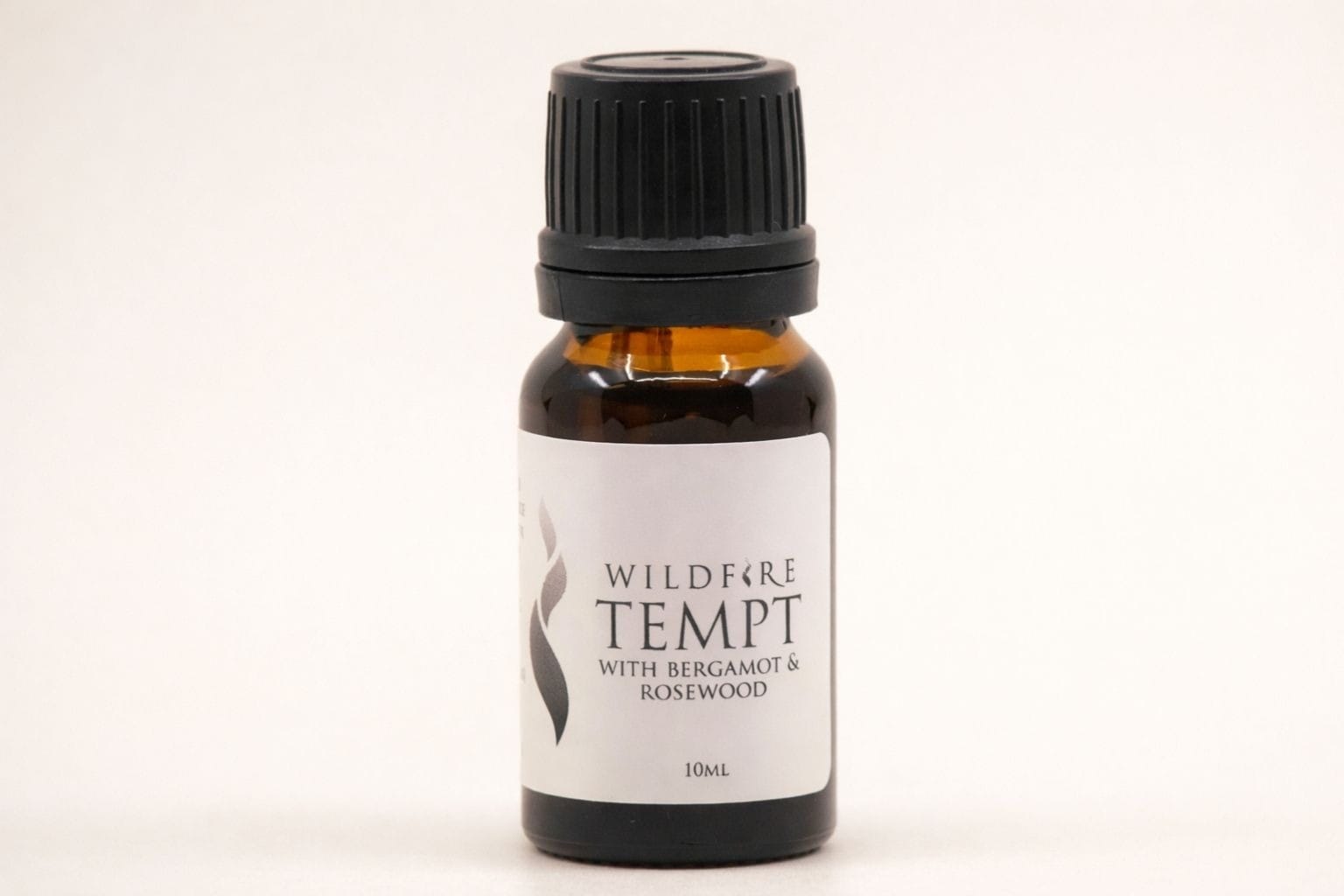
Tempt
Ylang ylang, bergamot, patchouli, rosewood and Australian orange create a warmer, layered aroma with a brighter citrus lift.
Explore Tempt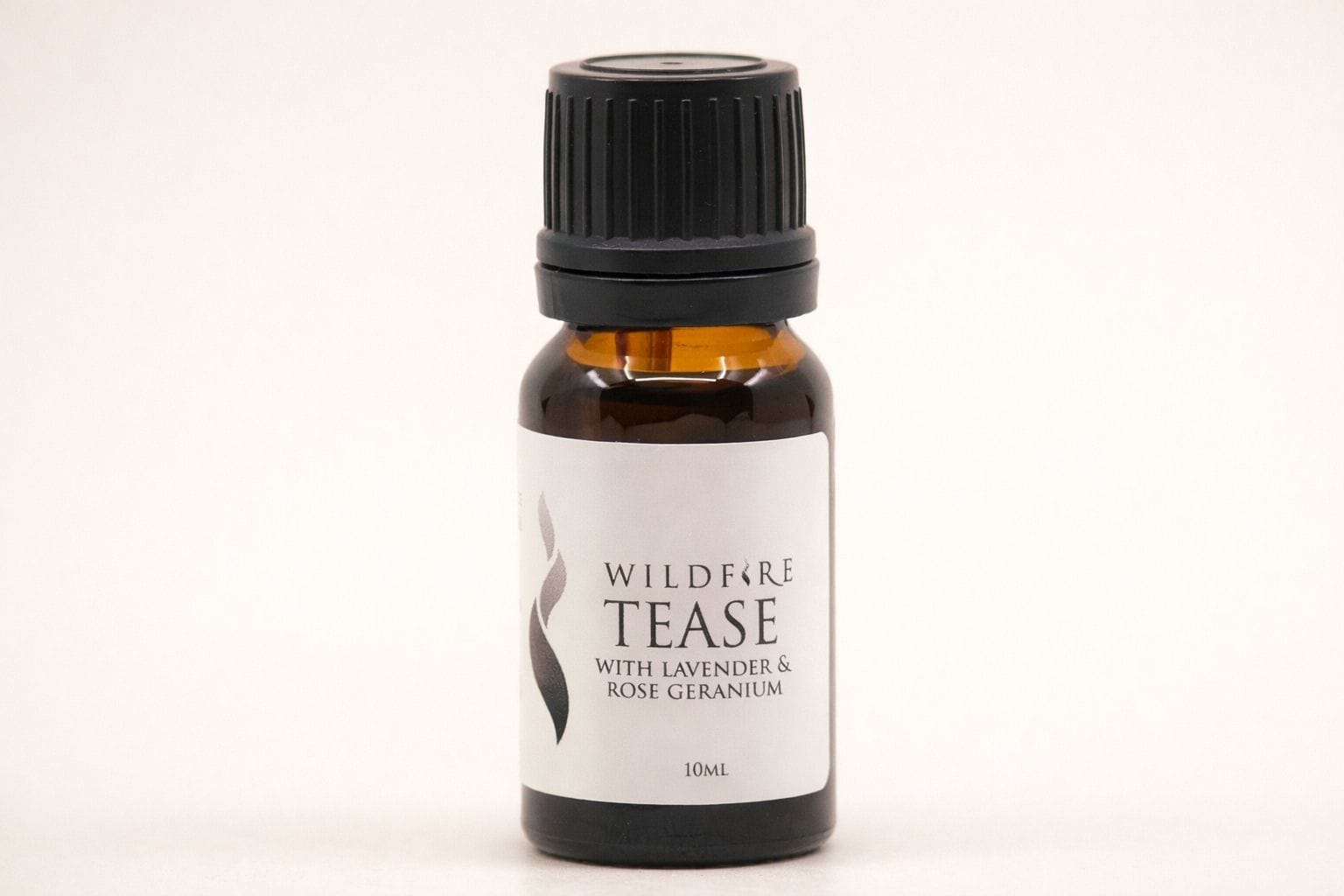
Tease
Lavender, rose geranium, ylang ylang and sandalwood create a softer floral and woody fragrance for a calmer setting.
Explore Tease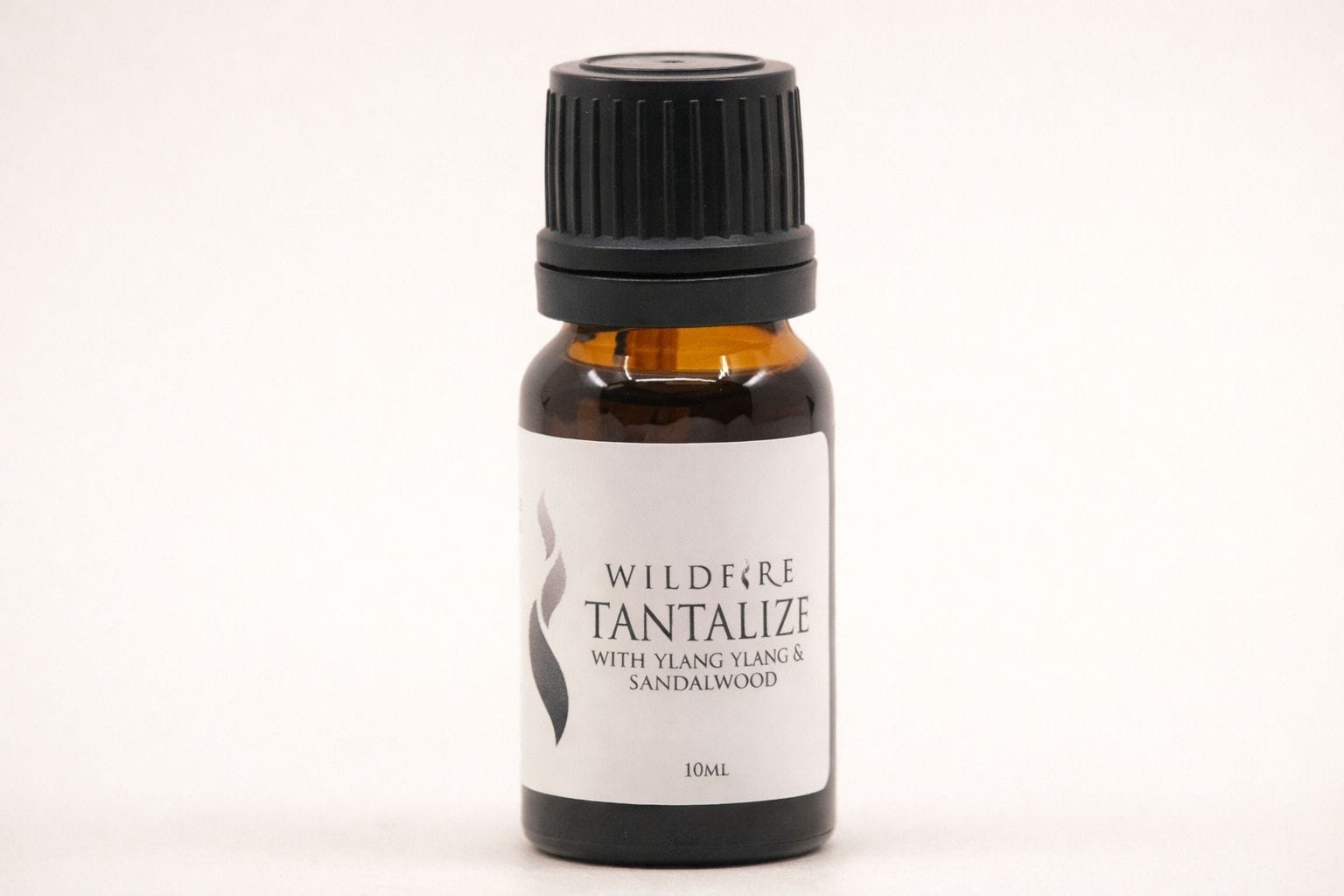
Tantalize
Bergamot, rose geranium, ylang ylang, patchouli and sandalwood give Tantalize a deeper floral, citrus and woody character.
Explore Tantalize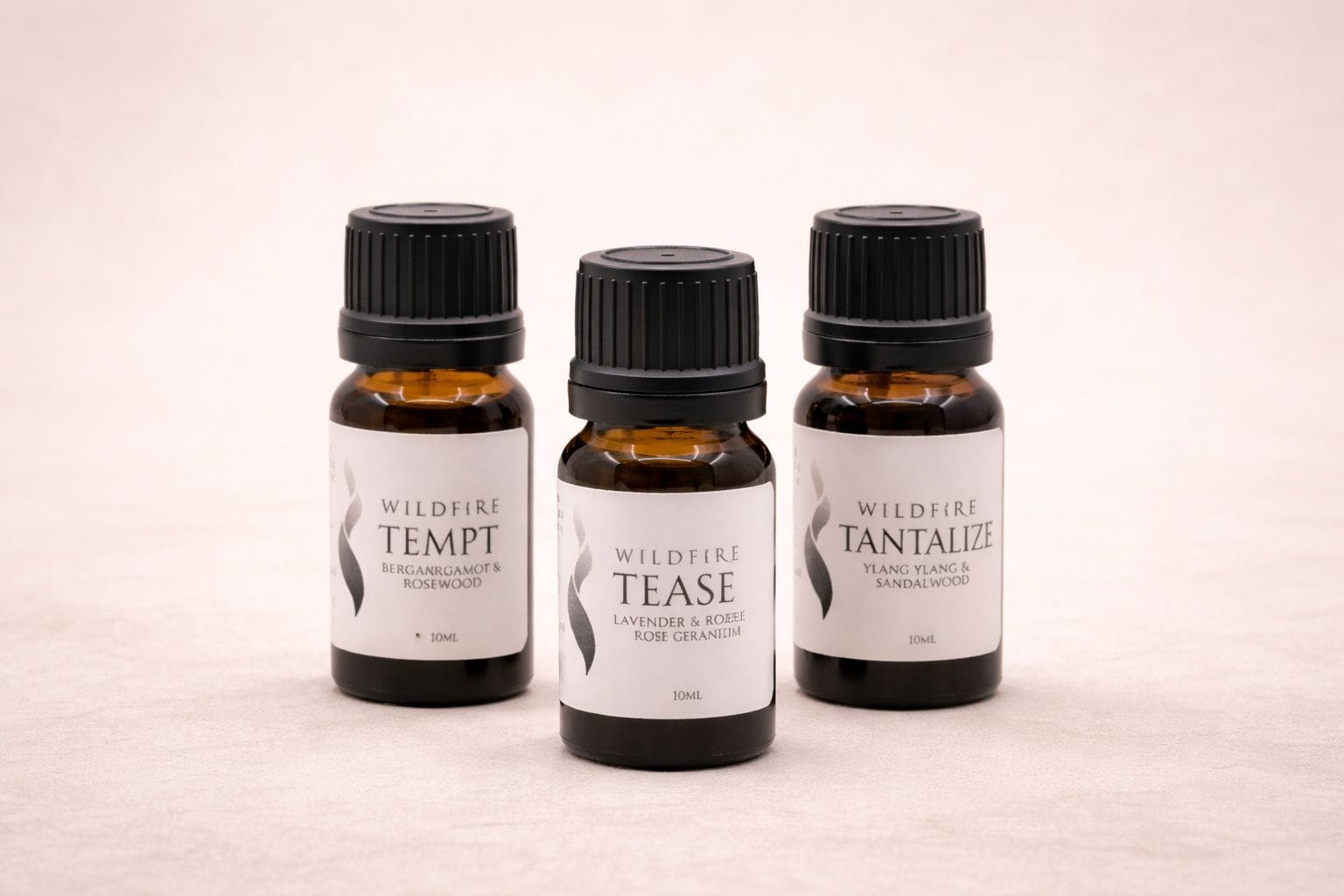
Trilogy Collection
Tempt, Tease and Tantalize together, making it easier to match the aroma to the mood rather than choosing one permanent favourite.
Explore the TrilogyCan Essential Oils Be Used for Arousal?
Searches for essential oils for arousal often mix together two very different product types: aromatic essential oils and topical arousal oils.
A concentrated essential oil blend is primarily about scent. It should not be treated as a warming, cooling or tingling product for intimate areas. If what you actually want is a noticeable topical sensation, choose a product specifically formulated and labelled for that purpose.
Wildfire’s arousal oils are a separate category designed for targeted external use. They are not the same as Tempt, Tease or Tantalize diffuser blends.
Aroma and arousal are not the same thing
An aroma may contribute to mood, relaxation or the feeling of a setting. A topical arousal oil is formulated to create physical sensation. Keeping those categories separate makes both the experience and the safety instructions much clearer.
Massage, Touch and Essential Oils
Massage can be one of the most natural ways to move from atmosphere into physical connection, but the product used on the body matters.
Wildfire’s concentrated essential oil blends are made for diffusers and oil burners, not for direct skin application. For massage, use a finished body or massage oil formulated for prolonged skin contact. Wildfire Pleasure Oils combine carrier oils, botanical infusions and essential oils within a ready-to-use body and massage formula.
If you want to understand how essential oils fit into a massage formulation without using concentrated oils directly, see our guide to essential oils for sensual massage.
Oil-based massage and body oils can weaken latex and polyisoprene condoms or barriers. If barrier protection is part of your plans, check the compatibility instructions supplied with both the oil and the barrier product before use.
What About Essential Oils in the Bath?
The old idea of adding a few drops of concentrated essential oil directly to bathwater is not a good safety shortcut. Essential oils do not dissolve in water, so undiluted droplets can remain on the surface and come into concentrated contact with the skin.
The Tisserand Institute’s bath-safety guidance specifically notes that materials such as milk and salts do not reliably disperse essential oils through bathwater.
If you want fragrance as part of a bath ritual, use a finished product whose directions specifically include bath use rather than improvising with a concentrated diffuser blend.
Essential Oil Safety Around Sex and Intimacy
Intimate skin and mucous membranes are more sensitive than many other areas of the body. Concentrated essential oils should therefore be kept separate from genital and internal use unless a specific finished product has been formulated and labelled for that purpose.
Wildfire Tempt, Tease and Tantalize are concentrated blends for diffusers and oil burners. Do not apply them directly to the genitals or intimate mucous membranes, do not ingest them, and do not assume a diffuser blend is interchangeable with a body or massage oil.
Poison Control notes that essential oils can cause skin reactions when misused, while the NCCIH describes inhalation and appropriately diluted topical use as the common aromatherapy methods. Follow the directions for the exact product you are using rather than relying on generic drop counts copied from another oil or blend.
When diffusing, start with a small amount, keep the space ventilated and consider other people in the room who may be sensitive to fragrance. If you are pregnant, managing a medical condition or have known scent sensitivities, check with an appropriate health professional before introducing a new essential oil routine.
Stop using any product if it causes irritation, burning, rash, breathing difficulty or other unexpected symptoms.
The Simplest Way to Use Scent Without Overthinking It
Essential oils do not need to become another task to perform correctly before sex. The most useful approach is often the simplest: choose one scent you both enjoy, use it in the room according to the product directions and let it remain in the background.
If the moment moves toward touch, change products rather than changing the rules. Use a body-safe massage oil for massage, a purpose-made arousal oil if targeted sensation is what you want, and keep concentrated essential oil blends where they belong: in suitable diffusers and oil burners.
That separation makes the ritual easier to understand and gives scent the role it is best suited to playing: creating atmosphere rather than promising an outcome.
Build the Atmosphere Your Way
Choose a Wildfire essential oil blend when you want fragrance in the room, or pair scent with a Pleasure Oil when you want massage and touch to become part of the experience.
Essential Oils for Sex: Frequently Asked Questions
What are the best essential oils for sex?
There is no universal best essential oil for sex. Ylang ylang, sandalwood, bergamot, rose geranium, patchouli and lavender are commonly chosen for intimate settings because of their floral, woody, citrus or grounding aromatic profiles. The most useful choice is the scent that you and your partner genuinely enjoy.
Do essential oils increase sexual arousal?
Essential oils should not be expected to create arousal on demand. Small studies in specific populations have found changes in sexual-function scores or anxiety with some aromatherapy interventions, but the evidence is limited and does not establish a universal arousal effect.
How do you use essential oils for lovemaking?
The simplest approach is aromatic use: diffuse an appropriate essential oil blend in the room before intimacy or use a ready-to-use room mist according to its directions. If you also want massage, use a separate product formulated for skin rather than applying concentrated diffuser oil to the body.
Can I put essential oils directly on intimate areas?
Concentrated essential oils and diffuser blends should not be applied directly to genitals or intimate mucous membranes. Use only products whose directions specifically state that they are formulated for the area and method of use you have in mind.
Can I use essential oils in a diffuser during sex?
Yes, an essential oil blend intended for diffusion can be used to fragrance the room. Follow the diffuser and product directions, begin lightly, keep the space ventilated and stop if anyone in the room finds the scent irritating or uncomfortable.
Can I add essential oils directly to bathwater?
Concentrated essential oils should not simply be dropped into bathwater because they do not dissolve in water and can remain in concentrated droplets on the surface. Use a finished bath product or a formulation specifically designed and directed for bath use.
Are essential oils for sex the same as arousal oils?
No. Essential oil blends are primarily aromatic products used to scent a room or create atmosphere. Arousal oils are topical products formulated for targeted sensation. Always follow the directions for the specific product rather than treating the two categories as interchangeable.