Top 10 Best Massage Oils for Relaxation and Sensual Nights
Choosing the best massage oils is less about finding the most expensive bottle and more about finding a texture you enjoy using. A lightweight oil may feel just right for a short shoulder massage, while a richer blend can make slower, full-body movements easier. Scent matters too, although a fragrance-free oil can be every bit as inviting when you want the focus to remain on touch.
This guide compares ten practical options, from familiar carrier oils to ready-to-use botanical blends. We look at what each one brings to a massage, where it may fall short and who is likely to appreciate it. The aim isn’t to declare one universal winner; it’s to help you choose with more confidence and fewer assumptions.
Which massage oil is best for relaxation and sensual touch?
For a simple, lightly scented or neutral massage, sweet almond, fractionated coconut and grapeseed oils are useful starting points. For a longer, more sensory ritual, a formulated massage oil can bring together glide, skin feel and fragrance in one ready-to-use product. Choose according to how the oil feels on your skin, how long you want to massage and whether everyone involved enjoys the scent.
What separates a good massage oil from a disappointing one?
Most oils will feel slippery at first, but the difference becomes apparent once your hands have been moving for a while. Some stay workable on the skin, others settle in more quickly, and a few can feel richer than you expected. The best result comes from balancing four considerations rather than choosing by an ingredient’s reputation alone.
Glide
Look for enough slip to keep the hands moving comfortably without frequent reapplication. A longer massage usually calls for a more sustained glide.
Absorption
An oil that settles into the skin quickly may suit brief massage or body care. A slower-absorbing oil can be easier to work with over a larger area.
Skin feel
Some people enjoy a rich, cushioning finish; others dislike the feeling of oil remaining on their skin. Neither preference is wrong, and different blends can behave differently.
Scent
A neutral base lets touch take centre stage, while an aromatic blend adds another sensory layer. The most appealing fragrance is the one you actually enjoy, not necessarily the strongest.
These ten options are an editorial guide to common massage-oil ingredients and finished blends, not a laboratory-tested ranking or a list of ten competing brands. The descriptions reflect their typical texture, practical uses and trade-offs. The feel of a particular bottle will still depend on its formulation, processing and your own preferences.
Which are the best massage oils for different needs?
A single carrier oil can be a perfectly sensible choice, especially when simplicity or a neutral aroma matters most. A finished massage blend is another option when you want the base oils, texture and fragrance selected together. The list below includes both so you can understand the differences before you shop; the numbers organise the choices rather than rank them from best to worst.
1. Ready-to-use botanical massage oil blends
A thoughtfully formulated massage oil combines ingredients for a particular overall feel rather than relying on one carrier oil to do everything. The advantage is convenience: you can choose a finished product for its texture and aromatic character without blending ingredients yourself. The trade-off is that a fragranced formula may not suit someone who prefers a completely neutral product or is sensitive to particular ingredients. Always check the label instead of assuming a botanical blend will suit every skin type.
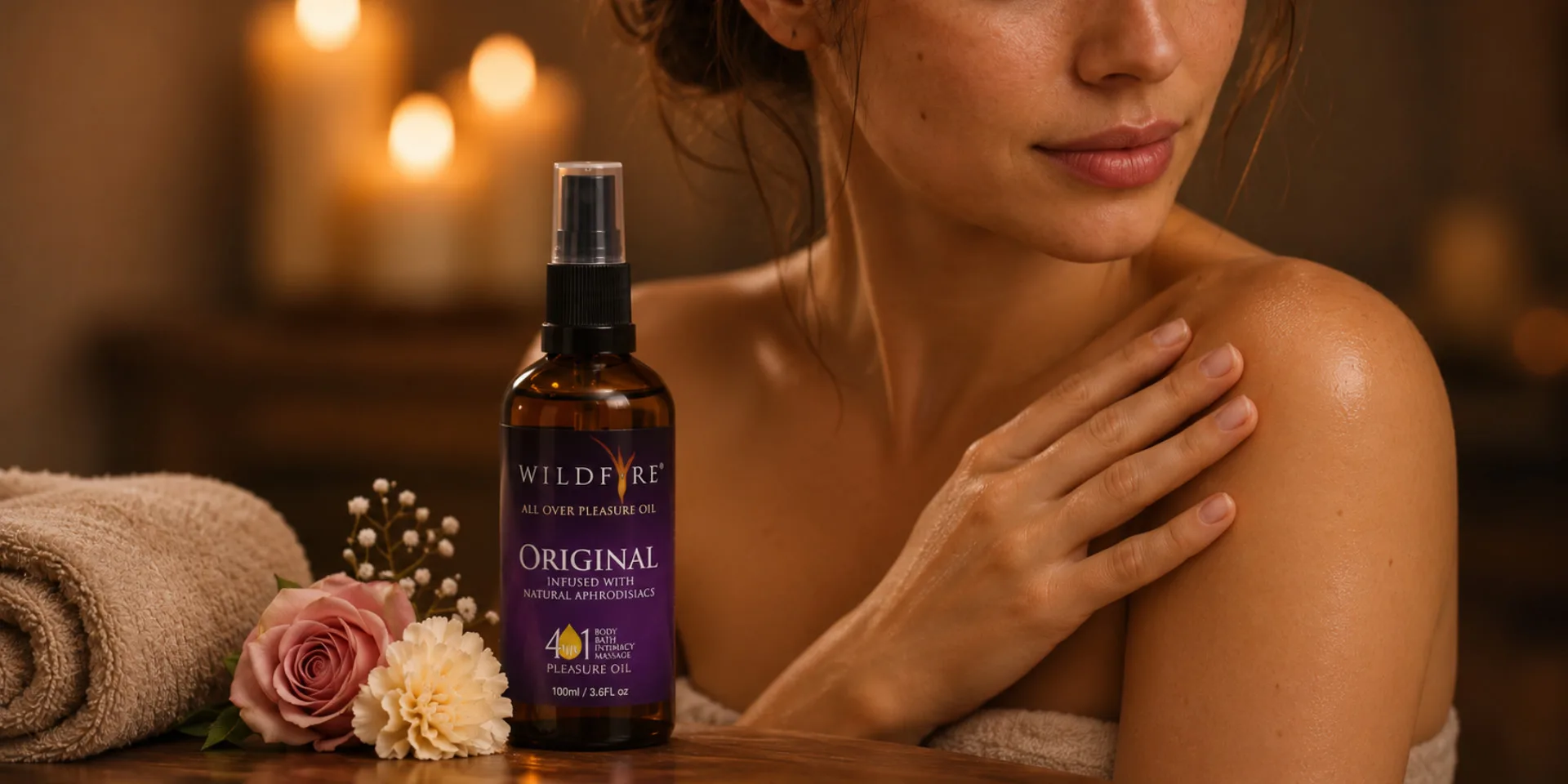
Wildfire’s Australian-made massage-oil range offers three different experiences: Original for a classic botanical massage, Enhance Her for a softer, comfort-focused feel, and Black for a bolder aromatic character. These are ready-to-use blends, rather than single carrier oils, and they are intended to make the choice between touch, texture and scent more straightforward.
Choose it when: You want a complete massage oil with a defined feel and scent. Consider: Fragrance preferences and the directions for the particular blend.
2. Sweet almond oil
Sweet almond oil is a familiar option for general body massage because it spreads smoothly and usually has a mild natural aroma. It offers a middle ground for people who don’t want an especially light or particularly heavy finish. That makes it versatile for an unhurried back or shoulder massage, and it is also used as a base in many finished products. If nut allergies are relevant, however, don’t assume that a sweet almond product is an appropriate choice.
Choose it when: You want a classic, uncomplicated carrier oil. Consider: Individual sensitivities and whether the finish feels too rich for you.
3. Fractionated coconut oil
Fractionated coconut oil, often labelled MCT oil, is different from the solid coconut oil commonly kept in the kitchen. It remains liquid at ordinary room temperature and generally has little natural aroma, making it a practical base when you don’t want scent to dominate. Its fluid feel can be appealing for massage across larger areas of the body. It is still worth checking the actual product label, because an oil sold for cooking is not automatically presented or packaged for body massage.
Choose it when: You like a light, neutral-feeling oil with useful glide. Consider: Whether you prefer the feel of a richer blend instead.
For a closer look at the distinction between the two forms, read our guide to using coconut oil for massage.
4. Jojoba oil
Jojoba is technically a liquid wax, although it is usually grouped with carrier oils in body-care discussions. People often appreciate its smooth, refined feel, particularly in products that are designed to leave the skin feeling cared for after application. It can be used on its own, but its price makes it more common as one component of a finished massage or body-oil blend. A beautiful skin finish doesn’t necessarily mean it will be your favourite option for a long, uninterrupted massage.
Choose it when: Skin feel is as important to you as massage glide. Consider: Cost and how much oil you expect to use.
5. Grapeseed oil
Grapeseed oil is often chosen for its relatively light texture and unobtrusive natural aroma. It can be pleasant for a quick massage when you want the oil to spread easily without an especially rich finish. On some skin, though, a lighter product can seem to settle in sooner than expected, so you may want to apply a little more as you go. If you know you dislike the residue of heavier oils, that compromise may be worthwhile.
Choose it when: You prefer a light finish for shorter body massage. Consider: Whether you will need to reapply during a longer session.
6. Olive oil
Olive oil has a richer character than many of the lighter carrier oils and a recognisable natural scent. That can be appealing for slow body massage, but it can also feel substantial on the skin and is not everyone’s preferred aroma. Its texture explains why it can be useful as part of a balanced massage-oil formulation: other ingredients can influence the finished feel and scent. As with any oil, choose a product intended for skin use and follow its directions rather than relying on a kitchen staple by default.
Choose it when: You enjoy a fuller, richer massage feel. Consider: Its natural aroma and the amount of oil left on the skin.
7. Sunflower oil
Sunflower oil is a practical carrier oil used in body-care and massage formulations. Depending on how it has been processed and blended, it can offer a relatively light-to-medium feel without a pronounced fragrance. It is worth considering if you’re comparing simple, affordable massage bases rather than looking for an elaborate scented experience. The finished result can vary, though, so one sunflower-based product may feel quite different from another.
Choose it when: You want a simple, versatile massage base. Consider: The particular formulation rather than judging all sunflower oils alike.
8. Apricot kernel oil
Apricot kernel oil is another traditional carrier oil that tends to feel soft and relatively light on the skin. It can appeal to people who like the general character of sweet almond oil but want to compare a different finish. Its subtle natural aroma also makes it suitable for blends in which the added scent is meant to take the lead. As with other seed and kernel oils, review the ingredients carefully if allergies or skin sensitivities are a concern.
Choose it when: You want a smooth, understated oil for body massage. Consider: Ingredient suitability and whether its glide lasts as long as you prefer.
9. Properly formulated essential-oil massage blends
For some people, aroma is an important part of unwinding. A massage blend scented with ingredients such as lavender, ylang-ylang or rose geranium can make the experience feel more deliberate, but fragrance preference is personal and a beautiful scent does not guarantee a physical or emotional response. Essential oils are concentrated ingredients, not ready-made full-body massage oils on their own. Choosing a correctly formulated product for skin application is more straightforward than improvising with undiluted essential oils.
Choose it when: Scent is part of the atmosphere you want to create. Consider: The full ingredient list, fragrance intensity and intended use.
10. Fragrance-free massage oil blends
A fragrance-free blend deserves a place on the list because scent is never a requirement for a satisfying massage. Combining carrier oils without added fragrance can still create a considered balance of glide and skin feel. This may be the direction to explore if you find strong aromas distracting or prefer to keep a massage simple. Remember that fragrance-free doesn’t mean suitable for every person; the other ingredients still matter, and ‘unscented’ is not always the same formulation claim as ‘fragrance-free’.
Choose it when: You prefer touch without added fragrance. Consider: The ingredient list and the actual feel of the finished blend.
Compare the ten options at a glance
This is a practical starting point rather than a promise of exactly how an oil will behave on every person. Think about the sensation you want during the massage and how you would like your skin to feel afterwards. You can then narrow the field to two or three oils instead of buying purely on name or price.
| Oil or blend | Useful for | Main consideration |
|---|---|---|
| Ready-to-use botanical blend | Complete texture and scent experience | Check fragrance and intended use |
| Sweet almond | Everyday, general body massage | Nut-related sensitivities |
| Fractionated coconut | Neutral aroma and fluid glide | May feel too light for some |
| Jojoba | Refined, body-care-focused feel | Cost for full-body use |
| Grapeseed | Lighter, shorter massages | May need reapplication |
| Olive | Richer, slower massage | Heavier feel and natural aroma |
| Sunflower | Simple, versatile carrier-oil use | Texture varies by formulation |
| Apricot kernel | Soft, understated body massage | Check sensitivities and glide |
| Essential-oil massage blend | Massage with an aromatic element | Must be formulated for skin use |
| Fragrance-free massage blend | Massage without added fragrance | Still check all ingredients |
Which one should you choose for the occasion?
For a brief massage after a long day, you may be happiest with a simple carrier oil that feels comfortable and is easy to apply. For an unhurried massage across the back, shoulders or legs, a product with enough lasting slip becomes more important. If fragrance is part of the ritual, choose it for the atmosphere you enjoy rather than expecting it to produce a particular response. And if you share the massage with someone else, their preferences matter just as much as yours.
If choosing an oil specifically for two people is your main question, our best massage oil for couples guide goes deeper into shared preferences, comfort and selecting a ready-to-use product together. This comparison is here to help you understand the oil types themselves.
A useful reality check: A single carrier oil isn’t automatically inferior to a more complex blend. The reason to choose a formulated massage oil is that you prefer its complete texture, aroma and convenience, not because massage requires an elaborate ingredients list.
A few small choices make a massage feel better
Even the best oil can feel disappointing if you use too much too soon or choose a fragrance that doesn’t suit the occasion. You don’t need a complicated routine. A little preparation, comfortable pressure and attention to how the oil behaves are usually more useful than trying to perfect every movement.
- Start with less than you think you need. Spread a small amount between your palms and add more if your hands begin to drag.
- Let your hands warm the oil. This avoids the surprise of pouring a cool stream directly onto the skin.
- Notice how quickly the glide changes. A lighter oil may need topping up, while a richer one may work best in smaller amounts.
- Keep the setting comfortable. A warm room, a towel beneath the massage area and a mutually appealing scent are simple details that matter.
- Check the product’s purpose. Follow the label, avoid irritated skin, and stop using a product if it causes discomfort.
An oil intended for external body massage should not automatically be used internally or with intimate devices. Oil-based products can also weaken latex condoms, so use a lubricant specifically confirmed as compatible with the condoms or devices involved. If that is relevant to your plans, read our guide to massage oil and intimate-area use and follow the individual product directions.
Is a formulated massage oil worth choosing over a single carrier oil?
It can be, but the value lies in the experience rather than a claim that more ingredients always mean a better product. A single oil may offer exactly the glide and simplicity you want, especially for occasional body massage. A formulated product can be more appealing when you want a particular texture, a consistent fragrance and the convenience of a bottle that’s already prepared for massage. Neither choice replaces the need to read the label and consider your own skin and scent preferences.
Wildfire’s Original, Enhance Her and Black blends offer three ways to approach that decision without expecting everyone to like the same fragrance. Original is the classic choice for an everyday relaxing ritual, Enhance Her places emphasis on a softer body-care experience, and Black has the boldest aroma of the three. The right one is simply the one that feels inviting to you.
A few questions worth asking before you decide
Is a lighter massage oil always better?
No. A light finish may be pleasant for a short massage, but you might prefer a richer oil when you want a slower, more continuous glide. Choose for the massage you’re planning and how you like your skin to feel afterwards.
Do you need essential oils for a relaxing massage?
Not at all. Gentle touch and a comfortable environment can be enjoyable without fragrance. If you do choose a scented oil, use a product formulated for skin application and remember that individual scent preferences and sensitivities vary.
Can any plant oil be used for massage?
Don’t assume that an oil is suitable just because it comes from a plant or is sold for cooking. Check that the specific product is intended for use on skin, review the ingredients for known sensitivities and follow its directions. For longer massage, you may also find that a purpose-made blend gives a feel you prefer.
Find a massage oil that feels right for you
Whether you prefer a gentle wind-down or a more aromatic massage ritual, the best choice is one you’ll enjoy reaching for. Explore Wildfire’s Australian-made Original, Enhance Her and Black blends to compare the available formulations, sizes and fragrances.