
How to Make Your Bedroom Smell Good and Keep It Fresh
A bedroom smells better when you deal with stale air, bedding, damp fabrics and other odour sources first. Once the room is genuinely fresh, fragrance can help create the atmosphere you want without simply masking the problem.
If your bedroom smells stale, musty or simply less inviting than you would like, start with the room itself rather than reaching immediately for more fragrance.
Bedding, laundry, carpet, soft furnishings, humidity and limited airflow can all affect how a bedroom smells. Once those sources are under control, a room and linen spray, essential oil blend or another carefully chosen fragrance can add the finishing touch.
How do you make your bedroom smell good and keep it fresh?
Remove the source of unwanted odours first, then improve ventilation and refresh bedding, clothing and soft furnishings.
Once the room is genuinely fresh, use fragrance lightly. A room and linen spray, diffuser or another suitable option can then add atmosphere rather than trying to cover dampness, stale bedding or dirty laundry.
Open the room to fresh air when conditions allow, pull back the bedding, remove damp towels and worn clothing, empty the bin and check for any musty or unusual odour. Once the room and fabrics are fresh, use fragrance sparingly.
Why Does My Bedroom Never Smell Fresh?
A bedroom can develop a stale smell because it spends long periods closed while people sleep, breathe and perspire in it. Bedding, carpet, curtains and upholstered furniture can all hold body oils, moisture, dust and fragrance, while limited airflow allows those odours to linger.
Common causes include:
- Closed windows and doors: Limited ventilation can allow stale air and indoor odours to build up overnight.
- Bedding: Sheets, pillowcases, mattress protectors, pillows and quilts gradually absorb perspiration, body oils and skincare products.
- Worn or damp fabrics: Clothing, towels, gym gear and wet swimwear can quickly affect the whole room.
- Laundry hampers and bins: These are easy to overlook, especially when they have lids or sit inside a wardrobe.
- Carpet and soft furnishings: Rugs, curtains, fabric bedheads and pet bedding can hold dust and odour.
- Food, cups or drink spills: Even a small forgotten spill can create a sour or stale smell.
- Humidity, condensation or a leak: Excess moisture and poor airflow can contribute to mould growth and a persistent musty smell.
Do not cover a persistent musty smell with fragrance
Look for condensation, damp carpet, water marks, plumbing or roof leaks and visible mould. NSW Health advises that mould commonly develops where there is excess moisture or reduced airflow, so the moisture source and ventilation problem need to be addressed. If the cause is unclear, keeps returning or covers a large area, seek appropriate professional advice.
For more information, see the NSW Health guidance on dampness and mould.
Start by Removing the Source of Unwanted Odours
Before adding any fragrance, work through the room systematically. Begin with the obvious sources, then check the areas that are easy to forget.
- Remove damp and worn fabrics. Take towels, activewear, swimwear and heavily worn clothes to the laundry rather than leaving them on the floor or behind a door.
- Strip and wash the bedding. Follow the care labels for sheets, pillowcases, protectors and other washable layers.
- Air the mattress, pillows and quilt. Pull the bedding back and allow trapped warmth and moisture to disperse before remaking the bed.
- Empty bins, cups and dishes. Check bedside tables, under the bed and any desk or dressing area.
- Vacuum thoroughly. Include rugs, the edges of carpet, beneath the bed and upholstered surfaces where the manufacturer permits.
- Dust forgotten areas. Bedheads, skirting boards, window tracks, blinds, fans and air-conditioning filters can collect dust.
- Clean spills and pet areas. Wash suitable pet bedding regularly and use cleaning products appropriate for each surface.
- Investigate anything unusual. A fishy, burning, sewage-like or gas smell may indicate a problem that fragrance should never be used to conceal.
Once the sources have been removed, give the room time to air. You may find that it already smells noticeably better before adding any scented product.
How Can I Keep My Bedroom Smelling Fresh All Day?
Keeping a bedroom fresh is easier when small habits prevent odour and moisture from building up. You do not need to deep clean the room every day.
- Let the room breathe: Open windows or doors when the weather, outdoor air quality, security and household conditions make it sensible. In hot or humid weather, air conditioning, extraction or a dehumidifier may be more useful than bringing humid air inside.
- Pull back the bedding after waking: Give warmth and moisture a chance to disperse before making the bed.
- Contain worn clothing: Use a ventilated hamper and avoid allowing damp items to sit in it for long periods.
- Keep food out of the bedroom where practical: Remove cups, plates and packaging promptly if you do eat there.
- Wash bedding regularly: Adjust the frequency for the climate, season, pets, perspiration and personal needs.
- Vacuum and dust consistently: A short weekly clean prevents dust and odour from accumulating in soft furnishings and hard-to-reach areas.
- Use fragrance lightly: A small amount in a fresh room is usually more pleasant than repeatedly spraying over stale air.
If the bedroom smells stale again soon after cleaning, return to the source rather than adding more scent. Check the laundry hamper, bedding, pet areas, carpet, ventilation and signs of moisture.
What Can I Put in My Bedroom to Make It Smell Better?
Once the room is clean and aired, you can choose a fragrance method based on how quickly you want the scent, how long you want it to last and how much control you prefer.
A ready-to-use spray suits a quick change before relaxing or welcoming someone into the room. If you are comparing sprays, our guide to the best room spray for bedroom use explains how to choose by atmosphere, fragrance style and whether you want room-only or room-and-linen use.
| Option | Best for | What to consider |
|---|---|---|
| Room and linen spray | An immediate, controlled fragrance refresh | Choose one made for rooms and suitable fabrics, and avoid over-spraying |
| Essential oil diffuser | Fragrance that develops gradually | Requires a diffuser, water and careful use according to the product and appliance directions |
| Reed diffuser | Continuous passive fragrance | Provides less control over when scent is released and must be positioned securely |
| Fresh flowers or botanicals | A light, natural aroma and visual detail | Shorter lasting and not suitable for every allergy-sensitive household or pet |
| Scented candle | Fragrance combined with warm ambience | Needs active supervision and must be extinguished before sleep or leaving the room |
If you prefer scent to build more gradually, explore essential oil blends for diffusers and oil burners. Beginners can also follow our practical guide explaining how to use an essential oil diffuser.
Use a Room and Linen Spray for a Quick Refresh
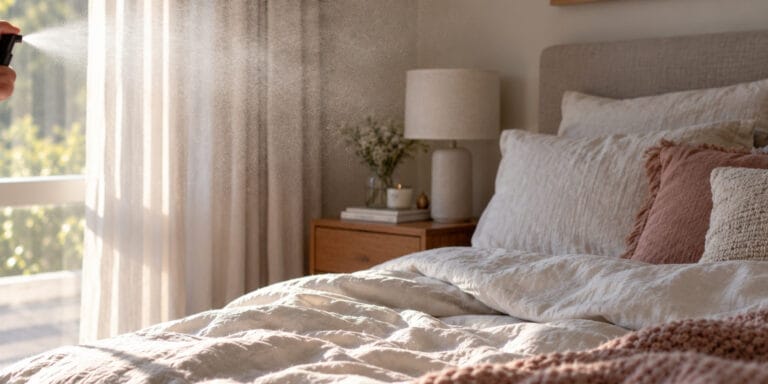
When the room is already clean, aired and free from unwanted odour sources, a ready-to-use room and linen spray can add fragrance to the air, bedding and other suitable soft furnishings within moments.
For a light and even result:
- Read the label and confirm that the product is intended for rooms and suitable fabrics.
- Mist into the room or over suitable fabric from a distance.
- Use a light application instead of saturating the material.
- Patch test delicate, specialty or light-coloured fabric in an inconspicuous area first.
- Allow sprayed bedding and soft furnishings to dry before contact or use.
- Avoid spraying floors or other surfaces that may become slippery.
- Do not use a room and linen spray as a body perfume unless it is specifically formulated for skin.
Because scent sensitivity varies, start with less than you think you need and wait for the fragrance to disperse before deciding whether to add more.
How Do I Make My Bedding Smell Fresh Between Washes?
Begin each morning by pulling back the quilt or blanket so the sheets and mattress can air. Keep damp towels and worn clothing away from the bed, and check that pillows, mattress protectors and the quilt itself are cleaned or aired according to their care instructions.
A linen spray can add a fresh fragrance between washes, but it does not clean fabric or replace laundering. Apply it lightly only where the product directions permit, then let the bedding dry completely before use.
If the smell returns quickly
Check more than the sheets. Pillow inserts, protectors, quilts, the mattress, fabric bedheads and carpet around the bed can all retain odour. Follow their care labels and arrange specialist cleaning where needed.
Once the Bedroom Is Fresh, Choose How You Want It to Smell
Freshness and fragrance are not the same thing. Cleaning, ventilation and fabric care address unwanted odours, while fragrance determines the aromatic character you add afterwards.
If you are unsure which notes suit your room, our guide to the best bedroom scents compares relaxing, romantic and sensual fragrance profiles in greater detail.
| Preferred atmosphere | Aromatic direction | Wildfire Mood Mist |
|---|---|---|
| Soft and peaceful | Lavender, sandalwood and gentle florals | Feels Like Bliss |
| Warm and inviting | Rose geranium, sandalwood and floral warmth | Feels Like Love |
| Rich and sensual | Ylang ylang, bergamot, patchouli and warm citrus | Feels Like Lust |
These descriptions refer to the style of fragrance, not a guaranteed effect. The best choice is the blend that suits your preferences and feels comfortable at the strength you use it.
Common Mistakes That Can Make a Bedroom Smell Worse
- Masking odours instead of removing their source: Fragrance layered over damp fabric, stale bedding or rubbish can create a heavier and less pleasant combination.
- Spraying too much at once: Repeated applications in an enclosed room can quickly become overpowering.
- Making the bed immediately: Pulling the covers back first gives warmth and moisture time to disperse.
- Leaving damp items in the room: Wet towels, swimwear and gym clothes can affect the room surprisingly quickly.
- Combining too many fragrances: Strong laundry products, candles, diffusers, sprays and perfumes can compete rather than blend.
- Ignoring overlooked fabrics: Curtains, rugs, fabric bedheads, decorative cushions and pet bedding may need attention too.
- Using products on the wrong surface: A room spray is not automatically suitable for fabric or skin, and concentrated essential oils should not be used as linen spray.
- Ignoring a persistent musty or unusual smell: Investigate moisture, mould, electrical, plumbing or other potential causes instead of concealing them.
How to Create a Simple Bedroom-Freshness Routine
A consistent routine prevents the room from reaching the point where it needs a major reset.
| When | What to do |
|---|---|
| Each morning | Pull back the bedding, remove cups and damp fabrics, and ventilate when conditions allow |
| Regularly | Wash bedding according to use and care instructions, empty the hamper and bin, vacuum and dust |
| Before relaxing or welcoming someone in | Tidy the room, allow fresh air to circulate, then lightly mist the air or suitable fabrics if desired |
| Whenever an odour appears | Find and address its source before adding fragrance |
Add fragrance after the room feels fresh
Explore three Australian-made botanical blends for an immediate room and linen fragrance refresh.
Explore Wildfire Mood MistsBedroom Freshness FAQs
These answers cover some of the most common questions about keeping a bedroom fresh and adding fragrance safely and lightly.
How can I make my bedroom smell good naturally?
Start with ventilation, fresh bedding, clean soft furnishings and the removal of damp towels, worn clothing, rubbish and other odour sources. If you then want fragrance, fresh flowers, suitable botanicals or a carefully used essential oil blend are options, but natural does not automatically mean allergen-free or safe for every person or pet.
How can I make my room smell good without a diffuser?
Remove the source of unwanted odours, air the room and wash or refresh bedding and soft furnishings. For added fragrance without a diffuser, use a ready-to-use room and linen spray, fresh flowers, a reed diffuser or a supervised scented candle, following the relevant safety and care directions.
Why does my bedroom smell after sleeping?
A closed bedroom can hold exhaled air, perspiration and odours from skin, bedding, clothing and carpet overnight. Pull back the bedding and ventilate when conditions allow. If the smell is unusually strong, musty or persistent, check bedding, laundry, pets, moisture and other potential sources.
How often should I use linen spray?
There is no universal schedule. Follow the product label and use a light amount when you want to refresh the fragrance. Allow the fabric to dry before use and remember that linen spray complements regular laundering rather than replacing it.
Where should I spray a room and linen mist?
Mist it into the room or onto bedding and soft furnishings only when the label says those fabrics are suitable. Spray lightly from a distance, patch test delicate or light-coloured materials and allow them to dry. Avoid skin, pets, food, water bowls, polished surfaces and floors that could become slippery.
Can I use essential oils to make my bedroom smell good?
Yes, an essential oil blend intended for diffusion can add fragrance when used according to the product and diffuser instructions. Do not apply concentrated essential oil directly to bedding. Use extra care around children, people with fragrance sensitivities and pets. Birds are particularly sensitive to airborne products, and animals should always be able to leave the fragranced area.
Will a room spray get rid of a musty bedroom smell?
No. A room spray can add fragrance, but it will not remove moisture, mould or another source of mustiness. Check for condensation, damp fabric, leaks and poor airflow, then address the underlying cause before using fragrance.