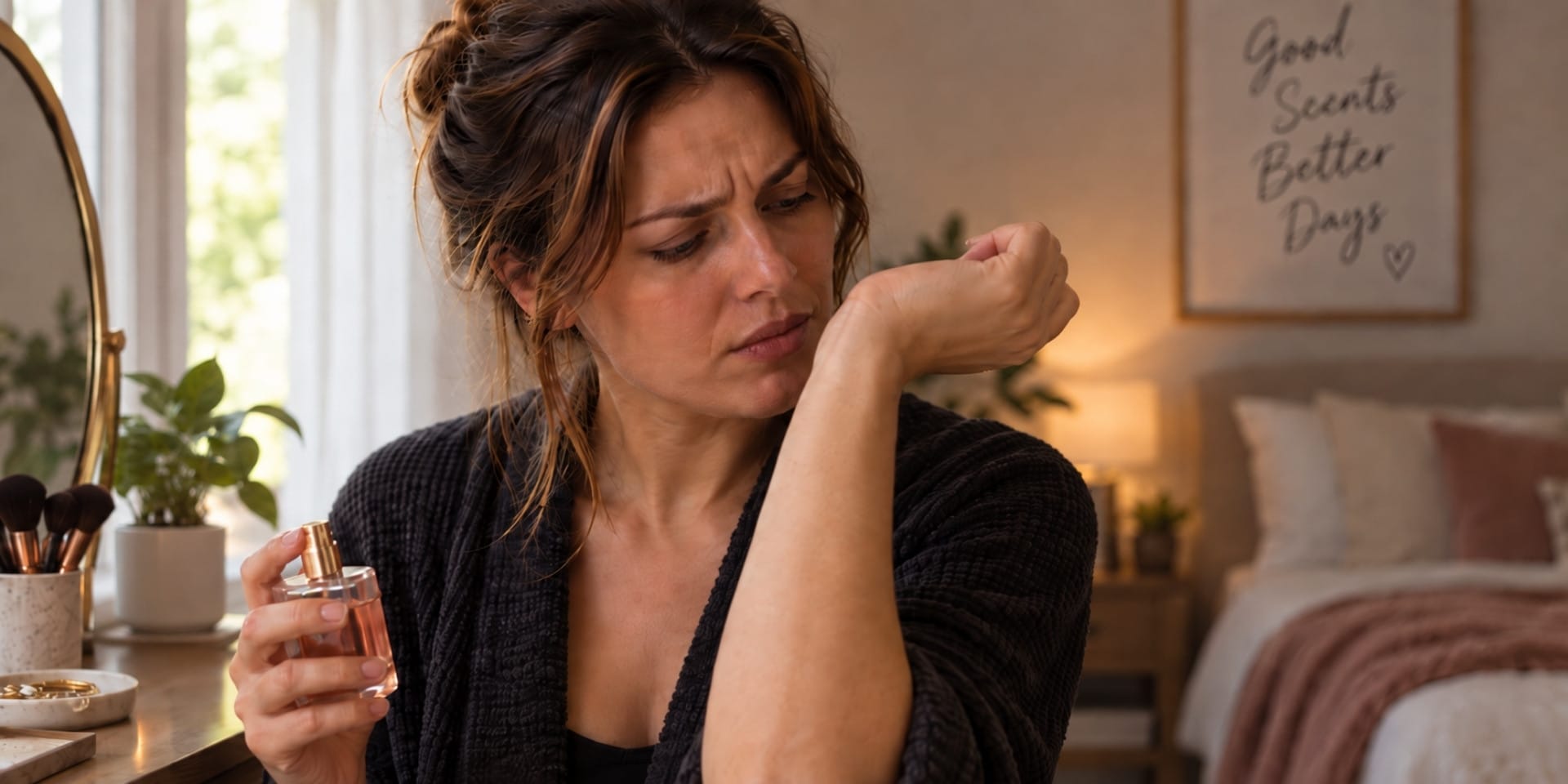
Why Does My Perfume Fade So Quickly? What Actually Helps
Sometimes perfume really does become quieter as the hours pass. Other times, it is still there and your nose has simply stopped noticing it. Skin condition, fragrance concentration, scent composition, application and temperature can all change how a perfume wears.
Why does my perfume fade so quickly?
Usually, it is a combination of olfactory adaptation, the volatility and concentration of the fragrance, your skin and the environment around you. Sometimes the fragrance has genuinely become softer. At other times, your brain has simply become less aware of a scent that is still detectable.
Why you stop noticing your perfume even when others still can
One of the most common reasons perfume seems to disappear is olfactory adaptation, sometimes called nose blindness.
When you are exposed to the same fragrance continuously, your brain can gradually reduce how much attention it gives that smell. It is similar to walking into a familiar room, noticing its scent immediately, then barely registering it a few minutes later.
Your fragrance may therefore still be detectable on your skin and noticeable to someone nearby even though you have become much less aware of it yourself. That distinction matters, because automatically applying more perfume can leave you wearing far more fragrance than you realise.
Moving into a different environment for a few minutes may help reset your perception enough to notice the fragrance again. You can also ask someone who has not been around you all day whether they can still smell it.
What actually happens as a fragrance wears
There is also a genuine chemical reason a perfume becomes quieter over time. Fragrance contains aromatic materials with different levels of volatility. Lighter compounds tend to reach your nose quickly after application and are also among the first to disperse into the air.
As those opening notes become less prominent, slower-developing components remain. The fragrance may therefore smell softer, warmer or quite different several hours after application than it did in the first few minutes.
Some fragrance notes naturally fade faster than others
The scent profile itself matters too. Bright citrus, fresh and green notes tend to be more volatile, so they can create a vivid opening before becoming quieter relatively quickly. Heavier notes such as woods, amber, vanilla and musk generally develop more slowly and can remain noticeable for longer.
That means two perfumes at the same concentration can still perform very differently on the same person. A fragrance becoming softer after its fresh opening does not automatically mean the perfume is weak or faulty.
How format and concentration affect how a fragrance wears
Whether a fragrance is an alcohol-based spray or an oil-based roll-on changes the way it projects and sits on the skin, but neither format is automatically longer-lasting in every formulation.
Alcohol-based sprays can create strong initial projection because the fragrance is dispersed over the skin and into the surrounding air. An oil-based perfume generally stays closer to the skin, creating a more intimate scent that is most noticeable at closer range.
Concentration matters independently of format. A fragrance containing a higher proportion of aromatic materials will often remain noticeable differently from a lighter concentration, although the individual ingredients, your skin and environmental conditions all influence the final result.
This is why an eau de parfum will often wear differently from an eau de toilette in the same fragrance family, while a concentrated perfume oil can feel more consistent and skin-close than a spray without necessarily projecting as far.
Where and how you apply perfume matters
Wrists, the sides of the neck, inner elbows and other pulse points are commonly used for fragrance because these areas tend to be warmer. That warmth can help aromatic compounds become more noticeable in the air immediately around you.
Pulse-point application does not guarantee that a perfume will last for a particular number of hours, but it provides a practical way to wear fragrance where body warmth can influence how the scent develops.
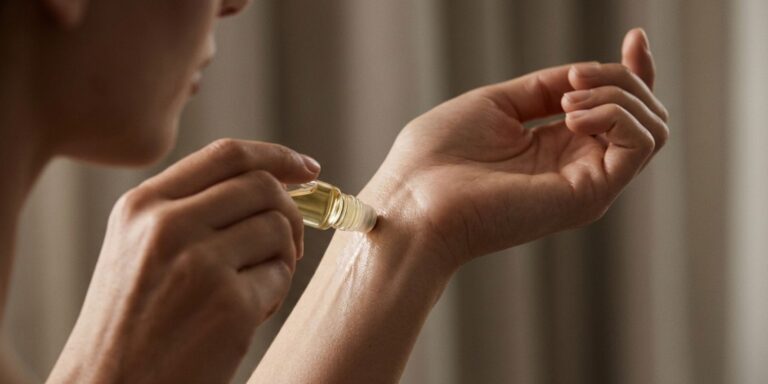
For a roll-on perfume oil, targeted application is one of the format’s practical advantages. A small amount can be applied directly to the wrist, neck or another chosen pulse point without the wider dispersal of a spray, helping keep the fragrance close to the skin.
There is also no need to vigorously rub your wrists together after applying fragrance. Simply applying it and allowing the scent to settle avoids unnecessarily spreading it away from the original application area.
What skin condition and temperature can change
Fragrance can behave differently on dry skin compared with well-moisturised skin. If your skin is particularly dry, applying an unscented moisturiser before your fragrance may help create a more favourable surface for the scent to sit on.
Temperature matters as well. Heat increases the volatility of aromatic compounds, which can make fragrance feel more noticeable initially while also causing lighter notes to move through their development more quickly.
That can be particularly noticeable during an Australian summer. The same perfume may feel brighter and more expressive on a hot afternoon than it does on a cool winter morning, without anything about the bottle itself having changed.
Where a Pure Instinct roll-on fits
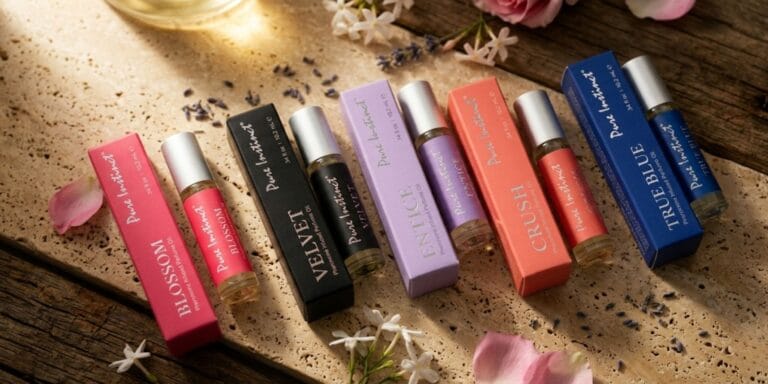
Wildfire’s Pure Instinct range is available in both spray and oil-based roll-on formats, so the difference is primarily about the type of fragrance experience you prefer.
The Pure Instinct Original Roll-On contains the recognisable fragrance customers also know as True Blue. Its oil-based formula includes soybean, safflower and grapeseed oils, caprylic/capric triglyceride and vitamin E alongside the fragrance and pheromone components.
Rather than creating the immediate projection of a spray, the roll-on is designed for precise, close-to-skin application. That makes it useful for someone who prefers fragrance to be noticed at closer range or wants the control of applying directly to selected pulse points.
Neither format needs to be considered universally better. The better fit depends on whether you enjoy the wider initial projection of a spray or the more personal, skin-close character of a perfume oil.
Prefer fragrance closer to the skin?
Explore Wildfire’s collection of pheromone perfume oils and Pure Instinct roll-ons, with fragrance profiles ranging from fresh and floral to warm, sweet and musky.
Frequently Asked Questions
Why does my perfume smell strong at first and then seem to disappear?
Lighter, more volatile fragrance materials are often most noticeable immediately after application and disperse relatively quickly. As they become quieter, deeper components continue developing closer to the skin. Olfactory adaptation can also make you less aware of a fragrance that is still detectable to other people.
Does moisturising before applying perfume help it last longer?
It can help, particularly if your skin is dry. Applying an unscented moisturiser before fragrance can create a different surface for the scent to sit on and may help some fragrances remain noticeable for longer.
Is it better to apply perfume to skin or clothing?
Skin allows body warmth and individual skin chemistry to influence how a fragrance develops. Some spray fragrances can also be used on clothing if their directions allow it. Oil-based roll-ons are best applied to skin unless the product states otherwise, as oils may mark some fabrics.
Why does the same perfume last longer on some people than others?
Skin type, hydration, temperature, the amount applied and individual fragrance perception can all change how long a scent seems noticeable. The same perfume can therefore wear differently from one person to another.
Is a roll-on perfume oil likely to last longer than a spray?
Not necessarily. An oil-based roll-on generally stays closer to the skin and releases fragrance differently from an alcohol-based spray, while a spray usually creates more immediate projection. Actual longevity depends on the formulation, fragrance concentration, skin and environment rather than format alone.
Can storing perfume incorrectly affect how it performs?
Yes. Repeated exposure to heat, direct sunlight and large temperature changes can affect fragrance over time. Store perfume somewhere cool and dry away from direct sunlight rather than leaving it in a hot car, sunny window or steamy bathroom.