
How Long Does Perfume Last on Skin? And Why Does It Fade?
You put on your favourite fragrance in the morning, but by lunchtime you can barely smell it. Does that mean the perfume has worn off, or are you becoming less aware of the scent? It is a frustrating question when you have chosen a fragrance you love, especially if you expected it to carry you through the day. Before you buy a stronger perfume or start applying more, it helps to understand what is actually happening.
How long does perfume last on skin?
Many perfumes remain noticeable on skin for roughly 2–8 hours, but that is only a broad guide, not a promise. Lighter mists may fade sooner, while some concentrated fragrances linger longer. Fragrance composition, skin condition, application and the environment all make a difference. And if you cannot smell your perfume any more, it may still be noticeable to someone else.
How long should your perfume actually last?
The familiar labels—cologne, eau de toilette, eau de parfum and extrait—offer a starting point, not a promise. A richer eau de toilette can outlast a light eau de parfum, and two perfumes with the same concentration can behave very differently. Treat the following as broad reference ranges rather than guaranteed performance or a way to judge product quality.
| Fragrance type | Indicative wear on skin | What to expect |
|---|---|---|
| Body or hair mist | Often 1–3 hours | Light, refreshing scent; many people top up during the day |
| Eau de cologne | Often 1–3 hours | Usually a lighter scent designed for refreshing application |
| Eau de toilette (EDT) | Often 3–5 hours | Can be subtle or surprisingly persistent, depending on the formula |
| Eau de parfum (EDP) | Often 4–8 hours | Generally more concentrated, but not automatically longer-lasting than every EDT |
| Parfum / extrait | Often 6–12+ hours | Frequently rich and persistent; noticeable range may still be intimate |
| Oil-based perfume / roll-on | Varies widely | Usually more localised application and closer-to-skin scent; formula determines longevity |
Before comparing: A roll-on is an application format , while eau de parfum is a concentration category . They are not directly interchangeable. Oil-based perfumes can last very well, but the absence of alcohol alone does not prove that an oil will last longer than a particular spray. For a closer look at the format, explore what makes perfume oils different before comparing individual fragrances.
Why does perfume seem to disappear so quickly?
There are two different possibilities: the fragrance has become weaker on your skin, or your nose has become accustomed to it. Both can happen at once. This distinction is especially useful when a perfume seems to disappear on you but someone standing nearby can still notice it.
The opening notes may have faded, not the entire fragrance
A perfume rarely smells identical from first application to the end of the day. Bright citrus, green and airy notes often make a strong first impression before giving way to softer floral, woody, musky or resinous notes. What feels like a disappearing perfume may actually be a change in its character. If you love the first ten minutes of a scent, that opening may naturally be much shorter-lived than its base.
Your skin and your day both make a difference
Fragrance can be less persistent on dry skin, which is why moisturising first is a sensible experiment. Heat, sweat, washing, friction from clothing and outdoor activity can also affect how a scent wears. Skin chemistry is sometimes used to explain every difference between wearers, but the fragrance formulation and conditions of use matter too. Our guide to why perfume smells different on different people explores this interaction in more detail. Rather than assuming a perfume is unsuitable for your skin, test it on more than one day under similar conditions.
Can people still smell your perfume when you can’t?
Yes, sometimes they can. When you are surrounded by the same smell for a while, your brain gives it less attention; fragrance wearers often call this nose blindness or olfactory adaptation. You might stop noticing your perfume at your desk while someone who has just entered the room can still detect it. That does not mean the scent is necessarily strong, only that your experience of it may differ from someone else’s.
There is no need to ask everyone around you for a verdict, but an occasional check with someone you trust can help you avoid overapplying. If they can still smell it at a comfortable distance, adding more may make it too strong for a shared space. If neither of you can detect it, a modest touch-up might make sense. The aim is to find a wearing routine that works for you rather than chase a fixed number of hours.
If this happens regularly, our guide to why you can’t smell your perfume when others still can explains nose blindness in more detail, including how to tell whether your fragrance has genuinely faded or you’ve simply become accustomed to it.
A useful distinction: Longevity describes how long a fragrance remains detectable; projection describes how far the scent travels. Your own ability to notice it is a third thing again. A fragrance can linger on your wrist after it has stopped projecting into the space around you.
How to make perfume last longer on your skin
If the scent really has faded, a few simple changes may help you enjoy it for longer. The most useful approach is to try one adjustment at a time, because the same trick will not work equally well for every perfume. You do not need a rigid five-spray rule or an elaborate layering routine to get started. Aim for comfortable application and realistic expectations rather than the strongest possible scent.
Start with moisturised skin
If your skin tends to feel dry, try a small amount of unscented moisturiser and allow it to settle before applying perfume. This may help the scent remain noticeable for longer without introducing a competing aroma. Avoid treating an added layer of oil or petroleum jelly as a universal fix: it can alter how the perfume spreads and feels, and may not suit every product or skin type. You can test this by wearing the same fragrance on two comparable days, moisturising first on one of them. Give the moisturiser time to settle so that you are not simply wiping the perfume into it.
Apply deliberately, then leave it alone
Wrists, the sides of the neck and inner elbows are convenient application areas. Warmth can help scent diffuse, but warmer does not necessarily mean it will last longer. Let your fragrance dry naturally rather than vigorously rubbing your wrists together. Rubbing is not proven to destroy perfume molecules, but unnecessary friction and wiping can disturb the application. Consider where clothing or frequent handwashing might remove the product during the day. You may find the inner elbow more convenient than the wrist if you wash your hands often.
Use layering for the scent you enjoy, not a promised extra two hours
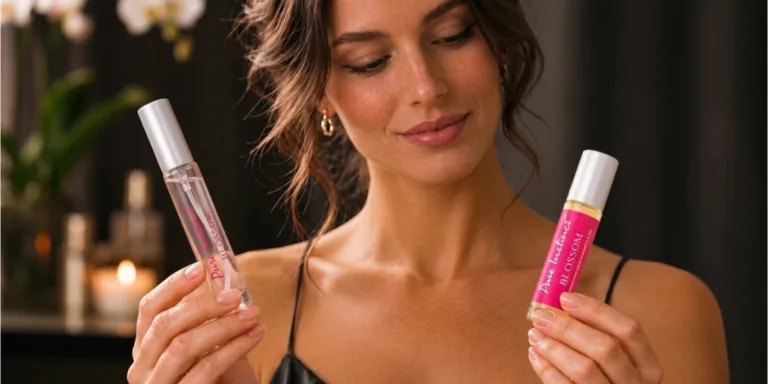
A compatible scented lotion, perfume oil or roll-on may add depth to a fragrance routine. Applying a roll-on for close-to-skin wear and using a complementary spray when you want more projection can be a practical combination. However, layering two products does not automatically extend their life by a set number of hours, and competing scents can be distracting. Test a small amount first and choose combinations that smell good to you. If you enjoy a specific perfume, it may be better to keep that scent recognisable rather than mix several strong fragrances together. Layering is an option, not something every fragrance requires.
If you enjoy wearing more than one fragrance, our guide to layering fragrances without overdoing it explores how to choose complementary scents, balance their intensity and avoid combinations that become overpowering.
Refresh only when you need to
If a scent is genuinely fading by the afternoon, a small touch-up is often more comfortable than heavy application in the morning. A roll-on can be particularly convenient when you are travelling, at work or sharing a small space. Remember that your own nose may adapt before the people around you do, so avoid repeatedly topping up simply because you cannot smell yourself. In a workplace or other close setting, a light application is often kinder to the people around you. The point is to enjoy your fragrance, not to make every room smell of it.
Be careful with fabric, hair and sunlight
Some fragrances linger longer on clothing, but perfume oils and certain sprays can mark fabric, particularly pale or delicate materials. Use hair products intended for hair rather than assuming every perfume is suitable for direct application. Follow the product directions and avoid applying fragrance to irritated skin; some fragrance ingredients can also make sun-exposed skin more sensitive. Store bottles closed and away from heat and direct light to protect the fragrance over time. If you are wondering how long perfume lasts in the bottle, rather than on your skin, our guide explains the signs of deterioration and how to store your fragrances properly. If you are unsure about a product or material, use the fragrance as directed on skin instead. Extra wear time is not worth a stain or irritation.
Does perfume oil really last longer than spray?
Not necessarily. An alcohol-based spray typically disperses fragrance across a wider area, giving a more noticeable opening and often stronger projection. An oil-based roll-on usually deposits a smaller amount precisely where you apply it, so the scent may sit closer to your skin. Either can have excellent or disappointing longevity depending on its fragrance blend and concentration.
This difference is important because projection —how far the scent travels—is not the same as longevity —how long it remains detectable. A roll-on can still be noticeable when someone is close, even if it no longer creates a scent trail. Equally, a strong spray can be very noticeable at first and then settle into something much quieter.
Think about the experience you want: A spray is useful when you enjoy a broader fragrance presence. A roll-on is convenient for precise application, discretion and touch-ups. Choose by how you like to wear scent rather than assuming one format guarantees more hours.
At Wildfire, you can explore both roll-on perfume oils and fragrance sprays rather than choosing from a single format. If you want a subtle scent you can reapply quietly, start with a roll-on. If you want a more noticeable first impression, consider a spray. The details of the fragrance itself still matter more than a blanket claim that one format is always stronger or longer-lasting.
Does pheromone perfume have a different wear time?
No special longevity rule applies simply because a fragrance is marketed as a pheromone perfume. How long you can smell it still depends on its actual formula, concentration, amount applied and the conditions in which you wear it. Pheromone-related marketing should not be confused with a measurable guarantee of stronger attraction or longer-lasting fragrance. If you wear an oil-based formula, our guide to where and how much pheromone oil to apply offers a practical starting point.
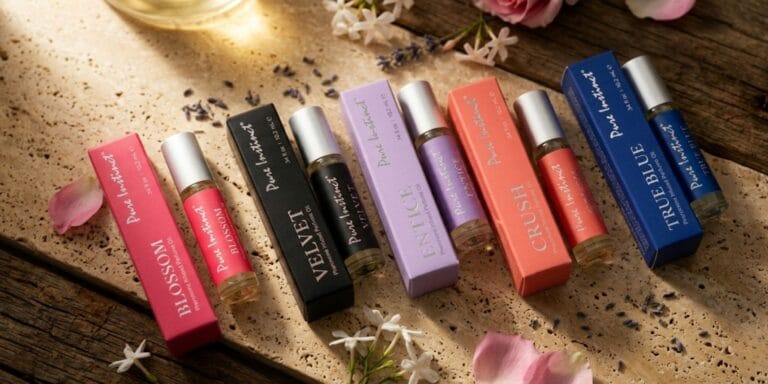
For example, Pure Instinct is available in spray and roll-on styles, while Simply Sexy includes lighter mist options. That gives you choices in how noticeable or portable your fragrance feels, but it would be misleading to promise the same wear time across every scent in either collection. If this is the format you are shopping for, our pheromone perfume versus regular perfume guide explores the differences without treating longevity as an automatic benefit.
So which fragrance should you choose if yours keeps fading?
If your current perfume disappears quickly, first check whether it truly fades or whether you have become used to smelling it. Then consider the scent itself: lighter, fresh compositions often behave differently from richer fragrances with prominent base notes. Buying a more concentrated fragrance may help, but it is not always the most satisfying answer if what you really want is the same bright opening all afternoon.
For noticeable scent at a distance, a spray may be the better fit. For a discreet fragrance you can refresh easily, a roll-on may suit your routine. If you enjoy both, there is nothing wrong with using a spray in the morning and keeping a compatible roll-on for later. If you are choosing a new scent, explore our pheromone perfumes for women or pheromone colognes for men to compare fragrance styles and formats. The best purchase is the fragrance you enjoy wearing, with realistic expectations of how it changes throughout the day.
Find a fragrance that suits the way you wear it
Explore Wildfire’s roll-on perfume oils and fragrance sprays, whether you prefer a close-to-skin scent, an easy afternoon refresh or something with a more noticeable opening.
Questions you might still have
How long does perfume last on skin?
Many perfumes remain noticeable for around 2–8 hours, although this varies widely. Eau de toilette is often lighter than eau de parfum, while some richer formulations can last well beyond eight hours. Use advertised ranges as guides, not guarantees.
Why can’t I smell my perfume when other people can?
Your nose may have adapted to a familiar scent. The perfume could also have become quieter rather than disappearing entirely. If someone else still notices it, avoid immediately adding more; take a break and reassess.
Does perfume oil last longer than perfume spray?
Not in every case. Oil-based perfumes frequently stay closer to the skin, while sprays often project more widely. Actual wear time depends on the individual formula, not simply whether the product contains alcohol.
How long does pheromone perfume last?
Pheromone perfume does not have a separate standard wear time. Treat it like any other perfume: the scent blend, concentration, amount applied and conditions determine how long it remains noticeable.
Does perfume last longer on clothing than on skin?
Fragrance can linger on many fabrics longer than on skin, sometimes until the garment is washed. However, perfume oils and sprays may stain or damage delicate materials. Check the product instructions and fabric care guidance before applying.
Can I make a body mist last as long as an eau de parfum?
You may improve the experience by applying to moisturised skin or refreshing it during the day, but a lighter mist will not necessarily perform like a more concentrated perfume. If you prefer the lightness of a mist, convenient reapplication may be a better solution than trying to make it behave like an eau de parfum.
Is the five-spray rule a good way to make perfume last longer?
Not necessarily. There is no universally suitable number of sprays because perfume strength, application and your surroundings vary. Begin with a modest amount and judge how it wears before adding more, especially in small or shared spaces.