What Is Perfume Oil? A Different Way to Wear Fragrance
Fragrance is one of the most personal things we wear. It can become part of our identity, evoke a favourite memory or capture something about how we want to feel. Yet while most of us spend time choosing a fragrance we love, we rarely give much thought to the way we wear it.
Perfume oils offer an alternative to the familiar spray bottle, inviting you to experience fragrance through a different texture, application and scent experience. But if you have always worn conventional perfume, you might wonder whether an oil will last as long, whether other people will notice it or whether it will feel comfortable on your skin. Understanding these differences can help you choose a fragrance that suits not only your taste, but also the way you live.
What is perfume oil?
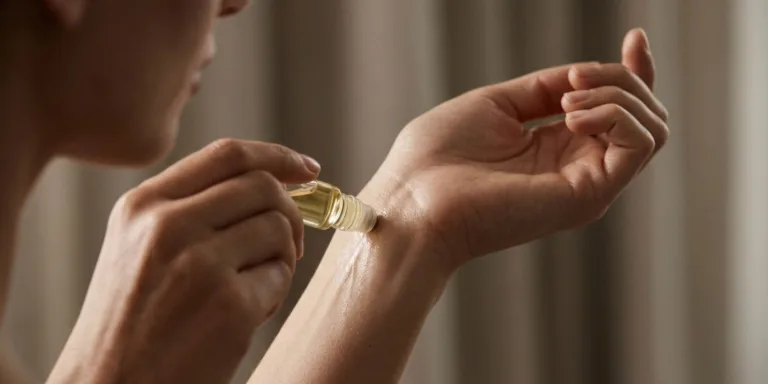
Perfume oil is a wearable fragrance in which aromatic ingredients are blended into an oil-based carrier rather than a predominantly alcohol-based solution. It is commonly applied directly to the skin using a rollerball, dabber or applicator. Its scent, strength and longevity depend on the formulation, aromatic ingredients and amount applied, rather than the oil format alone.
What is actually inside a perfume oil?
At its simplest, a perfume oil combines aromatic ingredients with a carrier that makes the fragrance suitable for its intended application. The aromatic ingredients create the scent, while the carrier influences how the perfume spreads across the skin, how it feels and how the fragrance is released. Depending on the formulation, the carrier may contain ingredients such as jojoba oil, fractionated coconut oil or other cosmetic emollients.
The fragrance itself may be composed of essential oils, naturally derived aromatic materials, synthetic fragrance ingredients or a combination of these. A perfume oil is therefore not necessarily natural simply because it is oil-based. Equally, an alcohol-based perfume can contain naturally derived fragrance ingredients.
Perfume oil, fragrance oil and essential oil
These terms are often used interchangeably, particularly when shopping online, but they do not always describe the same thing. Understanding the distinction matters because an aromatic oil intended for a diffuser or candle is not necessarily suitable for wearing directly on your skin.
| Type of oil | What it means |
|---|---|
| Perfume oil | A finished oil-based fragrance formulated for personal wear. |
| Fragrance oil | A broad term for an aromatic mixture. It may be a finished perfume or an ingredient intended for another application. |
| Essential oil | A concentrated aromatic extract obtained from plant material. It is not necessarily suitable for direct skin application. |
| Carrier oil | An oil used as a base to carry and dilute aromatic ingredients in a formulation. |
When choosing a fragrance to wear, look for a finished product specifically intended for personal use. The ingredient list and application instructions will tell you considerably more about its suitability than the word oil on the packaging.
Perfume oil vs spray perfume: what changes?
Imagine wearing the same fragrance composition in two different formats. One is dispersed across your skin as a fine mist, while the other is applied directly to a small area using a rollerball. Although the aromatic ingredients may be similar, the way they are delivered and released can create a noticeably different experience.
Conventional spray perfumes commonly use alcohol as a solvent, allowing the fragrance to spread across a relatively broad area before the alcohol evaporates. Perfume oils generally leave an oil-based layer on the skin from which aromatic ingredients are released. These differences can influence how a fragrance opens, develops and becomes noticeable to the wearer and those nearby.
| Feature | Perfume oil | Alcohol-based spray |
|---|---|---|
| Application | Usually rolled or dabbed directly onto skin. | Dispersed as a fine mist. |
| Coverage | More targeted application. | Typically covers a broader area. |
| Scent development | Influenced by the oil base and aromatic composition. | Influenced by solvent evaporation and aromatic composition. |
| Projection | Can range from subtle to pronounced. | Can range from subtle to pronounced. |
| Longevity | Depends on the individual formulation. | Depends on the individual formulation. |
| Skin feel | May leave a light emollient or oily finish. | Usually dries as the solvent evaporates. |
| Portability | Often available in compact rollerball bottles. | Available in full-size and travel atomisers. |
Neither format has to replace the other. You might enjoy the convenience of a perfume oil during the day and prefer a spray when getting dressed for an evening out. The value lies in having a choice, rather than feeling that one way of wearing fragrance is more sophisticated or effective than another.
Will other people be able to smell your perfume oil?
One of the biggest uncertainties when trying a perfume oil for the first time is whether it will be noticeable to anyone else. Some people enjoy a fragrance that becomes part of their personal space, while others prefer a scent that makes its presence known from further away. Neither preference is more desirable; they simply reflect different ways of enjoying fragrance.
Because perfume oils are commonly applied to smaller areas of skin, they can create a more localised fragrance experience than a broadly applied spray. However, this does not mean that perfume oils are inherently weaker. A strongly projecting aromatic composition in an oil base may be more noticeable than a delicate alcohol-based fragrance.
Fragrance strength and fragrance longevity are not the same thing.
Projection describes how far a fragrance can be detected around you. Longevity describes how long it remains detectable. A perfume can stay on your skin for a considerable time without projecting strongly, just as a noticeable fragrance can become softer relatively quickly.
Does perfume oil last longer than spray perfume?
It can, but there is no universal rule that an oil-based fragrance will outlast an alcohol-based one. The aromatic ingredients, their concentration, the carrier, the amount applied and the conditions in which the fragrance is worn all influence its performance. Some perfume oils remain detectable for longer than comparable sprays, while others may fade sooner.
Fragrance perception also changes as you wear a perfume. Your sense of smell can become accustomed to a familiar scent, making it less noticeable to you even when someone else can still detect it. Before assuming your perfume has disappeared, move away from the application area for a while and return to it later.
If staying power is particularly important to you, our guide to how long perfume lasts on skin explores the factors that influence fragrance performance in more detail.
Is perfume oil more concentrated than eau de parfum?
Not necessarily. The term perfume oil describes the type of carrier used, rather than a standard fragrance concentration. An eau de parfum and a perfume oil may contain different proportions of aromatic ingredients, even when they are designed to smell similar. Without knowing their individual formulations, it is not possible to determine which is more concentrated from the product names alone.
The art of wearing perfume oil
Applying perfume oil can feel quite different from the familiar ritual of spraying fragrance before leaving home. Instead of dispersing perfume into the air or across a broad area, you can place it precisely where you want to wear it. This gives you the opportunity to adjust your application gradually and discover how the fragrance develops on your own skin.
How to use perfume oil
- Begin with clean, dry skin. Choose an area where the fragrance will not immediately be rubbed away by clothing or washed off.
- Start with a small amount. If you are using a rollerball, make a light pass across the skin. Follow the product’s application instructions and adjust according to its strength.
- Choose your application points. The wrists, inner elbows and sides of the neck are popular places to wear fragrance, provided the skin is comfortable and intact.
- Give the fragrance time to develop. Experience the scent before deciding whether you would like to apply more. There is no need to rub it vigorously into your skin.
- Reapply according to your preference. Rather than following a fixed schedule, consider how the fragrance is performing and the environment you are in.
Do you need to apply perfume oil to pulse points?
Pulse points are popular fragrance application areas because they are convenient and often relatively warm. However, they are not the only places where perfume oil can be worn, nor do they guarantee that a fragrance will last longer. Choose application areas that suit your clothing, comfort and preferred fragrance experience.
Can you wear perfume oil with your usual perfume?
You do not need to abandon a favourite spray fragrance to enjoy perfume oils. An oil can be worn independently or combined with another perfume to introduce a complementary aromatic character. The combination might soften a fragrance, add warmth or introduce a contrasting note, depending on the scents you choose.
Start with a light application of each fragrance so that neither overwhelms the other. Our guide to layering perfume explains how to explore fragrance combinations without losing the individual character of the scents you enjoy.
What to expect when wearing perfume oil
Choosing a fragrance is not only about how it smells. Its texture, convenience and compatibility with your everyday routine can be just as important. If you are considering your first perfume oil, there are a few practical differences worth understanding before making the switch.
Will perfume oil leave your skin feeling greasy?
The answer depends largely on the carrier and how much product you apply. Some formulations have a lightweight finish, while others leave a more noticeable layer on the skin. Applying more oil than you need can increase the likelihood of residue without necessarily improving the fragrance experience.
If you are unfamiliar with the texture of a particular perfume oil, begin with a small application on your wrist. Notice how it feels as you wear it and whether the finish is comfortable for you. The most enjoyable perfume is one that suits your sensory preferences as well as your taste in fragrance.
Can perfume oil stain clothes?
Oil-based fragrances can leave marks on some fabrics, particularly delicate or light-coloured materials. The likelihood depends on the carrier, aromatic ingredients, fabric and amount of product transferred. Applying perfume oil to exposed skin and allowing it to settle before dressing can help reduce direct contact with clothing.
Avoid applying a skin perfume directly to silk, delicate fabrics or garments that are difficult to clean unless the manufacturer specifically indicates that the product is suitable for that use.
Are perfume oils better for sensitive skin?
An alcohol-free perfume oil may appeal to someone who finds alcohol-based fragrances uncomfortable or drying. However, removing alcohol does not automatically make a fragrance suitable for sensitive skin. Essential oils, synthetic fragrance ingredients and carrier ingredients can all contribute to irritation or allergic reactions in susceptible individuals.
If you know that particular ingredients cause discomfort, checking the formulation is more useful than choosing a product simply because it is described as natural or alcohol-free. A fragrance-free product may be a more appropriate choice for someone with a known fragrance allergy.
Use only products formulated for personal fragrance and follow their application instructions. Avoid broken or irritated skin, the eyes and mucous membranes. When trying a new fragrance, consider testing a small amount on a limited area of skin first. This does not guarantee that a reaction will not occur.
Discontinue use if irritation develops. If you have a known fragrance allergy or persistent skin sensitivity, seek advice from a qualified healthcare professional.
What is pheromone oil?
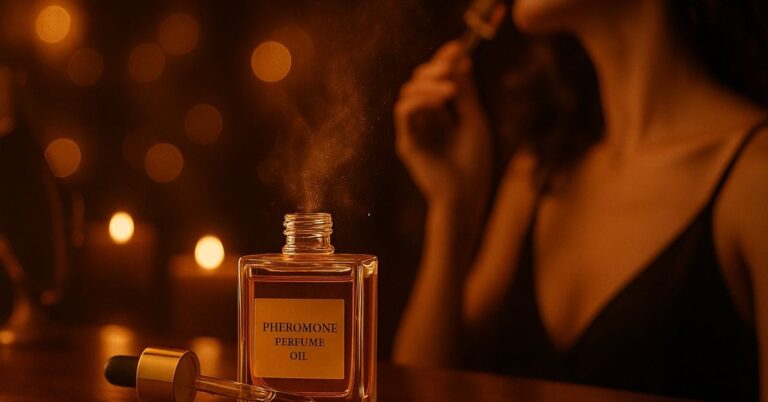
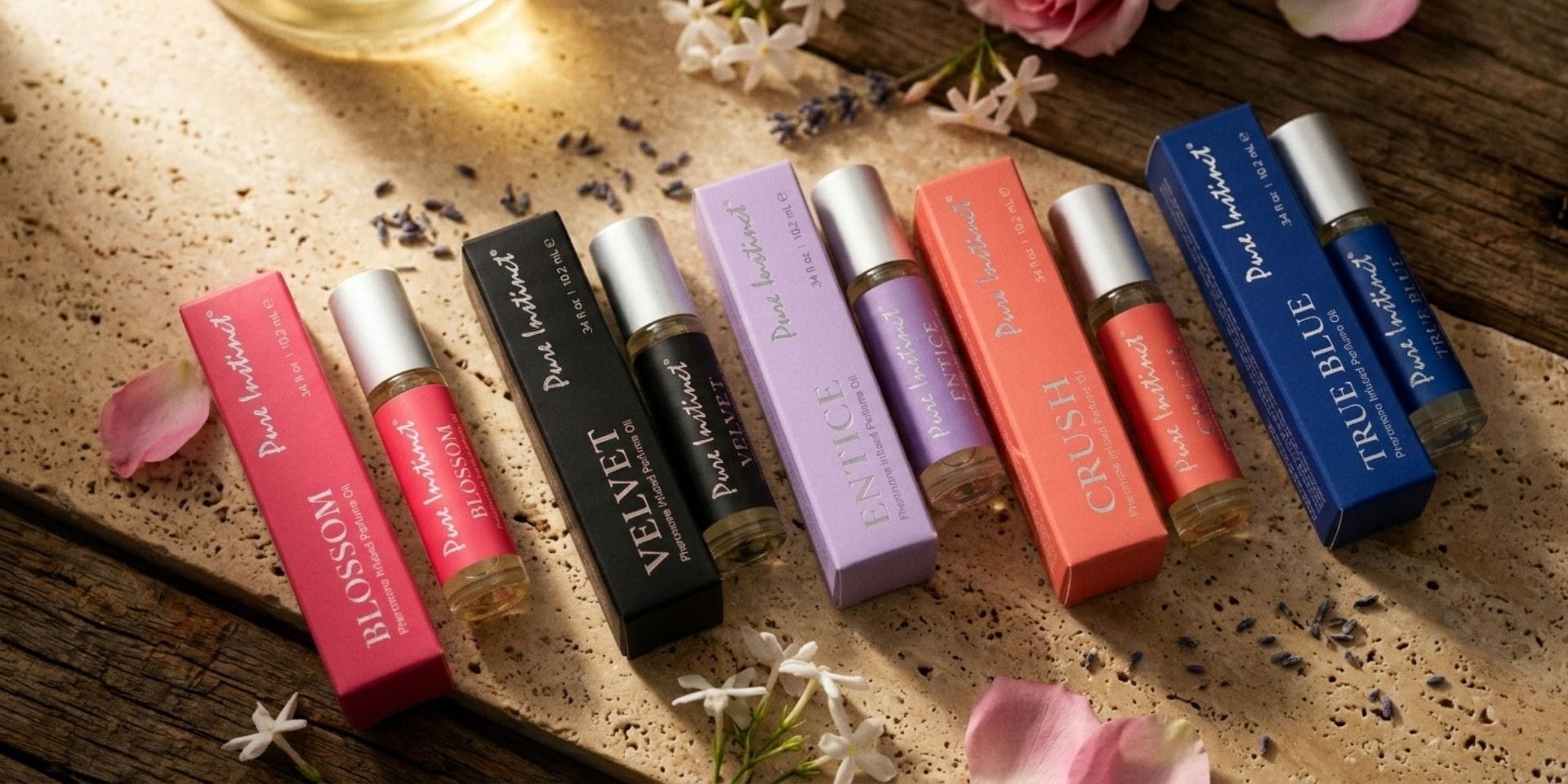
If you have been exploring perfume oils, you may also have encountered fragrances described as pheromone oils. These products combine an oil-based personal fragrance with ingredients marketed for their potential association with attraction, social perception or personal presence. They are often available in compact roll-on formats, although their formulations vary between brands.
The important distinction is that perfume oil describes the fragrance format, while pheromone perfume describes a particular product concept. A perfume oil does not necessarily contain ingredients marketed as pheromones, and a pheromone perfume does not have to be oil-based. Both conventional and pheromone fragrances can be available as oils or sprays.
Does pheromone oil work differently?
A pheromone perfume oil is worn much like any other finished oil-based fragrance. Its scent development, texture and staying power depend on its formulation. Claims that added pheromone ingredients reliably increase human attraction, however, are not established by robust scientific evidence.
Fragrance can still be meaningful in the way we express ourselves, experience confidence and create associations with people or moments. These experiences are personal and should not be confused with a guaranteed biological response from another person.
If you are curious about the distinction between fragrance, attraction and pheromone claims, explore our guide to whether pheromone perfume really works . For practical application advice, our guide to wearing pheromone oils explores the format in more detail.
Is perfume oil right for you?
The decision between perfume oil and spray perfume is ultimately about the kind of fragrance experience you enjoy. You might appreciate the precision of a rollerball, the convenience of carrying a small bottle or the texture of an oil-based formulation. Alternatively, you might prefer the familiar sensation and broader application of a conventional spray.
Rather than choosing a perfume format based on promises of superior performance, consider how you want fragrance to fit into your day. Do you enjoy revisiting your scent throughout the afternoon? Do you prefer a fragrance that feels personal, or one with a more pronounced presence? Would you like to explore different scent combinations without carrying several full-sized bottles?
| If you value… | Consider… |
|---|---|
| Precise application | A rollerball or dab-on perfume oil. |
| Broad fragrance coverage | A spray perfume. |
| Avoiding alcohol-based fragrance | A perfume oil with a verified alcohol-free formulation. |
| Strong projection | A fragrance with the desired aromatic performance, regardless of format. |
| Long-lasting scent | Evaluating the individual fragrance rather than relying on its format. |
| Exploring fragrance combinations | Layering compatible oils and sprays. |
If you are still unsure, try wearing a perfume oil on an ordinary day rather than saving it for a special occasion. Notice how the scent develops, how comfortable it feels and whether you enjoy the way you interact with it. Your own experience will tell you more about its suitability than a general comparison between perfume formats.
You may discover that oils become your preferred way to wear fragrance, or that you enjoy having both formats in your collection. There is no need to choose one exclusively. Fragrance is an expression of individuality, and the way you wear it should feel equally personal.
Frequently asked questions
A few more things worth knowing as you explore the world of perfume oils.
Can you wear perfume oil on its own?
Yes. A finished perfume oil is designed to be worn independently. You do not need to combine it with a spray perfume unless you enjoy experimenting with fragrance combinations.
Is roll-on perfume the same as perfume oil?
Not always. Roll-on describes the application method, while perfume oil describes the fragrance base. Although many rollerball perfumes are oil-based, some contain alcohol or other solvents. Check the individual formulation.
Are all perfume oils alcohol-free?
Many perfume oils are formulated without ethanol, the alcohol commonly used in spray perfumes. However, formulations vary, and the term perfume oil alone does not guarantee the absence of every type of alcohol. Check the ingredient list if avoiding a particular ingredient is important to you.
Can you use perfume oil every day?
A perfume oil formulated for personal fragrance may be worn regularly according to its instructions, provided you tolerate the ingredients. Adjust the amount to your preference and environment, and discontinue use if irritation occurs.
Why does my perfume oil smell different from the spray version?
The carrier, fragrance concentration, aromatic composition and application method can all influence how a scent develops. Even products with the same fragrance name may smell different when formulated as an oil and a spray.
Can you apply perfume oil to your hair?
Only if the manufacturer indicates that the formulation is suitable for hair. A perfume oil designed for skin may leave residue or affect the appearance of your hair. A dedicated hair fragrance may be more appropriate.
How should you store perfume oil?
Keep the bottle securely closed and follow the manufacturer’s storage instructions. A cool place away from direct sunlight and excessive heat is generally preferable for preserving fragrance quality.
FRAGRANCE • INDIVIDUALITY • EXPRESSION
Make fragrance your own
Whether you are discovering perfume oils for the first time or looking for something different to complement a favourite scent, explore a collection of fragrances designed to be worn your way.
Explore Perfume Oils