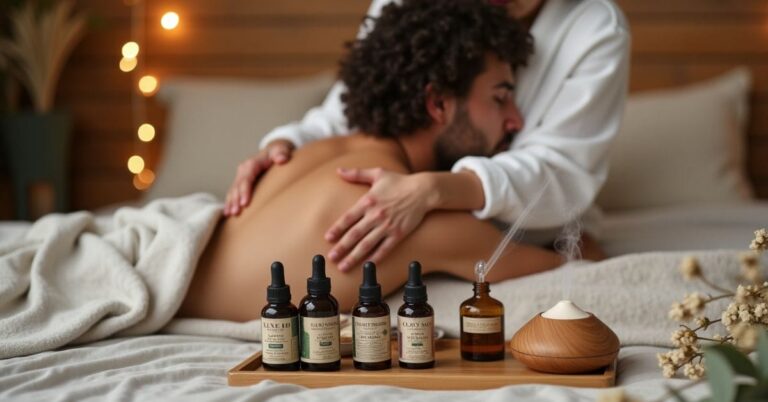

Lube Alternatives: What Can You Use Instead of Lube?
Looking for something to use instead of lube? This guide compares common household options, plant oils and purpose-made lubricants, explains which choices depend on the situation, and flags products that are better avoided.
People look for lube alternatives for all sorts of reasons. Sometimes you have simply run out at the wrong moment. Sometimes a familiar lubricant does not feel quite right, you prefer the lasting feel of an oil, or you want to know whether something already at home could work instead.
The useful question is not whether there is one perfect substitute for lube. There isn’t. The better question is which option suits what you are doing, what you are using it with, how you want it to feel, and how your body responds.
What can you use instead of lube?
Some plant oils, including coconut, grapeseed, hemp seed, olive and sunflower oil, are commonly considered as lubricant alternatives. Pure aloe vera gel can also be considered in some circumstances. Other household products, including honey, soap, baby oil and body lotion, are better avoided, while things such as water and saliva simply do not provide very effective lasting lubrication.
The A to Z finder below gives you the quick answer first. You can then jump directly to the explanation if you want to understand why.
Before choosing any lube alternative
First check what the product needs to work with. Oil-based products should not be used with latex or polyisoprene condoms or other latex barriers. Polyurethane condoms can generally be used with oil-based lubricants. Other barrier materials and products can have different instructions, so check the manufacturer’s guidance.
Sex toys also need a compatibility check. The material, surface or coating of the toy and the manufacturer’s care instructions determine which lubricants or oils should be used with it. Do not assume every toy is compatible with every lubricant.
Look at the complete formulation. Something labelled aloe, vitamin E, massage oil or hair oil may contain much more than the ingredient named on the front. Fragrance, alcohol, essential oils, preservatives and other additives can change the answer considerably.
If you are trying something new on the skin, start cautiously. Testing a small amount on external skin first may help identify an obvious sensitivity or reaction. A skin test does not prove that something is suitable for internal vaginal or anal use, so the intended use and complete formulation still matter.
Stop using anything that causes burning, itching, swelling or persistent discomfort. If you have known allergies, recurring irritation or particularly sensitive skin, factor that into your choice rather than assuming a commonly used option will automatically suit you.
Quick Lube Finder: Can I Use This as Lube?
If you have something in front of you and simply want to know whether it is worth considering, start here.
What the answers mean: Consider means it can be a reasonable option in an appropriate situation. Depends means the formulation, allergy risk, intended use or available evidence changes the answer. Poor lubricant means it is not necessarily unsafe simply because it touches intimate skin, but it does not perform particularly well as lubrication. Better avoided means there is a substantive irritation, hygiene, vaginal-health or formulation reason to choose something else.
Use the quick answer for the verdict, then open More detail for the reasoning, formulation checks and the situation each option suits best.
| What you’re considering | Quick answer | Why? |
|---|---|---|
| Aloe vera gel | Depends | Plain aloe may provide light glide, but skincare gels often contain alcohol, fragrance or other additives and aloe tends to dry quickly. More detailWhy this rating Aloe is water-based, so it can create light initial slip without the heavier feel of oil. The limitation is staying power: it tends to dry much faster than oil or silicone, so friction can return sooner. What to check Read the complete ingredient list. Commercial aloe gels can contain alcohol, fragrance, colour, preservatives or other skincare ingredients that change the answer. Best fit If what you actually want is long-lasting glide that can continue through massage and intimate touch, a purpose-made oil is generally a more predictable fit than a skincare aloe gel. |
| Arousal oil | Depends | Arousal oils are primarily designed to create sensation rather than replace lubricant. Intended use varies by product. More detailWhy this rating Arousal oils are usually designed to create sensation — warming, cooling or tingling — rather than to function primarily as lubricant. Some products may add glide, but sensation and lubrication are different jobs. What to check Follow the specific product’s directions and intended-use area. Ingredients that feel pleasant in a purpose-made arousal formula should not be assumed to work as a general lubricant in larger amounts. Best fit Wildfire treats these as separate product roles: arousal oils are for targeted sensation, while Pleasure Oils are the oil-based option when glide, massage and intimate touch are the priority. |
| Avocado oil | Consider | A rich plant oil with good staying power. Plain formulations are easier to assess than blends containing fragrance or other additives. More detailWhy this rating Avocado oil is richer and more cushioning than lighter oils such as grapeseed or jojoba, so it can provide long-lasting slip and remain noticeable on the skin for longer. What to check Plain oil is easier to assess than a fragranced or blended product. Cold-pressed and refined versions can also differ in colour, aroma and feel. Direct research on internal sexual use is more limited than for some better-established options. Best fit If you like the richer oil feel but want a finished blend intentionally created for body, massage and intimacy, a purpose-made Pleasure Oil removes some of the guesswork of adapting a cooking oil. |
| Baby oil | Better avoided | Medical guidance cautions that baby oil can irritate delicate vaginal tissue, and many formulas also contain fragrance. More detailWhy this rating Baby oil is usually mineral-oil based and often fragranced. The medical guidance cited in this article specifically cautions that baby oil can irritate delicate vaginal tissue. What to check Do not assume ‘baby’ means suitable for intimate use. Check fragrance and other additives, and remember that baby oil is not the same thing as a purpose-made intimate oil. Best fit If the goal is a smooth oil feel, a plain plant oil or a finished intimate oil such as Wildfire Pleasure Oils is a more intentional route than a fragranced baby-care product. |
| Beef tallow | Depends | There is little useful evidence supporting it as an internal sexual lubricant. It should not be labelled dangerous without evidence, but better-understood options exist. More detailWhy this rating There is little useful clinical evidence supporting beef tallow as a vaginal or anal lubricant. That does not prove it is toxic; it means there is not a good evidence base for recommending it. What to check Consider purity, storage, added fragrance and whether the product was ever intended for intimate use. Better-understood alternatives make the decision easier. Best fit A finished intimate oil has a clearer intended use than adapting an animal fat whose sexual-use profile is largely unstudied. |
| Body lotion / moisturiser | Better avoided | Products not intended for vaginal use can contain fragrances and other ingredients that may cause irritation, and many absorb too quickly to lubricate effectively. More detailWhy this rating Ordinary lotions are emulsions made for external skin, not for sustained intimate glide. They can contain fragrance, active skincare ingredients, emulsifiers and preservatives, and often absorb too quickly to lubricate well. What to check The NHS guidance cited in the article advises against putting ordinary creams, lotions or moisturisers inside the vagina unless they are intended for vaginal use. Best fit If you want a body product that can also move naturally into massage and intimate touch, use something explicitly intended for that role rather than repurposing a moisturiser. |
| Butter | Better avoided | Animal-derived food products introduce unnecessary biological and formulation variables and are specifically discouraged as vaginal lubricant substitutes. More detailWhy this rating Butter is an animal-derived food, not a simple carrier oil. The medical guidance cited in the article discourages animal-derived foods such as butter as vaginal lubricant substitutes. What to check Food ingredients bring unnecessary biological and formulation variables, and there is no practical advantage over simpler, better-understood options. Best fit A plant-based or purpose-made intimate oil offers the rich glide people are often seeking without adapting a dairy food. |
| Canola / rapeseed oil | Depends | A plain single-ingredient plant oil is different from a blended cooking product, but direct intimate-use evidence is more limited than for some better-studied oils. More detailWhy this rating Plain canola oil can provide oil-based slip, but there is less specific intimate-use guidance for it than for coconut, grapeseed, olive or sunflower oil. What to check Check whether the bottle is actually a single oil or a blend, and avoid flavoured or infused cooking oils. Best fit When evidence and intended use are less clear, a finished intimate oil can be easier to assess because its role is explicit rather than incidental. |
| Coconut oil | Consider | A commonly considered plant-oil option with rich, long-lasting glide. Ordinary coconut oil can solidify in cooler temperatures. More detailWhy this rating Coconut oil is commonly considered because it is inexpensive, familiar and provides rich, lasting glide. Medical guidance cited in the article includes it among plant oils people may consider. What to check Ordinary coconut oil can solidify in cooler rooms, and fragranced or blended coconut products are not equivalent to plain oil. Oil-based products also have barrier-compatibility limits covered earlier in the guide. Best fit If coconut’s staying power appeals to you but you want a finished product built around massage and intimate use, Wildfire Pleasure Oils are the more purpose-designed option. |
| Conditioner | Better avoided | Hair conditioner is a rinse-off cosmetic containing conditioning agents, preservatives and often fragrance. It offers no useful advantage as an intimate lubricant. More detailWhy this rating Hair conditioner is a rinse-off cosmetic made with conditioning agents, preservatives and often fragrance. Those ingredients are there to treat hair, not to maintain comfortable intimate glide. What to check Because formulas vary widely, there is no useful reason to expose sensitive genital tissue to a conditioner when simpler options exist. Best fit Choose a product designed around body contact and intimacy rather than adapting a rinse-off hair product. |
| Egg white | Better avoided | Raw animal-derived food introduces proteins and unnecessary hygiene concerns into the vaginal environment. More detailWhy this rating Raw egg introduces animal proteins and hygiene concerns without offering any unique lubrication benefit. The cited medical guidance specifically discourages egg white and other animal-derived foods as vaginal lubricant substitutes. What to check Food ingredients should not be assumed suitable simply because they feel slippery. Best fit If a natural-feeling glide is what you want, plant oils and purpose-made intimate oils are better-understood choices. |
| Essential oils, undiluted | Better avoided | Concentrated essential oils can irritate or burn skin and mucosal tissue. They should not be used neat as personal lubricant. More detailWhy this rating Essential oils are highly concentrated aromatic extracts, not carrier oils. Used neat, they can irritate or burn skin and mucosal tissue. What to check Never treat a bottle of peppermint, tea tree, rosemary or another undiluted essential oil as personal lubricant. Finished products containing essential oils are a different question because concentration and formulation matter. Best fit Wildfire’s finished products use formulated blends rather than asking you to apply concentrated essential oil directly. |
| Fractionated coconut oil / MCT oil | Consider if plain | It stays liquid at room temperature and feels lighter than conventional coconut oil. Check that it is a simple formulation rather than a fragranced blend. More detailWhy this rating Fractionated coconut oil and MCT oil stay liquid at room temperature and usually feel lighter than ordinary coconut oil while still providing long-lasting oil glide. What to check Look for a simple formulation. Fragrance, essential oils and other additions can change suitability, and oil-based barrier considerations still apply. Best fit This is close to the feel many people want from an intimate oil; a finished Pleasure Oil takes the next step by considering glide, aroma and multi-use body/massage application as part of the product. |
| Grapeseed oil | Consider | A relatively light plant oil specifically identified by medical guidance as one of the oils people can consider for lubrication. More detailWhy this rating Grapeseed oil is thinner and lighter than olive or avocado oil, so it spreads easily without leaving as heavy a coating. Medical guidance cited in the article includes it among oils people may consider for lubrication. What to check Freshness matters. Replace oil that develops a rancid or clearly unusual smell, and use a plain product rather than a fragranced blend. Best fit It can be a reasonable simple-oil option; a purpose-made intimate blend is the more predictable choice when you want the product to move between massage and sexual touch. |
| Hair oil | Depends | “Hair oil” describes a product category rather than one ingredient. Some contain fragrance, silicones, essential oils or other additives, so the full formula matters. More detailWhy this rating The label ‘hair oil’ tells you almost nothing about the formula. One product may be mostly carrier oil while another contains fragrance, silicones, essential oils or other cosmetic ingredients. What to check Read the full ingredient list and intended-use directions rather than judging the bottle by the word ‘oil’. Best fit A purpose-made intimate oil has a clearer job and fewer assumptions than repurposing a cosmetic product designed for hair. |
| Hemp seed oil | Consider | A lightweight plant oil included among commonly acceptable oil alternatives, although freshness and storage matter. More detailWhy this rating Hemp seed oil is a lighter plant oil that spreads easily and feels less substantial than olive or avocado oil. It is included in the article among oils identified in medical guidance as options people can consider. What to check Storage and freshness matter because the oil can deteriorate over time. Use a plain, fresh product. Best fit If you want a lighter oil feel but prefer a finished formulation designed for intimate body use, a purpose-made blend offers more consistency than a raw culinary or carrier oil. |
| Homemade lube / cornstarch recipes | Depends | There is no single homemade-lube formula. Ingredients, concentration, preparation, storage and contamination risk vary from recipe to recipe. More detailWhy this rating There is no single standard homemade-lube formula. Water content, starches or gums, preparation method, storage time and cleanliness all vary, so one recipe cannot stand in for every other recipe. What to check Food-grade ingredients are not automatically proven suitable for vaginal or anal use, and home-prepared water-containing mixtures introduce storage and contamination questions. Best fit A finished product gives you repeatable texture, known ingredients and a defined intended use instead of relying on a one-off kitchen preparation. |
| Honey / agave / syrup | Better avoided | High sugar content can change the vaginal environment, while sticky or clumping products can increase irritation and friction. More detailWhy this rating Sugary substances can alter the vaginal environment, and they can become sticky or clump as they dry. That can increase friction rather than reliably reducing it. What to check The problem is not simply that these are household foods; it is their high sugar content and poor lubricating behaviour. Best fit If you want something rich and long-lasting, an oil-based product provides that feel without using a sticky sugar product. |
| Hybrid lubricant | Consider | A purpose-made lubricant, usually combining water and silicone for more staying power than a typical water-based formula. More detailWhy this rating Hybrid lubricants are purpose-made formulas that usually combine water and silicone. They tend to last longer than standard water-based lube while feeling lighter than pure silicone. What to check Toy compatibility and the exact formula still matter, but a hybrid is usually a clearer choice than an improvised household substitute when you want more staying power. Best fit Choose hybrid when you want a lighter purpose-made lube. Choose a Pleasure Oil when you specifically prefer an oil feel and want massage and intimate touch to flow together. |
| Jojoba oil | Consider | A light, silky liquid wax widely used on skin and frequently considered when someone prefers an oil with less heaviness. More detailWhy this rating Jojoba is technically a liquid wax. It feels light and silky, is widely used on skin and tends to feel less heavy than richer kitchen oils. What to check Its main downside as an emergency substitute is practicality: good-quality jojoba is often more expensive and less likely to already be in the cupboard. Best fit Jojoba illustrates why a blended intimate oil can be useful: different carrier oils can be chosen for feel and glide rather than relying on one raw ingredient alone. |
| Margarine / shortening | Better avoided | These are processed food fats with variable emulsifiers, flavourings, salts or other ingredients and no useful advantage over simpler alternatives. More detailWhy this rating These are processed food fats rather than simple oils. Formulations can include water, emulsifiers, flavourings, salt and other ingredients that add uncertainty without improving intimate lubrication. What to check Do not assume ‘fatty and slippery’ means equivalent to a plain plant oil. Best fit If a rich oil texture is the goal, a simple oil or purpose-made intimate oil is a much cleaner choice. |
| Massage oil | Depends | Some are intended for intimate use and others are only intended for body massage. Ingredients and manufacturer directions decide the answer. More detailWhy this rating Massage oil can be appropriate or inappropriate depending on the formula. Some products are intended for body and intimate use; others contain strong fragrance, warming agents or muscle-relief ingredients intended only for ordinary massage. What to check Look at the full ingredient list and the manufacturer’s intended-use directions. The words ‘massage oil’ alone do not answer the question. Best fit This is where Wildfire Pleasure Oils have a clear advantage: they are intentionally positioned for body, massage, bath and intimate use rather than ordinary massage only. |
| Mineral oil | Depends | Pure mineral oil should not automatically be treated as identical to baby oil or petroleum jelly. Evidence for internal intimate use is limited, so better-understood options are easier to recommend. More detailWhy this rating Pure mineral oil is not automatically the same as baby oil, fragranced body oil or petroleum jelly. The article notes that evidence specifically supporting it as an internal lubricant is limited. What to check Assess the actual product rather than the ingredient family. Fragrance and other additives matter. Best fit When the evidence for a raw ingredient is limited, a product with explicit intimate-use intent can be easier to evaluate. |
| Olive oil | Consider | A widely available plant oil identified in medical guidance as a potential lubricant alternative. It is heavier and more aromatic than some other oils. More detailWhy this rating Olive oil is readily available, gives rich oil glide and is one of the plant oils identified in the article’s cited medical guidance as a possible alternative. What to check Extra virgin olive oil can have a stronger aroma and colour than refined versions, and the heavier oil can transfer to bedding and fabrics. Best fit If you like olive oil’s lasting feel but want a less improvised experience, a finished Pleasure Oil is designed around texture, aroma and multi-use application rather than kitchen use. |
| Papaw / pawpaw ointment | Better avoided for internal use | Common Australian papaw ointments can be petroleum-jelly-based topical products. Lucas’ Papaw Ointment, for example, is specifically labelled for external use only. More detailWhy this rating The botanical name can be misleading because the product may be mostly another base. The article uses Lucas’ Papaw Ointment as an example: it uses petroleum jelly as a carrier and is labelled for external use only. What to check Read the actual ingredients and product directions. ‘Papaw’ on the front is not evidence that the ointment is an internal lubricant. Best fit Choose an intimate product whose intended use is explicit rather than inferring suitability from a botanical marketing name. |
| Petroleum jelly / Vaseline | Better avoided as an internal lubricant | Medical guidance cautions about vaginal irritation, and observational research has found an association between intravaginal petroleum jelly use and bacterial vaginosis. More detailWhy this rating Petroleum jelly is useful for many external skin applications, but this article does not recommend it as an intravaginal lubricant. Medical guidance cited here cautions about irritation. What to check Observational research cited in the article found an association between intravaginal petroleum jelly use and bacterial vaginosis. That does not prove causation, but it is enough to favour better-understood alternatives. Best fit If long-lasting slip is the attraction, an oil specifically intended for intimate body use is a more appropriate route than petroleum jelly. |
| Purpose-made oil-based lubricant | Consider | Designed specifically to provide oil-based lubrication, with intended-use instructions that are clearer than an improvised household product. More detailWhy this rating A purpose-made oil lubricant is designed specifically to provide oil-based glide, so its intended use and directions are clearer than those of a pantry or cosmetic product. What to check Oil-based barrier compatibility still matters, and formulas can differ in feel, scent and clean-up. Best fit Wildfire Pleasure Oils sit in this broader oil-based space with an emphasis on multi-use body, massage, bath and intimate application rather than being a conventional water- or silicone-based lube. |
| Rice bran oil | Depends | A plain plant oil may provide useful glide, but there is less direct intimate-use guidance than for better-established alternatives. More detailWhy this rating Rice bran oil can provide light oil glide, but the article notes there is less direct intimate-use evidence for it than for better-established alternatives. What to check That limited evidence is why it is classified as ‘Depends’ rather than being labelled either safe or unsafe. Best fit When the raw ingredient has little direct intimate-use guidance, a purpose-made product offers a clearer intended-use framework. |
| Saliva / spit | Poor lubricant | Saliva is common during sexual activity and should not be described as inherently unsafe, but it dries quickly and provides little sustained glide. More detailWhy this rating Saliva is common during sexual activity and is not inherently unsafe simply because it touches genital skin. It is a poor lubricant because it dries quickly and provides little sustained glide. What to check The article also notes observational research associating vaginal use of saliva with bacterial vaginosis, although that does not establish that saliva itself causes BV. Best fit If the real problem is staying power, a purpose-made lube or oil solves the performance issue much more effectively than repeatedly adding saliva. |
| Shampoo / soap / body wash | Better avoided | Cleansing surfactants and unsuitable pH can irritate sensitive genital and vaginal tissue. More detailWhy this rating Cleansers contain surfactants designed to remove oils, which is the opposite of what you want from lubrication. Their pH and ingredient profile can also irritate sensitive genital or vaginal tissue. What to check Do not use cleansing products simply because they feel slippery when wet; that initial slip does not make them suitable lubricants. Best fit Use a product designed to maintain glide, not one designed to strip oils away. |
| Shea butter | Depends | There is limited direct evidence for its use as an internal lubricant. Plain shea butter and fragranced body products containing shea are also very different things. More detailWhy this rating Shea butter is widely used on external skin, but there is little good evidence specifically assessing it as a vaginal or anal lubricant. What to check Plain shea butter is also very different from a fragranced body butter containing shea plus many other ingredients. Best fit A finished intimate oil gives you the rich, skin-conditioning feel many people want from shea with clearer intended-use guidance. |
| Silicone-based lubricant | Consider | A purpose-made option with very long-lasting glide. Sex-toy compatibility should be checked. More detailWhy this rating Silicone lube gives very long-lasting glide because it does not evaporate like water-based formulas, so it usually needs much less reapplication. What to check Check sex-toy compatibility and follow the manufacturer’s guidance for both the lubricant and the toy. Best fit Silicone is the stronger choice when maximum lasting slip is the only goal. Wildfire Pleasure Oils make more sense when you specifically want oil-based glide plus massage and body use. |
| Sunflower oil | Consider | A lightweight plant oil included among commonly acceptable oil alternatives. More detailWhy this rating Sunflower oil is relatively light, readily available and is included in the article among plant oils identified in medical guidance as lubricant alternatives. What to check Use a plain oil rather than a flavoured, infused or blended cooking product. Best fit It can work as a simple household option; a finished Pleasure Oil offers a more deliberate sensory and multi-use experience. |
| Sunscreen | Better avoided | It is a treatment product containing UV filters and a cosmetic base, not a simple moisturising oil, and offers no useful reason to expose intimate tissue to those ingredients. More detailWhy this rating Sunscreen contains UV-filtering actives within a cosmetic base, often alongside fragrance or other additives. It is formulated to protect external skin from sunlight, not to lubricate intimate tissue. What to check There is no practical lubrication benefit that justifies exposing genital or internal tissue to sunscreen ingredients. Best fit Choose a dedicated lubricant or intimate oil rather than repurposing a treatment product. |
| Sweet almond oil | Depends | A common light carrier and massage oil, but almond allergy is an obvious consideration and intimate-use guidance is less consistent than for some other oils. More detailWhy this rating Sweet almond oil is a common carrier and massage oil with a relatively light feel, but direct internal-use guidance is less consistent than for several other plant oils. What to check Almond allergy is the obvious additional concern. Anyone with a known relevant allergy should choose another option. Best fit A blended intimate oil can deliver a light carrier-oil feel without relying on one ingredient that may not suit everyone. |
| Vegetable / cooking oil | Depends | Some plain vegetable oils are considered viable, but “vegetable oil” may describe different single oils or blends. Check what is actually in the bottle. More detailWhy this rating The phrase ‘vegetable oil’ can refer to a single oil or a blend. Some plain plant oils are included in medical guidance as possible alternatives, but that does not make every cooking-oil product equivalent. What to check Look for the actual oil or oils in the bottle and avoid flavoured, infused or complex blends. Best fit The key difference with Wildfire is intention: the product is formulated for body, massage and intimate use rather than being adapted from the kitchen. |
| Vitamin E oil | Depends | Vitamin E itself is sometimes recommended as an oil option, but products sold as “vitamin E oil” vary widely in concentration and added carrier ingredients. More detailWhy this rating Products sold as ‘vitamin E oil’ vary widely. Some contain concentrated vitamin E while others are mostly carrier oils with vitamin E added, and some include fragrance or other ingredients. What to check Read the ingredient list and concentration rather than assuming every bottle labelled vitamin E oil is the same product. Best fit A finished intimate oil is easier to judge because the complete sensory and use profile matters, not just one headline ingredient. |
| Water | Poor lubricant | Water is not dangerous simply because it contacts intimate skin. It just provides almost no lasting lubricating film and disappears quickly. More detailWhy this rating Water itself is not dangerous on intimate skin, but it is a poor lubricant because it does not remain as a slippery film between surfaces. What to check If friction returns, adding more water does not solve the underlying performance problem for long because it runs away or disappears quickly. Best fit If you need sustained glide, choose a purpose-made water-based lube, silicone lube or an appropriate oil-based option instead. |
| Water-based lubricant | Consider | A versatile purpose-made option that is generally easy to clean and available in different thicknesses. More detailWhy this rating Water-based lube is purpose-made, versatile and generally easy to clean. Its main limitation is that water evaporates or absorbs, so glide can reduce and some formulas become tacky or need reapplication. What to check Different formulas vary in thickness, ingredients and longevity, so the best one is partly a feel preference. Best fit Water-based lube is usually the better all-round conventional option. Wildfire Pleasure Oils are for people who specifically prefer richer, longer-lasting oil glide and want massage and intimacy to flow together. |
| Wildfire Pleasure Oils | Consider | Finished oil blends intentionally designed for body, massage, bath and intimate use rather than an improvised pantry substitute. More detailWhy this rating Wildfire Pleasure Oils are finished botanical oil blends intentionally created for body, massage, bath and intimate use. Unlike a pantry oil, their texture, glide, aroma and multi-use experience are considered as part of the finished product. What to check They are oil-based, so the oil-and-barrier compatibility guidance earlier in this article still applies. They are also a different product category from conventional water- or silicone-based personal lubricant. Best fit Their strongest fit is where long-lasting oil glide, massage and intimate touch overlap and you want one purpose-made product rather than switching between unrelated products. |
| Yoghurt | Better avoided | An animal-derived food containing cultures, proteins and other components that can interfere with the normal vaginal environment. More detailWhy this rating Yoghurt is an animal-derived food containing cultures, proteins and other components with no useful role in personal lubrication. What to check The medical guidance cited in the article advises against yoghurt as a vaginal lubricant because animal-derived substances may interfere with normal vaginal bacteria and contribute to irritation or infection. Best fit A dedicated lubricant or intimate oil is a far more predictable option than introducing a cultured food product. |
How Purpose-Made Lubricants Compare
Before looking more closely at household alternatives, it helps to understand how the main types of purpose-made lubricant behave. The differences are not just about how slippery they feel at first, but how long that glide lasts, how the texture changes during use and whether reapplication is likely to be needed.
| Type | Feel | How it lasts | Clean-up | Why someone might choose it |
|---|---|---|---|---|
| Water-based lube | Light and slippery | Usually needs reapplication sooner. As the water evaporates or absorbs, glide can reduce and some formulas may begin to feel tacky or sticky. | Easy | Versatile, easy to wash away and available in a wide range of textures and thicknesses. |
| Silicone-based lube | Very silky and smooth | Maintains slip for a long time because it does not evaporate like water-based lubricant. Usually requires much less reapplication. | More involved | Useful when long-lasting, consistent glide is a priority, including situations where water-based lube disappears too quickly. |
| Hybrid lube | Silky but often lighter than pure silicone | Usually lasts longer than a typical water-based lubricant while feeling lighter than a full silicone formula. Reapplication varies by formulation. | Fairly easy | Offers a middle ground for people who want some of silicone’s staying power without quite the same persistent feel. |
| Purpose-made oil-based lube | Rich, smooth and cushioning | Generally long-lasting because oil does not evaporate like water. It remains on the skin until absorbed or cleaned away. | Oil residue can remain on skin and fabrics | Appeals to people who prefer a richer oil feel and less frequent reapplication. |
| Wildfire Pleasure Oils | Smooth, rich oil glide | Long-lasting glide that does not dry out or become tacky as water evaporates. It stays workable through extended touch and massage, reducing the need to stop and reapply as intimacy develops. | Oil-based clean-up; may transfer to fabrics | Multi-use for body, massage, bath and intimacy, particularly where massage and sexual touch flow naturally into one another. |
I’ve Run Out of Lube. What Should I Reach For?
If you have run out of lube, first think about what you need the product to do. Something being slippery does not automatically make it equally useful in every situation.
For masturbation or external touch, there may be a wider range of practical choices. Vaginal or anal penetration, condoms, other barriers and sex toys introduce additional considerations around formulation and compatibility.
If you are choosing something already at home, a plain product with a short ingredient list is generally easier to assess than a fragranced cosmetic, complex skincare product or improvised food mixture.
If natural oils are specifically what interest you, our Natural Lube Alternatives guide explores that area in greater depth.
Plant Oils and Natural Lube Alternatives Worth Understanding
Plant oils are one of the main reasons people look beyond conventional lubricant. They generally remain on the skin longer than water-based products, but their weight, glide, scent, absorption and availability can vary considerably.
The general barrier rules for oil have already been covered at the beginning of this guide, so there is no need to repeat them under every oil below.
Aloe Vera Gel
Aloe is different from the oils below because it is water-based. A simple aloe gel can provide light glide, but it usually does not last as long as oil or silicone.
The challenge is formulation. A bottle labelled “aloe vera gel” may also contain alcohol, fragrance, colour, preservatives or other skincare ingredients. Check the full ingredient list rather than assuming that every aloe product is interchangeable.
Avocado Oil
Avocado oil provides a richer, more cushioning feel than lighter oils such as grapeseed or jojoba. It may appeal to someone who prefers an oil that remains noticeable on the skin rather than disappearing quickly.
It is also increasingly easy to find in supermarkets. Cold-pressed and refined versions can differ in colour, aroma and texture, so the particular bottle matters.
Avocado oil is widely used topically and is generally well tolerated on ordinary skin, although direct research specifically on its use as an internal sexual lubricant is more limited. A plain formulation and individual response therefore remain important.
Coconut Oil and Fractionated Coconut Oil
Coconut oil is inexpensive, familiar and provides a rich, lasting glide. Medical guidance commonly includes it among plant oils that people may consider as lubricant alternatives.
The main practical difference is temperature. Ordinary coconut oil can become firm or completely solid in a cooler room before melting readily with body warmth.
Fractionated coconut oil and MCT oil stay liquid at normal room temperatures and usually feel lighter. If choosing one, look for a plain product rather than assuming every fragranced or blended coconut product has the same properties.
Grapeseed Oil
Grapeseed oil is lighter and thinner than olive or avocado oil and spreads easily without leaving quite the same heavy coating.
It is specifically included by medical guidance among plant oils that can be considered as lubricant alternatives. This is why we are no longer placing grapeseed in the “avoid” group simply because it can oxidise.
Freshness still matters. If any oil develops a rancid or clearly unusual smell or changes unexpectedly during storage, replace it rather than using it on sensitive skin.
Hemp Seed Oil
Hemp seed oil is another lighter oil specifically identified among plant oils people can consider for lubrication. It spreads easily and tends to feel less substantial than olive or avocado oil.
As with grapeseed, storage is worth watching because the oil can deteriorate over time. Freshness is a practical consideration rather than a reason to categorically reject the oil.
Jojoba Oil
Jojoba is technically a liquid wax rather than a conventional vegetable oil. It has a light, silky feel and is widely used as a carrier oil and skin product.
Its main downside as an emergency household substitute is practicality. Good-quality jojoba tends to cost more than kitchen oils and is much less likely to already be sitting in the cupboard.
We look much more closely at this ingredient in Can Jojoba Oil Be Used as Lube?
Olive Oil
Olive oil has one obvious advantage: there is a good chance it is already in the house. It is also one of the plant oils specifically identified by medical guidance as a possible lubricant alternative.
It has a richer and heavier feel than grapeseed or jojoba. Extra virgin olive oil can also have a stronger aroma and deeper colour than refined varieties, and the oil can transfer to bedding and fabrics.
Sunflower Oil
Sunflower oil is relatively light and readily available. It is another plant oil specifically included among lubricant alternatives in medical guidance.
If using a supermarket product, check that it is simply the oil you expect rather than a flavoured or blended cooking product.
Sweet Almond Oil
Sweet almond oil is widely used as a carrier and massage oil and usually feels lighter than olive or avocado oil.
The distinctive issue is allergy. Anyone with a known almond allergy or relevant nut sensitivity should choose another option rather than experimenting with sweet almond oil on intimate skin.
Direct guidance about almond oil as an internal lubricant is also less consistent than it is for several of the oils above, which is why we classify it as Depends rather than giving it an unconditional green light.
Vitamin E Oil
Vitamin E oil appears in medical guidance as another possible oil option, but the label can be misleading because products sold as “vitamin E oil” vary considerably.
Some are concentrated vitamin E, while others are blends containing carrier oils, fragrance or additional ingredients. Check the actual formulation before deciding whether the product in your hand resembles the simple option being discussed.
Canola / Rapeseed Oil
Plain canola oil is a plant oil, but there is less specific intimate-use guidance for it than for coconut, grapeseed, olive or sunflower oil.
That does not justify declaring it unsafe. It simply means we have stronger evidence and clearer guidance for other alternatives. If the product is a blend or flavoured cooking oil, the answer becomes less straightforward again.
Rice Bran Oil
Rice bran oil is another relatively light cooking oil people sometimes consider. Evidence specific to intimate lubrication is limited, so we place it in the Depends category rather than presenting either safety or danger as established.
Vegetable and Cooking Oils
“Vegetable oil” is not always one ingredient. Depending on the product and country, it may be a single plant oil or a blend of several oils.
Medical guidance does include plain vegetable oil among possible alternatives, but that should not be interpreted as approval for every flavoured, infused or blended cooking product. Check the actual ingredients first.
Want to compare natural options in more detail? See Natural Lube Alternatives: What’s Safe and What to Avoid for the dedicated natural-options guide.
Options Where the Answer Really Does Depend
Some substances cannot responsibly be reduced to a simple yes or no. Sometimes evidence is limited. In other cases, the product name tells us almost nothing about what is actually in the bottle.
| Option | Why the answer depends |
|---|---|
| Arousal oil | Arousal oils are generally designed to create warming, cooling or tingling sensation rather than function primarily as lubricant. Some may provide some glide, but use should follow the particular product’s directions. See Lube vs Arousal Oil. |
| Beef tallow | There is little useful clinical evidence supporting beef tallow as a vaginal or anal lubricant. That is not the same as evidence that it is inherently toxic. It simply leaves us without a good basis for recommending it when better-understood options are available. |
| Hair oil | The name tells you almost nothing about the formula. A hair oil may be predominantly a plain carrier oil, or it may contain fragrance, silicones, essential oils and other ingredients. Read the full ingredient list before treating it like a simple plant oil. |
| Homemade lube recipes | There is no standard recipe. Water content, starches or gums, preparation method, storage time and cleanliness all vary. A recipe being made from food ingredients does not automatically establish that it is suitable for vaginal or anal use. |
| Massage oil | Some massage oils are intended for body and intimate use. Others contain strong fragrance, warming agents, muscle-relief ingredients or other additives intended only for ordinary body massage. Check the intended use rather than judging the product from the words “massage oil”. |
| Mineral oil | Pure mineral oil should not automatically be treated as identical to baby oil, fragranced body oil or petroleum jelly. Evidence specifically supporting it as an internal lubricant is limited, so we would favour better-understood options without claiming that pure mineral oil is proven inherently unsafe. |
| Shea butter | Shea butter is widely used on external skin, but there is little good evidence specifically assessing it as vaginal or anal lubricant. Products containing shea can also include many additional ingredients. This makes “Depends” more accurate than either a blanket recommendation or warning. |
Poor Lubricants That Are Not Automatically Unsafe
Something can be a poor substitute for lube without being inherently dangerous. This distinction matters, particularly for water and saliva.
| Option | Why it performs poorly |
|---|---|
| Saliva / spit | Saliva is a normal part of many sexual activities, including oral sex, so describing genital contact with saliva as inherently unsafe would be misleading. As lubricant, however, saliva dries quickly and provides little sustained glide, allowing friction to return. Some observational studies have found an association between vaginal lubrication with saliva and bacterial vaginosis, but that does not establish that saliva itself causes BV. |
| Water | Water is not an effective lubricant simply because it does not remain as a slippery layer between surfaces. It quickly runs away or disappears, so it does very little to maintain glide or reduce friction over time. |
Lube Alternatives Better Avoided
The products below are not rejected merely because they are household products or because they were not originally sold as lubricant. Each has a more specific reason for choosing something else.

| Product | Why it is better avoided as lube |
|---|---|
| Baby oil | Baby oil is usually mineral-oil based and often fragranced. Medical guidance specifically cautions that baby oil can irritate delicate vaginal tissue. If an oil feel is what you want, there are simpler plant oils and purpose-made intimate oils with fewer uncertainties. |
| Body lotion, face moisturiser and ordinary creams | Products designed for ordinary skin frequently contain fragrance, active skincare ingredients, emulsifiers and preservatives. NHS guidance specifically advises against using creams, lotions or moisturisers inside the vagina unless they are intended for vaginal use because they can cause irritation or infection. They also tend to absorb or dry too quickly to provide reliable glide. |
| Butter | Butter is an animal-derived food rather than a simple plant oil. Medical guidance advises against animal-derived food products such as butter as vaginal lubricant substitutes because they can interfere with the normal vaginal environment and contribute to irritation or infection. |
| Hair conditioner | Conditioner is a rinse-off hair product containing conditioning agents, preservatives and commonly fragrance. These ingredients have no useful role in intimate lubrication and may irritate sensitive genital tissue. There is no practical advantage that justifies using conditioner when simpler options exist. |
| Egg white | Raw egg introduces animal proteins and unnecessary hygiene concerns. Medical guidance specifically discourages egg white and other animal-derived foods as vaginal lubricants because they can interfere with healthy vaginal bacteria and contribute to irritation or infection. |
| Undiluted essential oils | Essential oils are highly concentrated. Undiluted essential oils can cause skin irritation and some can damage or burn mucosal tissue. A bottle of pure rosemary, peppermint, tea tree or another essential oil should therefore never be treated like a bottle of carrier oil or personal lubricant. |
| Honey, agave and syrup | Sugary substances can alter the vaginal environment and create conditions that favour irritation or infection. Honey and syrups can also become sticky or clump as they dry, which can increase friction rather than reliably reducing it. |
| Margarine and shortening | These are processed food fats rather than simple oils. Formulations can include water, emulsifiers, flavourings, salt and other ingredients, with no established advantage for intimate lubrication. The concern is not that margarine has been proven toxic on contact, but that it introduces unnecessary variables when simpler, better-understood alternatives exist. |
| Papaw / pawpaw ointment | The botanical name can be misleading. For example, Lucas’ Papaw Ointment uses petroleum jelly as the carrier for its fermented papaw ingredient and is specifically labelled for external use only. Other papaw products have different formulations, so “papaw” on the label should not be interpreted as evidence that the product is an internal lubricant. |
| Petroleum jelly / Vaseline | Petroleum jelly is useful on ordinary external skin in many settings, so it would be inaccurate to call the ingredient universally unsafe. As an intravaginal lubricant, however, medical guidance cautions about irritation, and observational research has found an association between intravaginal petroleum jelly use and bacterial vaginosis. That association does not prove petroleum jelly caused the BV, but it is enough to favour better-understood alternatives. |
| Shampoo, soap and body wash | Cleansing products contain surfactants designed to remove oils rather than maintain glide. Shampoo and soaps can also have a pH that differs significantly from the normal vaginal environment, contributing to burning, irritation and disruption. |
| Sunscreen | Sunscreen combines UV-filtering active ingredients with a cosmetic base that may also contain fragrance and other additives. It is formulated to protect external skin from sunlight, not for contact with vaginal or anal tissue, and offers no useful advantage as lubrication. |
| Yoghurt | Yoghurt contains animal-derived proteins, bacterial cultures and other components that have no useful role in personal lubrication. Medical guidance specifically advises against yoghurt as a vaginal lubricant because animal-derived substances may interfere with normal vaginal bacteria and contribute to irritation or infection. |
Petroleum jelly is searched often enough to deserve a fuller explanation of its own. See Can I Use Vaseline as Lube?
Does the Type of Sex Change Which Lube Makes Sense?
Yes. There is no reason to assume that one lubricant is automatically the best choice for every kind of sex or every couple. Different situations place different demands on lubrication.
| Situation | What tends to matter most |
|---|---|
| Vaginal sex | Comfort, preferred texture, sensitivity and how long you want the glide to remain |
| Anal sex | Adequate lubrication and sustained glide are particularly important because the anus does not self-lubricate in the same way as the vagina |
| Masturbation and external touch | There is often more flexibility, so feel, absorption, longevity and clean-up may drive the choice |
| Massage that develops into sex | Continuity and staying power can matter, which is one reason an intimate oil can make practical sense |
| Sex with condoms or barriers | The lubricant and barrier need to be chosen as a compatible pair rather than considering either in isolation |
| Sex toys | Toy material and manufacturer lubricant guidance become part of the decision |
Why Purpose-Made Pleasure Oils Exist
The wide range of lube alternatives people experiment with points to a simple reality. Many are not trying to replace lubrication altogether. They may be looking for something that feels more comfortable, lasts longer, works naturally with touch, or better suits the way intimacy actually unfolds.
Improvised solutions often emerge from convenience or necessity, but they also highlight the difference between adapting a pantry or household product and choosing something whose finished formulation has been intentionally developed for body contact and intimacy.
Purpose-made pleasure oils sit within that space. Rather than relying on the natural characteristics of a single household oil, a finished intimate oil can take texture, glide, absorption, aroma, consistency and the way the product behaves over time into account as part of the formulation.
This becomes particularly relevant where massage and intimacy overlap. In these situations, lubrication may not be one isolated moment. It can be part of a longer experience involving touch, warmth, massage and closeness.
An oil designed for this kind of multi-use experience can reduce the need to stop and switch between unrelated products as intimacy develops.
Where Wildfire Pleasure Oils Fit
Wildfire Pleasure Oils are finished botanical oil blends intentionally created for body, massage, bath and intimate use.
In the context of lube alternatives, they can therefore be considered alongside other oil-based choices where an oil suits the way it will be used. They are not the same product category as a conventional water-based or silicone personal lubricant, but they are also very different from simply reaching into the pantry and adapting a cooking oil because it happens to be available.
The distinction is intention. Texture, glide, aroma, sensory experience and multi-use application are considered as part of the finished product rather than being incidental characteristics of a single raw ingredient.
Purpose-made pleasure oils are not universal replacements for every type of lubricant. They offer an option for people who prefer an oil-based approach and want something formulated with intention rather than adaptation.
If you specifically want to understand how Wildfire oils fit where massage becomes sexual touch, see our Sexual Massage Oil guide.
Choosing the Right Option for Your Body and Relationship
Choosing between lube alternatives is not simply about identifying a single “best” product. What feels comfortable, enjoyable or practical can vary between individuals, partners and situations.
Pay Attention to Individual Sensitivity
Even ingredients and products that are widely used can cause irritation for some people. When introducing something new to external skin, starting with a small amount and observing how your skin responds can be useful.
A patch test is a useful sensitivity check, not proof that a product is suitable for internal use. If something causes burning, itching, swelling or lingering discomfort, stop using it rather than assuming you need to adjust to it.
Talk About Preferences
Feel, scent, texture, warmth, staying power, mess and clean-up are all subjective. One person may love the rich glide of an oil while another prefers something lighter.
Talking openly about preferences and comfort is particularly useful when introducing something new. A technically workable product is still not a good choice if either person dislikes how it feels.
Recognise That Needs Can Change
Lubrication and sensitivity are not necessarily constant throughout life. Hormonal changes, stress, medication, level of arousal and changes in physical health can all influence how touch feels and how much additional lubrication is wanted.
What worked well at one point may not always remain your preferred choice. Adjusting to what feels comfortable now is more useful than assuming there is one permanent answer.
Using Lube Alternatives Safely and Comfortably
Once compatibility and intended use have been considered, comfort often comes down to a few practical details.
- Start with a small amount. Different products spread very differently. Beginning with less makes it easier to judge the feel and add more if needed.
- Reapply when the glide changes. Water-based options may disappear more quickly, while oils and silicone products tend to remain present for longer. Do not continue simply because there is still some product present if friction is increasing.
- Think about clean-up beforehand. Oils can remain on skin and fabrics, so protecting bedding or surfaces can make the experience easier. Clean external skin gently as appropriate, and avoid introducing soaps or fragranced washes internally.
- Keep products clean. Use clean hands, keep containers closed between uses and avoid contaminating the contents by repeatedly dipping unclean fingers into jars.
- Store oils appropriately. Follow the product’s storage instructions. Do not use an oil that has developed a rancid or clearly unusual smell or changed unexpectedly during storage.
- Listen to your body. If something produces burning, itching, swelling or persistent discomfort, discontinue it rather than continuing because it works well for someone else.
A note on personal health
Bodies respond differently to ingredients and physical changes over time. If you have known allergies, particularly sensitive skin, recurring irritation or an underlying health concern, individual advice from a qualified healthcare professional may be useful before experimenting with unfamiliar products.
Persistent vaginal dryness, recurring pain, unusual discharge, bleeding or an unexplained change in comfort also deserves more attention than simply trying a different lubricant. Lubrication may improve comfort, but it does not identify the underlying reason symptoms are occurring.
Making an Informed Choice About Lube Alternatives
Lube alternatives attract so much attention because the question sits at the intersection of availability, comfort and personal preference. People are not always looking for the same thing.
Someone who has unexpectedly run out of lube may prioritise what is already at home. Someone else may specifically want a lighter feel, longer glide, an oil that works naturally with massage, or a purpose-made product that removes some of the uncertainty associated with improvising.
That is why context matters more than declaring one ingredient the universal winner. Consider what you are doing, what the product needs to work with, how it feels to the people using it and how the body responds during and after use.
For some people, experimenting with substitutes ultimately highlights the value of predictability and intention. Knowing how a finished product feels, how long it lasts and what it was designed to be used for can be just as important as what ingredient appears first on the label.
Frequently Asked Questions About Lube Alternatives
What can I use if I don’t have lube?
Depending on the situation, commonly considered options include plain coconut, grapeseed, hemp seed, olive or sunflower oil, as well as simple aloe vera gel. The best choice depends on the formulation, intended use, individual sensitivity, and whether condoms, other barriers or sex toys are involved.
What can be used as lube at home?
Some plain plant oils may be reasonable household options. What you should not do is assume that anything slippery is automatically suitable. Soap, shampoo, honey, ordinary body lotion, raw egg and similar improvised products have specific drawbacks that make them poor choices for intimate lubrication.
Are natural lube alternatives always safer?
No. “Natural” describes where something comes from, not whether it suits vaginal, anal or external intimate use. Honey is natural but is a poor choice for vaginal lubrication, while a carefully formulated synthetic lubricant may be well tolerated. Formulation and intended use matter more than the marketing category.
Should I patch test a lube alternative first?
Testing a small amount on external skin may help identify an obvious sensitivity to a new product. Passing an external skin test does not prove that a product is suitable for internal vaginal or anal use, so intended use and the complete formulation still need to be considered.
Can oils be used instead of lube?
Some people choose plant oils, purpose-made oil lubricants or intimate oils because they prefer a richer feel and longer-lasting glide. Coconut, grapeseed, hemp seed, olive and sunflower oil are among options commonly discussed in medical guidance, while other oils have less direct evidence. The general oil compatibility considerations described earlier in this guide still apply.
Are oil-based products safe with condoms?
Oil-based products should not be used with latex or polyisoprene condoms. Polyurethane condoms can generally be used with oil-based lubricants. Because condom materials and product instructions vary, check the packaging or manufacturer’s guidance for the particular condom you are using.
Can aloe vera gel be used as lube?
Plain aloe vera gel is sometimes considered because it is water-based and can provide a light, slippery feel. The complete formula matters, as many commercial aloe gels contain alcohol, fragrance, colour or other skincare ingredients. Aloe also tends to dry more quickly than oil or silicone lubricant.
Is saliva unsafe to use as lube?
It would be misleading to describe genital contact with saliva as inherently unsafe, particularly because saliva is naturally present during oral sex. The main problem with saliva as lubricant is performance: it dries quickly and provides little sustained glide. Some observational research has found an association between using saliva vaginally and bacterial vaginosis, although this does not establish that saliva causes BV.
What should you never use as lube?
Products best avoided include sugary substances such as honey and syrup, shampoo and soap, raw egg, yoghurt, ordinary creams and lotions, and undiluted essential oils. These have identifiable issues involving irritation, vaginal balance, hygiene or highly concentrated ingredients rather than simply being rejected because they are household products.
Can Vaseline be used as lube?
Petroleum jelly is useful for many external skin applications, but it is not our preferred choice as an intravaginal lubricant. Medical guidance cautions about irritation and observational studies have found an association between intravaginal petroleum jelly use and bacterial vaginosis. Read our dedicated Vaseline and lube guide for the fuller explanation.
Can avocado oil be used as lube?
Avocado oil is a rich plant oil that some people consider when they prefer substantial, long-lasting glide. It is commonly used on skin, although research specifically assessing avocado oil as an internal sexual lubricant is limited. A plain formulation and individual sensitivity therefore matter.
Does the best lube change depending on the type of sex?
Yes. Vaginal sex, anal sex, masturbation, massage and sex involving condoms or toys can place different demands on lubrication. Some situations prioritise easy clean-up, others benefit from greater staying power, while condoms and toys introduce material-compatibility questions.
Can I use an oil-based product with a sex toy?
It depends on the particular toy. Material, coatings and manufacturer instructions determine lubricant compatibility. This applies to plant oils, purpose-made oil lubricants and Wildfire Pleasure Oils. Check the toy manufacturer’s care guidance before combining it with an oil-based product.
Explore Wildfire Pleasure Oils
If you prefer the feel and staying power of an oil, Wildfire Pleasure Oils are purpose-made botanical oil blends for body, massage, bath and intimate use, offering a considered alternative to simply adapting a single pantry oil.