Does Perfume Expire? How to Tell When Your Fragrance Has Gone Bad
Does perfume expire?
Yes, perfume can expire, but it does not necessarily go bad on a particular date. Exposure to oxygen, heat and light can gradually change its fragrance, colour and composition, whether the bottle has been opened or not. Many perfumes retain their fragrance for several years when stored correctly, although their actual shelf life depends on the formulation, packaging and manufacturer’s guidance. A noticeably sour, stale or rancid smell is a reason to stop using the fragrance.
Perhaps you have rediscovered a favourite perfume tucked away in a drawer, received a fragrance that you have been saving for special occasions, or built a collection that will take years to finish. Naturally, you might wonder whether those beautiful bottles have a limited lifespan.
Unlike food, perfume does not necessarily undergo an obvious transformation when it begins to deteriorate. The changes can be subtle, with bright citrus notes becoming less distinctive, delicate florals losing their freshness or the fragrance developing an unfamiliar character. Some perfumes remain recognisable for years, while others change considerably sooner. Understanding what happens inside the bottle can help you care for your fragrances and make a more informed decision about when it is time to let one go.
It is also worth distinguishing the shelf life of a fragrance from how long perfume lasts on your skin. A perfume that fades quickly after application has not necessarily expired, just as a long-wearing fragrance is not necessarily still within its recommended shelf life.
Why does perfume expire?
A perfume is a carefully composed mixture of fragrance ingredients and a base, commonly alcohol or a carrier oil. Each ingredient contributes something to the finished scent, whether it is the brightness of the opening notes, the character of the heart notes or the warmth and depth of the base. Over time, some of these ingredients can undergo chemical changes that alter the balance of the original composition. How quickly this happens depends on both the ingredients themselves and the conditions in which the fragrance is kept.
Oxidation: when fragrance ingredients react with oxygen
Oxidation occurs when susceptible ingredients react with oxygen. Some fragrance compounds, including limonene and linalool, which occur naturally in many citrus and floral essential oils, are particularly relevant examples. As these ingredients oxidise, they can form new compounds that differ from those originally present in the fragrance. These changes may affect the scent and, in some circumstances, increase the potential for an allergic skin reaction.
A well-sealed fragrance bottle helps limit exposure to the surrounding environment, but packaging does not make a fragrance immune to ageing. Repeatedly opening a dab bottle, transferring perfume between containers or storing it with a poorly fitted closure may introduce additional opportunities for air exposure. The design of the bottle and its dispensing mechanism also influence how much air comes into contact with the remaining fragrance.
Heat and sunlight
Heat can accelerate chemical changes within a fragrance, while exposure to light can contribute to the degradation of susceptible ingredients. A perfume bottle sitting on a sunny windowsill may look beautiful, particularly when the light catches the glass, but it is not an ideal place to preserve the fragrance inside. Repeated exposure to high temperatures, such as leaving perfume in a parked car, can also place unnecessary stress on the formulation.
Changes in the fragrance composition
Perfume ingredients differ in their stability and volatility. Some of the lighter components responsible for a fragrance’s fresh opening may change or diminish over time, leaving the deeper notes more noticeable than you remember. The result can be a fragrance that smells heavier, flatter or less balanced, even though much of its original character remains. This is one reason an older perfume can smell different without developing an immediately unpleasant odour.
Natural does not mean immune to ageing. Both naturally derived and synthetic fragrance ingredients can change over time. The stability of a perfume depends on its individual ingredients, formulation, packaging and storage conditions, rather than whether it is described as natural or synthetic.
How long does perfume last once opened?
General fragrance guides commonly suggest a lifespan of around one to five years after opening, but this should be understood as a broad reference rather than a universal expiry period. A perfume kept in a cool, dark cupboard may retain its original character considerably longer than one regularly exposed to heat and sunlight. Differences in formulation and packaging also mean that two fragrances stored under identical conditions can age differently. Where the manufacturer provides a recommended period of use, that guidance should take precedence over general shelf-life estimates.
This variation helps explain why fragrance enthusiasts sometimes report owning perfumes that still smell wonderful after a decade or more. Those experiences are not necessarily inconsistent with shorter recommended shelf lives, because the continued enjoyment of a scent and the manufacturer’s recommended period of use are different considerations.
How long does perfume last unopened?
An unopened perfume may retain its original fragrance for longer because its packaging has not been disturbed through regular use. However, an unopened bottle can still age, particularly if it has been stored in warm conditions or exposed to sunlight. Chemical reactions can occur within the formulation even before a fragrance is first used. The fact that a bottle remains sealed does not, by itself, establish that it is still within its shelf life.
If you have purchased a discontinued perfume, received an older unopened bottle as a gift or discovered fragrance that has been stored for an unknown period, check the packaging for any applicable dates. If its age or storage history is uncertain, the manufacturer may be able to provide more specific guidance.
Do different types of perfume have different shelf lives?
The format of a fragrance can influence how it ages, but concentration alone does not determine its shelf life. An eau de parfum is not automatically more stable than an eau de toilette, and an oil-based fragrance does not necessarily expire sooner or later than an alcohol-based perfume. The complete formulation needs to be considered.
| Fragrance type | What can affect its shelf life? |
|---|---|
| Parfum and eau de parfum | Fragrance ingredients, base composition, packaging and exposure to heat, light and oxygen. |
| Eau de toilette | Stability of the fragrance blend, evaporation through poor seals and storage conditions. |
| Eau de cologne | Stability of the individual fragrance notes, formulation and packaging. |
| Perfume oil | Stability of the carrier oil, fragrance ingredients and dispensing mechanism. |
| Hair and body mist | Overall formulation, water content, preservation where required, and packaging. |
Alcohol-based perfumes may present different preservation considerations from oil-based or water-rich fragrances. Alcohol can inhibit microbial growth at suitable concentrations, but it does not prevent every form of chemical deterioration. This is why the recommended shelf life of the finished product matters more than assumptions based solely on its fragrance category.
How to tell if perfume has gone bad
If you are unsure about an older bottle of perfume, start by considering how it has been stored, whether its packaging is intact and whether it remains within any recommended period of use. You can then look for changes in its appearance and fragrance. While these observations may help identify deterioration, they cannot establish that a fragrance is safe simply because it looks and smells normal.

1. The fragrance smells noticeably different
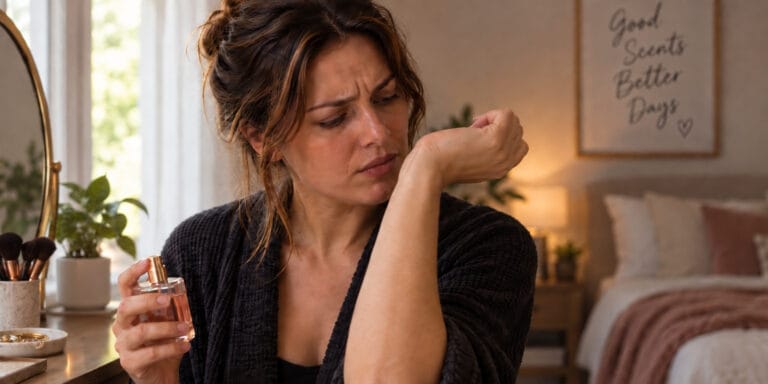
One of the most recognisable signs of deterioration is a persistent change in the scent itself. A perfume that previously smelled fresh, soft or balanced may develop a sour, stale, unusually sharp or rancid character. Sometimes the brighter opening notes seem to have disappeared, leaving a heavier fragrance that no longer resembles the original composition. A pronounced unpleasant change is a good reason to discontinue use.
2. The perfume has changed colour
Some fragrances gradually deepen in colour as they age, particularly those containing ingredients that naturally vary in colour or undergo changes during storage. A pale golden perfume may become amber, for example, without necessarily developing an obvious unpleasant smell. Colour changes alone do not reliably establish whether a fragrance has expired. However, a substantial or unexpected change warrants closer attention, especially when accompanied by other signs of deterioration.
3. The liquid becomes unexpectedly cloudy or develops sediment
Unexpected cloudiness, particles, separation or sediment can indicate a change in the physical stability of a fragrance. Some formulations are naturally less clear than others, and temperature changes can temporarily affect the appearance of certain ingredients. What matters is whether the appearance differs from what is normal for that particular product. If the change is unexplained or accompanied by an unusual odour, avoid using the fragrance until you have sought advice from the manufacturer.
4. The bottle is leaking or the closure has deteriorated
A damaged atomiser, leaking bottle or poorly fitting closure may compromise the packaging’s ability to protect the fragrance. This can increase evaporation or exposure to the surrounding environment, depending on the design of the bottle. If you notice a substantial loss of liquid without corresponding use, inspect the packaging before continuing to use the product.
5. The fragrance causes an unexpected skin reaction
If a perfume that you have previously worn comfortably begins to cause itching, redness or irritation, discontinue use. Changes in a fragrance are one possible consideration, but a reaction does not automatically mean the perfume has expired. Allergic contact dermatitis can develop even after previous uneventful exposure to an ingredient. Seek medical advice if symptoms persist or are significant.
A perfume can change without becoming obviously unpleasant. Your sense of smell is useful for recognising changes in fragrance quality, but it is not a reliable test of whether an older cosmetic product remains suitable for skin application.
How to check the expiry date of perfume
Finding out when a perfume expires is not always as straightforward as looking for a date on the bottom of the bottle. Fragrance packaging may carry different types of information, including a batch number, a recommended period after opening or a specific date. These markings have different purposes, so understanding what they represent can help prevent unnecessary confusion.
What does the open jar symbol mean on perfume?
The small open jar symbol found on some cosmetic packaging is known as the Period After Opening, or PAO, symbol. A marking such as 12M or 24M indicates a recommended period of 12 or 24 months after the product is first opened. It is not calculated from the date you purchased the fragrance unless that is also when you opened it.
| PAO marking | Period after opening |
|---|---|
| 6M | 6 months |
| 12M | 12 months |
| 24M | 24 months |
| 36M | 36 months |
Not every perfume carries a PAO symbol. If there is no recommended period shown, do not assume that the fragrance has an unlimited shelf life. Check the product information supplied by the brand or contact the manufacturer if you need clarification.
Can you check perfume expiry using a batch code?
A batch code is primarily used to identify a particular production batch. Manufacturers may use this information to trace when a product was made and review its production records. Some online batch-code calculators attempt to estimate manufacturing dates, but their accuracy depends on the brand and the information available to the database.
Even when a manufacturing date is identified correctly, that date does not reveal when the bottle was opened, how it has been stored or whether its contents have deteriorated. A batch code is therefore not the same as an expiry date. The manufacturer’s guidance is a more appropriate starting point when evaluating an older fragrance.
Does perfume oil expire?
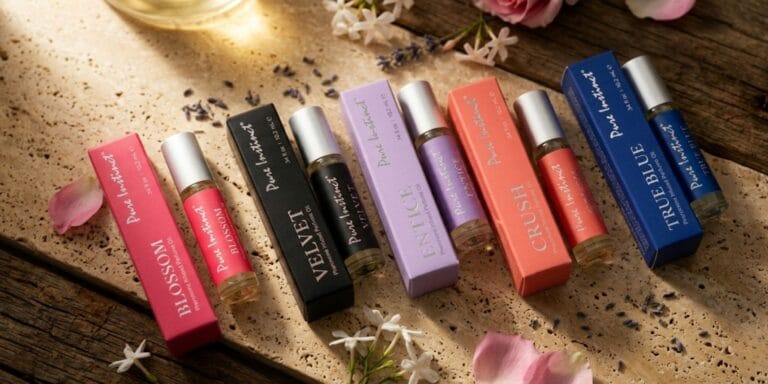
Yes, perfume oils can deteriorate over time, just as traditional alcohol-based fragrances can. In an oil-based formulation, the carrier oil introduces another factor that can influence the stability of the finished product. Different carrier oils have different resistance to oxidation, and the fragrance ingredients blended into them may also change independently. There is no single shelf-life estimate that applies to every perfume oil.
An oil that has undergone oxidative deterioration may develop a stale or rancid smell that competes with the fragrance itself. In other cases, the aromatic composition may change before any obvious deterioration of the carrier oil is noticeable. Neither the absence of alcohol nor a high concentration of fragrance ingredients guarantees a longer shelf life.
Do roll-on perfumes need different care?
A roll-on perfume is applied through direct contact between the rollerball and your skin. Because of this dispensing method, it is sensible to use the fragrance on clean, dry skin, keep the cap securely fitted and avoid sharing the applicator. Storing roll-ons away from heat and direct sunlight is equally important, particularly if you carry a favourite fragrance in your handbag or travel case.
If you are unfamiliar with oil-based fragrances, our guide to what perfume oil is explains how these formulations differ from traditional perfume sprays and why some people enjoy their more personal, skin-close style of scent.
Is it okay to use expired perfume?
It is understandable to feel reluctant to part with a cherished fragrance, particularly if it carries personal memories or is no longer available. However, the decision to continue using an older perfume should not be based solely on whether you still enjoy its scent. Fragrance ingredients can undergo chemical changes that are not immediately obvious through smell or appearance.
For example, the oxidation of limonene and linalool can produce compounds known as hydroperoxides, which are recognised contact allergens. This does not mean every older perfume will cause irritation, or that a newer fragrance cannot cause a reaction. It does demonstrate why fragrance quality and skin compatibility should be considered separately.
If a perfume has exceeded the manufacturer’s recommended period of use, follow the manufacturer’s advice rather than relying on a home smell test. If it has developed an unfamiliar odour, significant unexplained changes in appearance or signs of compromised packaging, discontinue use. An older bottle can still be treasured as a keepsake without needing to be worn.
Looking after your skin: If a fragrance causes irritation, stop using it and gently wash the affected area. Seek medical advice for persistent or significant symptoms. For more information about fragrance ingredient oxidation and allergic reactions, see DermNet’s guidance on contact allergy to limonene and linalool.
What should you do with expired perfume?
Parting with a favourite fragrance can feel wasteful, particularly when there is still a considerable amount left in the bottle. You may wonder whether an older perfume could serve another purpose around the home, rather than simply being discarded. Before deciding what to do with it, however, it is worth distinguishing between a fragrance you no longer enjoy and one that has genuinely deteriorated or exceeded its recommended period of use.
Can you repurpose expired perfume?
Using old perfume as a room fragrance, spraying it onto clothing or adding it to a homemade diffuser are ideas often shared as ways to avoid waste. However, changing how you use a deteriorated fragrance does not reverse the chemical changes that have occurred. Perfumes are formulated for a particular purpose, and their suitability for other applications should not be assumed. If a fragrance has gone bad, responsible disposal is generally the better option.
| Suggested use | What to consider |
|---|---|
| Room fragrance | Only consider this for a fragrance that has not deteriorated, where the manufacturer confirms suitability for this purpose. |
| Clothing or linen spray | Avoid using expired perfume on fabrics. Fragrance ingredients may stain certain materials and can still come into contact with your skin. |
| Homemade reed diffuser | Not recommended. Perfume is not necessarily formulated for use in a diffuser. |
| Bathwater or body products | Avoid adding deteriorated perfume to products intended for skin contact. |
| Candles or oil burners | Avoid. Alcohol-based fragrances may be flammable and are not formulated for these applications. |
| Decorative keepsake | A beautiful bottle can be kept once its remaining contents have been appropriately handled and the container cleaned where practicable. |
How to dispose of expired perfume responsibly
Avoid pouring unwanted perfume or perfume oils down the sink, toilet or into the garden. Alcohol-based fragrances may be flammable, and fragrance ingredients can present environmental concerns when released into waterways. Keep the remaining perfume in its original container with the closure securely fitted. Check with your local council to find out whether your nearest household chemical waste collection facility accepts unwanted fragrances.
Disposing of perfume in Australia: Waste collection and recycling arrangements vary between local councils. Planet Ark’s Recycling Near You is a useful starting point for finding local disposal and recycling information. Confirm that the facility accepts perfume before taking your unwanted fragrances there.
Can you recycle empty perfume bottles?
Many perfume bottles are beautiful enough to keep long after the fragrance itself has been enjoyed. A properly emptied and appropriately cleaned bottle can become a decorative keepsake, particularly if it holds sentimental value. There is no need to part with the memories associated with a fragrance simply because its contents are no longer suitable to wear.
If you prefer to recycle the bottle, check whether your local council accepts perfume packaging and whether the cap or dispensing mechanism needs to be removed. Decorative glass, mixed materials and permanently attached atomisers can affect whether a bottle is suitable for conventional recycling. Do not force apart a sealed atomiser or break the bottle to empty it.
How to store perfume so it lasts longer
Looking after your fragrance does not require specialised equipment or elaborate storage rituals. The aim is to reduce unnecessary exposure to heat, light and air while keeping the original packaging in good condition. For those of us living in Australia, where summer temperatures can rise considerably, the location of a fragrance collection is particularly worth considering.
| Storage location | Recommendation | Why? |
|---|---|---|
| Bedroom drawer | Generally suitable | Helps protect fragrance from direct light and unnecessary exposure to heat. |
| Cool cupboard | Generally suitable | Offers a relatively stable environment when kept away from heat sources. |
| Bathroom vanity | Less suitable | May experience regular temperature fluctuations, steam and humidity. |
| Sunny windowsill | Avoid | Exposes bottles to direct light and potentially elevated temperatures. |
| Parked car | Avoid | Can expose fragrances to extreme heat, particularly during Australian summers. |
| Refrigerator | Not routinely necessary | Low temperatures may affect some formulations. Follow manufacturer guidance. |
Keep your perfume in its original bottle
The packaging selected for a fragrance is part of the finished product. Transferring the contents into decorative bottles or frequently refilling travel atomisers can introduce additional handling and air exposure. Whenever practical, retain the main supply in its original container and transfer only a small amount when a travel-sized fragrance is useful.
Store bottles upright with their closures intact
Keeping fragrance bottles upright can help minimise unnecessary contact between the liquid and dispensing components during storage. Replace caps after use, particularly on roll-on and dab-style bottles, and avoid dismantling spray mechanisms unnecessarily. If the packaging begins to leak, contact the manufacturer rather than assuming the fragrance remains unaffected.
Choose bottle sizes you are likely to enjoy
A large bottle can be appealing when you discover a fragrance you love, but it is not always the most practical choice if you enjoy rotating between several scents. Smaller bottles and roll-on formats may allow you to experience more variety while keeping less fragrance open at any one time. If you prefer having a signature scent that you wear most days, a larger bottle may make more sense for your individual habits.
Make a note of when you first open a fragrance
If you own several perfumes, remembering when each bottle was opened can become difficult. A small date label on the base of the bottle or a note in your phone makes it easier to keep track of the manufacturer’s recommended period after opening. This is particularly helpful when you rotate fragrances seasonally or reserve certain scents for special occasions.
Enjoy your fragrance rather than endlessly saving it. A beautiful perfume can become part of the ordinary moments that make life feel special. Wearing a favourite scent regularly, rather than keeping it untouched for years, can be a meaningful way to enjoy what you already own.
Frequently asked questions about perfume expiry
Can perfume expire even if it has never been opened?
Yes. Unopened perfume can still undergo chemical changes over time. Although intact packaging can help protect a fragrance, its formulation, age and storage conditions continue to influence its shelf life.
Does cologne expire?
Yes, cologne can deteriorate in much the same way as other fragrances. Its individual ingredients, formulation and storage conditions influence how long it retains its original character. Fragrances marketed as men’s cologne can also include eau de toilette and eau de parfum formulations, so check the guidance for the specific product.
Can perfume last for 10 years?
Some fragrances retain a recognisable and enjoyable scent for ten years or longer, particularly when stored well. However, this does not establish a ten-year shelf life for all perfumes or confirm their suitability for continued skin application. Follow the manufacturer’s recommended period of use.
Is perfume bad if it turns yellow or darkens?
Not necessarily. Some fragrance ingredients naturally change colour during storage. A noticeable change in colour should be considered alongside the perfume’s age, storage history, scent and any manufacturer’s guidance. Significant unexplained changes warrant further investigation.
Does perfume expire faster in hot weather?
Exposure to elevated temperatures can accelerate certain chemical changes within a fragrance. Keeping your perfume away from direct sunlight, hot vehicles and other heat sources can help protect its original composition.
Should I keep perfume in the fridge?
Refrigeration is not normally necessary. A cool, dark location with relatively stable temperatures is generally a more practical choice. Some formulations may become cloudy or undergo other physical changes at low temperatures, so follow any specific storage instructions supplied by the manufacturer.
Does perfume oil last longer in the bottle than spray perfume?
Neither format has a universally longer shelf life. Perfume oils depend partly on the stability of their carrier oils, while spray perfumes have their own formulation and packaging considerations. The manufacturer’s recommended shelf life is more useful than comparing fragrance formats alone.
Does pheromone perfume expire?
Yes. Like other fragrances, pheromone perfumes can undergo changes during storage. Their shelf life depends on the specific ingredients, formulation and packaging. The presence of ingredients marketed as pheromones does not establish a longer or shorter shelf life.
Can expired perfume be used as a room freshener?
It is not advisable to repurpose a fragrance that has deteriorated. Using expired perfume as a room freshener does not reverse chemical changes within the formulation. If you simply no longer enjoy a fragrance that remains within its recommended period of use, check whether the manufacturer considers it suitable for this alternative application.
Can you pour expired perfume down the sink?
Avoid pouring unwanted perfume down the sink or toilet. Keep it in its original container and contact your local council for advice on appropriate household chemical waste disposal. Alcohol-based perfumes may be flammable, and disposal arrangements differ between councils.
Give the fragrances you love a little care
Fragrance can hold an extraordinary sense of familiarity. A favourite perfume might remind you of a particular person, a place you once visited or a chapter of your life that you remember fondly. Looking after the bottle helps preserve the composition that makes those associations so personal, although no fragrance remains unchanged indefinitely.
Store your perfumes thoughtfully, pay attention to their individual recommended periods of use and enjoy them while they are at their best. Whether you prefer a single signature scent or a collection that changes with your mood, fragrance is something to experience, not simply something to keep.
Find a fragrance that feels like you
From softly lingering perfume oils to expressive fragrance sprays, explore scents that complement your individuality and the moments you want to make your own.