
Do Natural Aphrodisiacs Really Exist? What the Evidence Says
Foods, herbs, spices and aromas have been called aphrodisiacs for centuries. Some have intriguing research behind them, many rely heavily on traditional use, and none should be treated as a guaranteed instant switch for sexual desire.
Natural aphrodisiacs have a much longer history than modern sexual-health products. Across different cultures, plants, foods and aromatic ingredients have been associated with desire, fertility, vitality, intimacy and sexual function.
Some of those traditions have since attracted scientific research. Others remain largely traditional. And in some cases, an interesting finding from an oral extract has been repeated online as though the same result must occur from a tea, food, massage oil or fragrance.
That is where things become confusing.
The real answer is more interesting than either “aphrodisiacs definitely work” or “aphrodisiacs are completely fake”. Different ingredients have different evidence, and how an ingredient is prepared, how much is used and how it enters the body all matter.
Do aphrodisiacs actually exist?
Natural aphrodisiacs certainly exist as a traditional and cultural concept, but evidence that any particular food, herb or scent reliably increases sexual desire is mixed.
Some botanicals — including ginseng, maca and tribulus — have been studied in humans and produced potentially interesting results in certain groups. That does not make them instant libido boosters, and evidence from an oral supplement cannot automatically be applied to a topical massage oil or botanical infusion.
Scent, touch, massage, expectation and atmosphere can also influence the experience of intimacy without requiring an ingredient to act like a pharmaceutical drug.
What Is an Aphrodisiac?
An aphrodisiac is traditionally understood as something believed to increase sexual desire, arousal or sexual pleasure.
The word itself comes from Aphrodite, the ancient Greek goddess associated with love and desire, but cultures around the world developed their own foods, plants and rituals associated with sexuality long before modern clinical research existed.
Natural aphrodisiacs have included:
- herbs and roots
- spices
- fruits and foods
- flowers and aromatic plants
- traditional tonics
- botanical extracts
- essential oils and fragrance rituals
But being traditionally labelled an aphrodisiac is not the same thing as being clinically proven to increase libido.
Do Natural Aphrodisiacs Actually Work?
The evidence depends on the ingredient.
Some natural products have been tested in human clinical trials. Others have mostly laboratory, animal or traditional-use evidence. Many studies are small, use different extracts or doses, or examine one aspect of sexual function rather than sexual desire itself.
There is no well-supported natural equivalent of an instant “on switch” for libido. Some botanicals have interesting evidence, but that is very different from saying every traditional aphrodisiac reliably produces arousal.
This distinction is particularly important because sexual desire is influenced by much more than one ingredient.
Sleep, stress, medication, hormones, physical health, relationship dynamics, attraction, pain, body confidence and emotional connection can all affect someone’s interest in sex.
Desire, Arousal and Sexual Function Are Not the Same Thing
A lot of aphrodisiac marketing treats libido, arousal, erections, lubrication and sexual performance as if they all describe the same outcome.
They do not.
| Term | What It Generally Refers To |
|---|---|
| Sexual desire / libido | Interest or motivation to engage sexually |
| Sexual arousal | Mental and physical responses to sexual stimulation |
| Sexual function | Processes such as erection, lubrication, orgasm and sexual response |
| Sexual satisfaction | A person’s subjective experience of sexual activity and connection |
A study showing a change in one of these measures does not automatically prove that an ingredient “boosts libido” generally.
Maca: One of the Better-Known Natural Aphrodisiacs
Maca is an Andean plant traditionally used as a food and associated with fertility, vitality and sexual wellbeing.
It is also one of the natural aphrodisiacs that has actually been studied in humans.
Some small clinical trials have reported improvements in sexual desire or sexual function in particular groups. However, systematic reviews have concluded that the number and quality of trials remain too limited to make strong conclusions.
One important detail: research on maca generally involves consuming a specific preparation over a period of weeks. It does not demonstrate that maca applied to the skin produces the same effect within minutes.
That difference between ingredient evidence and product-route evidence is important throughout this topic.
Ginseng and Sexual Function
Ginseng has a long history in traditional herbal systems and is frequently included in supplements marketed for energy, vitality and sexual wellbeing.
Modern reviews have found some promising human evidence for certain ginseng preparations in areas of sexual function. Research has included erectile function as well as sexual arousal and desire in some populations.
That makes ginseng more interesting scientifically than many ingredients marketed as aphrodisiacs, but it still does not justify assuming that every form, concentration or method of use produces the same response.
Wildfire currently uses several ginseng-related botanical infusions across its formulations, including American, Brazilian and Indian ginseng.
Tribulus: Interesting Evidence, but Not a Simple Answer
Tribulus terrestris has been used traditionally in sexual-health and vitality preparations and continues to appear in modern supplements.
Research is mixed.
Some analyses involving women have reported improvements in measures of sexual function, including desire or arousal. Evidence in men has been less consistent, with recent reviews still describing the evidence for erectile dysfunction as insufficient.
This is a good example of why “does this aphrodisiac work?” can be the wrong question. Results can differ by population, preparation, dose and the outcome being measured.
Does Horny Goat Weed Really Work?
Horny goat weed may have the most memorable name in the natural-aphrodisiac world.
It has a long history of traditional use, and one of its best-known compounds, icariin, has attracted scientific interest.
Much of the excitement around horny goat weed, however, comes from laboratory and preclinical research rather than strong clinical evidence showing predictable sexual effects in people.
It should therefore not be described as a natural version of prescription erectile-dysfunction medication.
“Who needs Viagra?” is not an appropriate comparison. A traditional herbal ingredient and a regulated prescription medicine have very different evidence, dosing, safety and mechanisms of use.
Damiana, Muira Puama, Cnidium and Other Traditional Aphrodisiac Botanicals
Many botanicals earned aphrodisiac reputations long before controlled clinical trials existed.
Damiana has a long association with sensuality and sexual wellbeing in traditional herbal use.
Muira puama, sometimes called “potency wood”, has similarly been used in South American herbal traditions associated with vitality and sexual function.
Cnidium has a history in traditional Chinese herbal practice and is another plant that appears in sexual-wellbeing formulations.
Wildfire also currently uses botanical infusions including ginkgo biloba, velvet bean, wild yam, black cohosh, chaste tree berry, Chinese wolfberry, rhodiola rosea, suma and others across different formulas.
These traditions are a legitimate part of botanical history. What they do not automatically provide is proof that a particular topical product produces a predictable medical or sexual effect.
What About Ylang Ylang, Rose Geranium and Aromatic Aphrodisiacs?
Some ingredients earn their sensual reputation as much through fragrance and ritual as through herbal medicine.
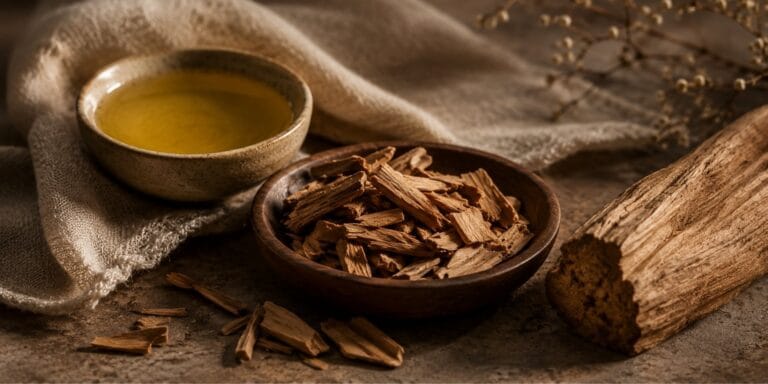
Ylang ylang, rose geranium, sandalwood and other aromatic botanicals have long been used in perfumery, massage and intimate settings.
That does not mean inhaling ylang ylang or applying a fragrant body oil automatically causes a surge in libido.
But aroma can still matter.
Scent can contribute to atmosphere, memory, anticipation and the overall sensory character of an intimate experience. When combined with massage, warmth, touch and time together, fragrance can become one part of the ritual without needing to behave like a drug.
Our guide to aphrodisiac essential oils and the role of scent explores that side of the subject in more detail.
What About Oysters, Chocolate and Other Aphrodisiac Foods?
Foods have probably attracted more aphrodisiac folklore than herbs.
Oysters, chocolate, chilli, watermelon, figs, strawberries and pomegranate are all commonly mentioned.
Some contain nutrients or plant compounds relevant to general health or circulation. That does not mean eating them produces an immediate, reliable increase in sexual desire.
Food can also influence intimacy in a completely different way.
A shared meal, an indulgent flavour, anticipation, novelty and cultural associations can all contribute to the experience of romance or sensuality. That effect does not become meaningless simply because it is not pharmaceutical.
Context matters. Something can contribute to a sensual experience without needing to chemically “switch on” libido.
Does the Placebo Effect Mean Aphrodisiacs Are “All in Your Head”?
No.
Expectation can influence subjective experiences, particularly experiences involving mood, pleasure, anticipation and desire.
If someone associates a fragrance, massage ritual or particular setting with intimacy, those cues may become meaningful to them even without a proven pharmacological aphrodisiac mechanism.
That does not prove the herb itself increases libido, but it also does not make the experience imaginary.
Sexuality involves the brain, body, senses, relationship and surrounding context. There is rarely one isolated mechanism.
Can Aphrodisiac Herbs Work Through the Skin?
This is where older aphrodisiac claims need the most care.
The skin is a barrier, but some substances can penetrate into or through it. How much depends on factors including the molecule itself, concentration, formulation, carrier, area of skin and contact time.
That does not mean every botanical infused into an oil is automatically absorbed into the bloodstream in an amount capable of changing libido or sexual function.
Evidence for an orally consumed herb or concentrated extract cannot automatically be transferred to a massage oil.
Massage can warm the skin and increase local circulation. Oils such as jojoba can also affect how a formulation sits and spreads across the skin. But those facts alone do not prove that aphrodisiac botanical constituents reach the bloodstream at an effective systemic dose.
Applying an infused oil to delicate skin also does not, by itself, establish a clinically meaningful transdermal effect.
This distinction is one reason Wildfire now talks much more carefully about botanical infusions than some of its early material did.
Why Has Wildfire Always Used Aphrodisiac Botanicals?
There is a genuine history behind the ingredients.
Wildfire was originally developed in 2007 by a naturopath and natural medicine specialist around the concept of an “All Over Pleasure Oil”.
The original formulation philosophy combined rich plant oils, essential oils and botanical infusions selected partly because of their traditional associations with sensuality, vitality and aphrodisiac use.
Early Wildfire material went further than we would today. It described massage, jojoba, herbal infusions and aromatic oils through a naturopathic model involving transdermal absorption, circulation, nerve endings and sexual response.
That historical formulation theory explains why older Wildfire articles sometimes made strong claims about herbs being absorbed through the skin and producing arousal quickly.
The formulation heritage remains; the way we describe the evidence has evolved. Traditional use and the original naturopathic rationale are part of Wildfire’s history, but we do not present those early mechanisms as established clinical fact.
Does Wildfire Still Use These Botanical Infusions Today?
Yes.
Botanical infusions are not simply part of an old Wildfire recipe book. A broad range continues to be used across current formulations.
Depending on the product, current Wildfire formulations use botanicals including:
- damiana
- horny goat weed
- muira puama
- tribulus
- maca
- American, Brazilian and Indian ginseng
- cnidium
- ginkgo biloba
- velvet bean
- wild yam
- black cohosh
- chaste tree berry
- Chinese wolfberry
- rhodiola rosea
- suma
Other botanical extracts are used in specific formulations for different sensory or product purposes.
The important distinction is that Wildfire’s continued use of these botanicals reflects the formulation heritage and character of the range. It should not be interpreted as a claim that every botanical produces a proven aphrodisiac effect through topical use.
So What Does “Pleasure Oil” Mean Today?
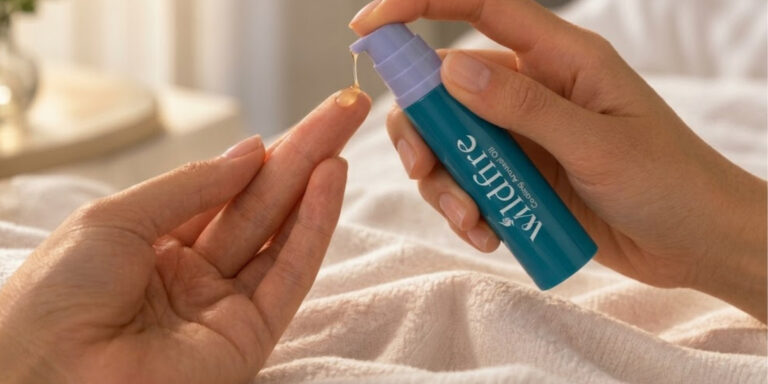
Wildfire still calls its signature body oils Pleasure Oils because the concept has always been broader than ordinary massage oil.
Today, that experience can be understood through several layers:
- massage glide from the plant-oil base
- skin feel from oils such as olive and jojoba
- aroma from carefully selected essential-oil blends
- botanical heritage from the infused herbs used across the range
- touch and warmth through massage
- ritual and anticipation around slowing down together
- external intimate touch as part of the product’s multi-use design
Earlier Wildfire material also used stronger language around libido, transdermal effects and lubricant use. Current Wildfire descriptions are deliberately more measured and distinguish sensory and traditional associations from guaranteed physiological effects.
A Pleasure Oil does not need to behave like a drug to add something to intimacy. Aroma, touch, glide, warmth, attention and shared ritual can all be meaningful parts of the experience.
Explore the current Wildfire Pleasure Oil range or read more about creating a sensual massage ritual.
Natural Does Not Automatically Mean Safe
Another problem with the word “natural” is that it can make an ingredient sound automatically harmless.
That is not always true.
Herbal supplements can interact with medications or be unsuitable for certain health conditions. Concentrated essential oils can cause irritation or sensitivity when used incorrectly. Even familiar botanical ingredients can produce allergic reactions in some people.
If you are considering an oral herbal supplement specifically for sexual dysfunction, libido or another health concern, discuss it with an appropriate healthcare professional — particularly if you take medication, are pregnant or have an existing health condition.
For topical products, follow the product directions and stop use if irritation occurs.
So, Do Natural Aphrodisiacs Really Exist?
Yes — but probably not in the simple way the word is often marketed.
There are plants, foods and aromas with centuries of aphrodisiac tradition. Some botanicals also have preliminary or emerging human research relating to aspects of sexual desire or function.
But there is no evidence that every traditional aphrodisiac works, and there is no reliable natural ingredient that can simply be rubbed onto the skin and guaranteed to create sexual desire within minutes.
That does not make sensual botanicals irrelevant.
Their history, aroma, cultural associations and place within massage and intimate rituals can still be part of why people enjoy them.
The most useful question may not be “Is this herb a magic aphrodisiac?” but “What role does this ingredient actually play in the experience?”
Explore Wildfire’s original Pleasure Oil philosophy
Discover plant-based body and massage oils combining botanical infusions, aromatic essential oils and the glide of rich carrier oils for massage, body care, bath rituals and external intimate touch.
Continue Exploring
Aphrodisiac Essential Oils and the Role of Scent
Explore why certain aromatic oils have long been associated with sensuality and intimate settings.
Sensual Massage Guide
Learn how touch, pace, atmosphere and massage can work together without making the experience performance-focused.
What Is Arousal Oil?
Understand how purpose-made arousal oils differ from massage oils and aromatic botanicals.
Essential Oils for Calm and Relaxation
Compare aromatic oils and different ways to use scent safely at home.
Frequently Asked Questions About Natural Aphrodisiacs
Do aphrodisiacs actually exist?
Natural aphrodisiacs exist as a traditional and cultural category, but scientific evidence varies considerably between ingredients. Some botanicals have limited or emerging human research relating to sexual desire or function, while many others rely mainly on traditional use.
Are there any natural aphrodisiacs that actually work?
Some preparations of botanicals such as ginseng, maca and tribulus have produced potentially positive findings in human studies, but results vary and the evidence is not strong enough to describe any one natural ingredient as a guaranteed aphrodisiac for everyone.
What is the strongest natural aphrodisiac?
There is no scientifically established “strongest” natural aphrodisiac. Different ingredients have been studied for different outcomes, and results depend on the preparation, dose, population and whether researchers are measuring desire, arousal, erectile function or another aspect of sexual wellbeing.
Do natural aphrodisiacs work instantly?
There is no good evidence that a natural herb reliably produces an immediate increase in sexual desire within minutes. Studies of botanicals such as maca generally involve oral preparations used over weeks rather than an instant effect.
Can aphrodisiac herbs be absorbed through the skin?
Some substances can penetrate into or through the skin, but that does not mean every botanical infusion reaches the bloodstream at a dose capable of changing libido. Evidence from orally consumed herbs cannot automatically be applied to topical massage oils.
Is horny goat weed a natural alternative to Viagra?
No. Horny goat weed has a long traditional reputation and compounds within the plant have been researched, but it does not have the same level of human clinical evidence, standardised dosing or regulatory status as prescription erectile-dysfunction medication.
Why does Wildfire use aphrodisiac botanicals?
Wildfire was originally developed in 2007 by a naturopath and natural medicine specialist around an “All Over Pleasure Oil” philosophy. Botanicals were selected partly for their traditional associations with sensuality, vitality and aphrodisiac use. These botanical infusions remain part of current Wildfire formulations, although Wildfire now distinguishes traditional associations from effects that have been conclusively demonstrated.
Are Wildfire Pleasure Oils proven to increase libido?
No. Wildfire does not present its Pleasure Oils as pharmaceutical treatments for low libido or sexual dysfunction. Their current role combines botanical formulation heritage with aroma, massage glide, skin feel, bath and body use, and external intimate touch.